






Expert Voice

Our Blogs

Stay updated with the latest news, insights, and trends from our team. Our blog is a space where we share valuable tips, industry updates, and expert advice to help you stay informed and inspired. Whether you're looking to learn something new or keep up with what's happening, you'll find fresh and engaging content right here.

What is Club Accounting Software? A Complete Guide for Private & Country Clubs

What is Club Accounting Software? A Complete Guide for Private & Country Clubs

Club accounting software is the financial backbone every private and country club needs. If your club’s finance team is still reconciling charges manually, chasing billing errors, or waiting days for financial reports, it’s not a people problem; it’s a software problem. Not all accounting software is created similarly. Managing member minimums, split receivables, and multi-department billing for private & country clubs requires a purpose-built solution. Northstar truly fits the bill with its integrated club management software that connects the entire club on a single dashboard.

Why are Club Finances more complex?

Running a private or country club isn’t just about great golf courses or elegant dining rooms. Behind every exceptional member experience is a complex financial engine. One that handles monthly dues, vendor invoices, staff payroll, food and beverage charges, event billing, and much more.

For most clubs, managing all of that manually or across multiple disconnected tools creates enormous risk. Errors creep in. Reconciliation becomes a weekly nightmare. Finance teams spend hours on reports that should take minutes.

That’s exactly where club accounting software steps in.

Clubs globally are investing in integrated financial technology because the alternative, manual and fragmented accounting, is no longer sustainable.

What is Club Accounting Software?

Club accounting software is a purpose-built financial management platform designed specifically for the billing, reporting, and operational accounting needs of private clubs, country clubs, golf clubs, HOAs, Marina & Yacht, and similar membership organizations.

Club accounting software is engineered around the unique financial complexities of club operations. It handles split receivables, member minimums, profile-based billing, recurring dues, vendor payments, payroll timekeeping, and financial reporting, all from within a single, integrated system.

Northstar’s Club Accounting Software is one such purpose-built solution. It goes further than most by sitting inside a fully unified club management platform. This specialized accounting software works in two ways: it can run entirely on its own, or it can act as a standalone module bolted onto other software to make any system fully compatible.

The Core Modules inside Northstar’s Club Accounting Software

Northstar’s club accounting software is built around five deeply integrated modules; each designed to address a distinct but interconnected aspect of club finance.

Accounts Receivable – Built for Complex Club Billing

Most clubs deal with billing scenarios that generic software simply can’t handle. Member minimums, finance charges, split receivables, and profile-based billing rules are standard for private clubs. But they’re outliers for off-the-shelf accounting tools. (But they are rare exceptions compared to typical out-of-the-box accounting tools.)

Northstar’s Accounts Receivable under the club accounting software provides a robust account management system supporting split receivables, charges based on member profile, minimums, finance charges, adjustments, customizable paper and email statement formats, and multiple member payment types, including Credit Card and ACH payment processing.

This means your finance team isn’t spending time manually adjusting billing rules for each member type. The system handles it automatically and accurately, every single time. 

Know How to Keep the Lifeblood of Your Club Flowing With Your Accounts Receivable System

Accounts Payable – Vendor Management Streamlined

Vendor management for clubs involves much more than paying invoices. Reciprocal billing, prepaid allocations, inventory-triggered payments, and bank reconciliation are all part of a club’s payables landscape.

Northstar’s Accounts Payable addresses all basic needs of a payables system, including invoice processing, payment on receiving from inventory, reciprocal payments charged directly to member accounts, multiple and customizable vendor terms and discounting, prepaid allocations, and built-in bank reconciliation tools.

The ability to trigger payments directly from inventory receiving and charge reciprocal transactions to member accounts is a capability that sets Northstar’s accounting software apart from generalist platforms.

General Ledger – The Financial Backbone of the Club

The General Ledger is where all financial data converges. The General Ledger module forms the central part of the accounting suite, specifically designed to answer the needs of a club’s management and financial accounting requirements. It allows clubs to create custom journal templates or import from a file, create recurring and allocating journals, and virtual accounts, with built-in budgeting tools and import capability from spreadsheets.

The ability to create recurring journals, virtual accounts, and custom templates means that the General Ledger adapts to the club’s financial structure and not the other way around.

Financial Report Designer – Financial Reports in Minutes

Financial reporting is often the most time-consuming task in a club’s finance department. Northstar solves this with an Excel-like report designer that eliminates that entire burden.

The Financial Report Designer offers a quick and responsive experience when designing and viewing financial reports. This enables to securely publish reports directly to staff desktops and empowers teams with easy access to real-time financial data.

This is a purpose-built report designer where the clubs’ finance team can design, preview, and distribute detailed financial reports in a familiar interface without needing IT support or external tools.

Timekeeping – The Often Overlooked Accounting Tool

Timekeeping might not seem like an accounting function, but for clubs with large staff rosters, overtime pay, shift premiums, and seasonal employees, it absolutely is.

Northstar’s Timekeeping provides an efficient and comprehensive method for calculating hours, overtime, and shift premium pay, with integration to POS, single-view clocked-in employee monitoring, schedule management for activities & spa employees, and interface to most payroll providers.

The direct interface with payroll providers means there’s no manual data transfer between timekeeping records and payroll processing. This eliminates a major source of errors for clubs with high staff turnover.

How Northstar stands ahead of the competitors in the Club Industry

When evaluating the club accounting software and integrated club management software, here’s an honest look at where Northstar stands out.

Northstar differs in the depth of single-database integration. NS Office, along with NS Connect and ClubNow, are all built on a single database, making Northstar the only club management software to offer a complete unified solution. This means accounting data flows directly from POS, F&B, Rooms, Golf, and every other department with no manual syncing, no API dependencies, and no data discrepancies. This is the reason why Northstar is the top choice of premium clubs and partner of platinum clubs.

Many of the club management software providers claim to provide the integrated club management software in theory, whereas it isn’t integrated in practise. 

For clubs that need truly unified financial visibility across all departments, this single-database architecture is a decisive advantage.

Why Private Clubs need purpose-built Club Accounting Software?

Many clubs still attempt to run their finances on generic platforms or a patchwork of tools. The result is almost the same, always, i.e., manual reconciliation, billing errors, and finance teams stretched beyond capacity.

According to a joint study conducted by Club Benchmarking, the Club Management Association of America (CMAA), and the National Club Association (NCA), as mentioned on SGB Media, there are approximately 5,659 private clubs, ranging from golf and country clubs to yacht and racquet clubs, that are vital contributors to national & local economies, having a vast economic impact.

What makes club accounting software different from generic tools comes down to the core needs listed below:

Member-centric billing complexity – Clubs bill by member profile, membership type, and spending category. Generic accounting tools aren’t built for this.

Multi-department financial integration – Every department generates charges. Club accounting software connects them all to one financial record automatically.

Regulatory and audit readiness – Clubs require precise financial records for board reporting, audits, and tax compliance. A purpose-built system ensures accuracy at every level.

The single database advantage: What it means for the Clubs’ Finances?

When the clubs’ accounting system sits on the same database as the POS, Golf, F&B, Rooms, Membership, and Retail modules, every transaction is recorded once and visible everywhere. There’s no end-of-day upload between systems. No reconciliation between a POS report and the accounts receivable ledger. And no delay between a member’s dining charge and their monthly statement.

Since the implementation of the full Northstar club management software suite in 2012, Shadow Wood Country Club has been able to operate much more efficiently while greatly enhancing the member experience from the point of making a reservation to paying the monthly member bill, allowing back-office departments to do more with fewer resources required.

That kind of operational efficiency isn’t a feature; it’s a structural advantage built into Northstar’s architecture. The single database advantage is where Northstar’s club accounting software genuinely separates itself.

Real Clubs & Real Results: What CFOs and GMs are saying about Northstar

Gaith Alkaldi, GM:COO of Great Hills Country Club, Shares His Experience.mp4

At Great Hills Country Club in Austin, Texas, General Manager and COO Gaith Alkaldi has spent over 40 years in the club industry. And after nearly six years on Northstar, he’s unequivocal about where it stands. “Northstar is one of the best systems I have worked with throughout my career,” he says. He highlights how the club accounting software, combined with golf, fitness, tennis, and pool management, eliminates the need to jump between multiple systems.

For Gaith, the real value lies in the Business Intelligence and analytics tools that power his communication with the board and department heads, turning raw financial data into strategic decisions. In a tech-savvy market like Austin, where members use their phones for everything from car access to food orders, the ClubNow app and integrated “grab and go” feature have made operations noticeably more efficient for both staff and members. His advice to any club manager still on the fence? “Give it a try. Look at the system, know what’s in there, and see how many advantages it will give you.”

Who is Northstar’s Club Accounting Software for?

Northstar’s club accounting software is specifically built for:

  • Golf & Country Clubs managing complex member billing, F&B charges, and pro shop POS transactions
  • City Clubs handling event-based billing, dining charges, and corporate member accounts
  • Community Associations (HOAs/POAs) with dues billing, vendor payments, and reserve fund management
  • Marina & Yacht Clubs managing slip fees, reciprocal billing, and seasonal membership structures
  • Resorts & Hotel-Style Clubs with room folios, housekeeping billing, and multi-department charge management

Northstar is a truly integrated software solution, with award-winning software used by 1,500+ clubs to gain operational efficiencies, insights, and provide superior member experiences.

6 Signs your club needs to upgrade its Club Accounting Software

Not sure if it’s time to make a change? Here are six clear indicators:

  1. Your finance team spends more time reconciling than analyzing, which is a sign that your systems aren’t connected.
  2. Billing errors show up on member statements, pointing to manual data entry and a lack of integration.
  3. Month-end close takes more than a week, indicating a fragmented accounting workflow.
  4. You can’t pull a financial report without exporting to Excel first, a symptom of inadequate report design tools.
  5. Vendor payments aren’t tied to inventory receiving, creating payables inaccuracies.
  6. Timekeeping and payroll live in different systems, causing overtime calculation errors and payroll delays.

If two or more of these sound familiar, it’s time to evaluate a purpose-built club accounting software solution like Northstar.

Ready to Modernize your Club’s Financial Management?

Club accounting software isn’t just an upgrade; it’s a strategic investment in the financial accuracy, operational efficiency, and long-term health of the club. Northstar’s fully integrated accounting platform gives the finance teams everything the clubs need, from automated accounts receivable to real-time report design in one cohesive system.

Check out the Frequently Asked Questions (FAQs) about the Club Accounting Software:

1. What is club accounting software?

Club accounting software is a financial management platform specifically designed for the billing, reporting, payables, and accounting needs of private clubs, country clubs, golf clubs, and community associations. Unlike generic tools, it handles club-specific billing complexities like member minimums, split receivables, and profile-based charges.

2. How is Northstar’s club accounting software different from regular accounting software?

Regular accounting software is built for general business use and common accounting solutions. Whereas Northstar’s club accounting software is purpose-built for clubs with features like member profile-based billing, reciprocal payments, ACH and credit card integration, and a Financial Report Designer, all within a single-database club management platform.

3. Does Northstar’s accounting software integrate with POS and other modules?

Yes. Northstar is built on a single database, which means charges from POS, F&B, Golf, Rooms, Retail, and every other department flow directly into the accounting system automatically with no manual syncing required.

4. Can Northstar’s club accounting software handle ACH payments?

Yes. The Accounts Receivable module accepts multiple payment types, including Credit Card and ACH payment processing, giving members flexible payment options and reducing manual collection efforts.

5. Does Northstar support custom financial report design?

Yes. Northstar’s Financial Report Designer uses an Excel-like interface that allows finance teams to design, view, and securely publish custom reports directly to staff desktops, eliminating time-consuming manual reporting.

6. Is Northstar’s club accounting software suitable for all clubs?

Northstar serves boutique private clubs & country clubs to large resort properties. Its modular architecture means clubs can adopt the features they need without being overwhelmed by unnecessary complexity. Northstar is recognized as the premium club management software provider due to its integration. It also provides tailored solutions for the clubs that fit in with the clubs’ needs. 

👉 Explore Northstar’s Club Accounting Software.

Looking to upgrade your club’s accounting software? Request a personalized Demo.

How to Choose the Best Club Management Software in 2026: A Buyer’s Guide

How to Choose the Best Club Management Software in 2026: A Buyer's Guide

Running a club in 2026 means juggling between more systems than ever before, such as membership renewals, tee time bookings, dining reservations, event management, billing, and member communications, all happening at once. The clubs that are pulling ahead aren’t just the clubs with the best amenities, but also the clubs that have a member-first focus in delivering the best hospitality. They’re the ones that have found the right club management platform to tie everything together.

This guide is for Club Managers, General Managers, and Board Members who are either evaluating their first dedicated software solution or are finally ready to move on from a system that’s been slowing them down. Here’s everything the club decision makers need to know to move to the Best Club Management Software.

Why this decision matters more than ever

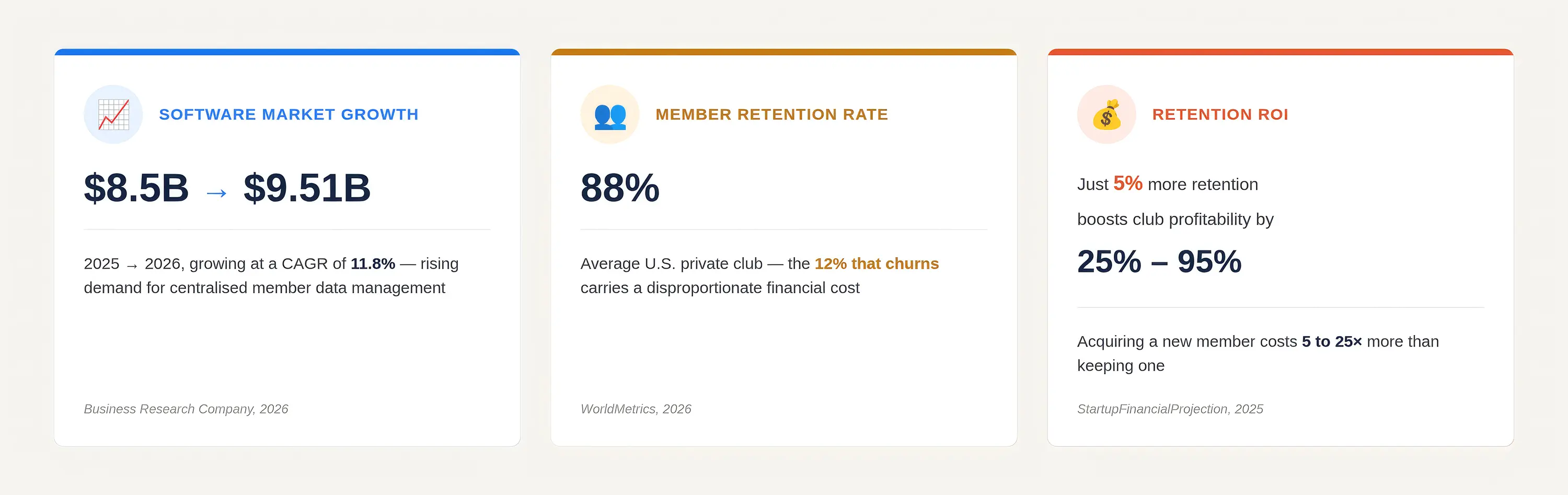
The club management software market isn’t niche anymore. Valued at approximately $9.1 billion in 2026, the global market is forecast to reach $24.5 billion by 2033, growing at a CAGR of 15.2% as per the industry report of the club management software market. That kind of growth doesn’t happen by accident. It’s being driven by clubs of every size recognizing that disconnected, manual systems are no longer viable.

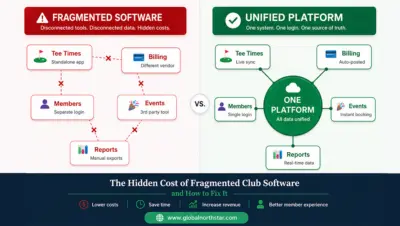
Clubs using five or more disconnected systems for POS, tee times, and accounting have manual data entry headaches and costly errors. If that sounds familiar, you’re not alone, and you’re exactly the kind of operation this guide is written for.

Joondalup Resort & Country Club was relying on five separate systems. Switching to Northstar’s unified platform enabled it to consolidate information from five different operating environments into one. The integration of multiple modules means the business can rely on current information seen via the seamless transition from inventory to Point of Sale to General Ledger. Northstar has definitely set a platform for the business to grow going forward. The result is saving the annual cost and reclaiming more staff hours. This is the real advantage of staying on the right system.

The 2026 Landscape: What actually changed

Mobile-First is non-negotiable

Members expect to book a court, check their statement, or register for an event from their phone. Clubs with mobile-first experiences see higher member engagement and satisfaction. Any software that doesn’t lead with a polished member app in 2026 is already behind.

Cloud-Native architecture is the standard

Deployment of cloud-native architectures to support scalable club operations globally is one of the defining trends shaping adoption decisions this year. On-premises systems still exist, but the flexibility, lower upfront cost, and automatic updates of cloud-based solutions make them the default choice for clubs at every stage.

The Convergence of Operations and Experience

The clubs that thrive in 2026 will be the ones that modernize thoughtfully, using the right technology to support service, protect trust, and simplify operations. That means your software shouldn’t just help staff manage the back office; it should visibly improve the member experience on the front end too.

AI that works for both sides of club operations:

The best club experiences aren’t restricted to the front desk, and neither should the software. Intelligent assistants embedded directly into Mobile Apps enable members to make dining reservations, get instant answers to their questions, and interact with the club at any hour without picking up a phone or waiting on a response. It’s connected to live club data, and it works round the clock. 

On the operations side, the same intelligence works for the team. Drafting campaign copy, writing event descriptions, answering staff queries on the spot, and turning existing reports into clear, actionable insights rather than raw numbers that sit in a spreadsheet. 

The result is a club that feels more responsive to members, and a team that spends less time on repetitive tasks and more time on the work that actually moves the needle. Not every platform can say its technology genuinely works for both sides of the clubhouse door and Northstar’s does. 

The Club Management features that actually matter

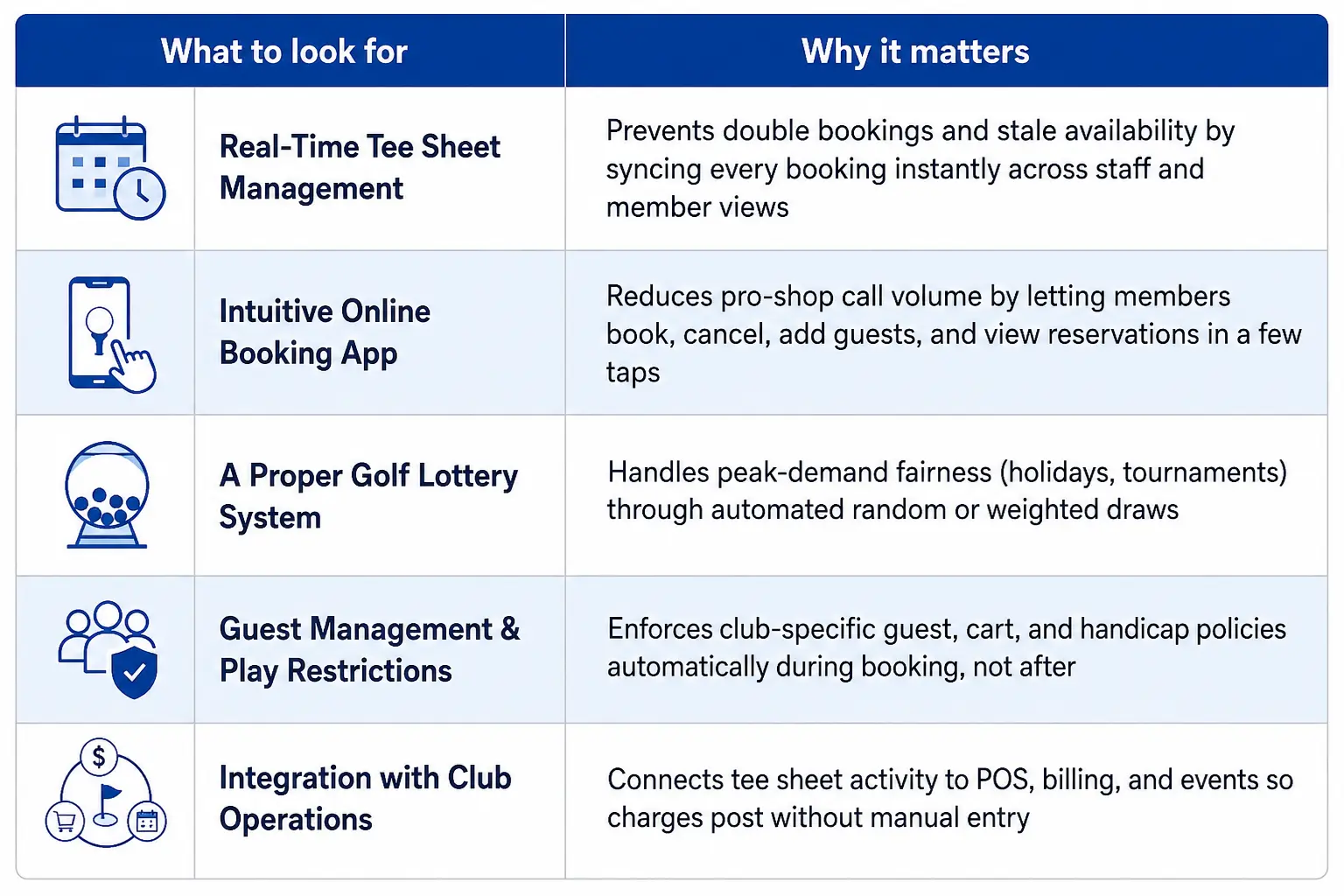
Not all club management platforms are built the same. Here’s what to look for when doing a proper club software comparison. And what separates platforms that look good in a demo from ones that hold up during daily operational pressure?

1. Unified Member Management

Everything starts with a clean, central member database. Look for platforms that handle membership tiers, family accounts, guest access, renewal automation, and communication history in one place without needing a separate CRM bolted on top.

2. Integrated POS and Billing

Whether it’s the pro shop, dining room, or golf course, your POS should feed directly into member statements and accounting. Platforms that require manual reconciliation between systems create exactly the kind of errors that cost clubs’ real money.

3. Event and Facility Scheduling

Real-time booking for tee times, courts, dining, and events accessible by both staff and members is a baseline expectation. The better platforms add waitlist management, automated reminders, and capacity controls.

4. Reporting and Analytics Dashboards

Utilization of advanced analytics dashboards to monitor member retention and revenue streams is no longer reserved for enterprise clubs. A good platform should make it easy to spot churn risks early, understand F&B trends, and track which programs are actually driving engagement. Check out how finding the right approach to Analytics in your Club Management Software helps the clubs to opt for the best club management software.

5. Accounting and Financial Management

This is where several platforms diverge significantly. Some offer lightweight billing tools; others include full accounting modules with revenue recognition, multi-entity financials, and audit trails. Know what level of financial depth the team genuinely needs before committing to the software. Many club accounting platforms offer individual modules for accounting, but an integrated accounting software gives the total financial picture of the club in a single dashboard.

6. Security and Data Privacy

Members trust clubs with sensitive payment details and personal data, with the expectation that the club will handle them responsibly. Look for enterprise-grade encryption, role-based access controls, and compliance with applicable data privacy standards. As clubs begin using more advanced systems, including AI-driven personalization, transparency about how data is used becomes critical to maintaining long-term member trust. The top club management software providers always ensure to secure & protect the club data/member data with the top secured tools.

How to compare Club Management Platforms: A Practical Framework

The evolution of Club Management Platforms has come a long way. Though each and every platform survives with its own pros & cons, the truly integrated platforms are the winning ones with the growing member convenience expectations and upgrading hospitality to reach the member expectations. Let’s have a look on the type of platforms through the modern times:

Integrated Platforms

Integrated platforms run on a single codebase with one unified data model. Every department, every transaction, every member interaction connected in one place. The real advantage shows up in daily operations: reservations, billing, POS, and member records all feed into a single live view, eliminating manual syncing and the data gaps that come with it. When every module talks to the others seamlessly, club management gets real-time visibility across the entire operation and the ability to turn that data into informed decisions without waiting on a report.

For clubs that blend golf, dining, fitness, social programming, and community management under one roof, a comprehensive platform serves far better. They deliver unified software that covers not just golf clubs, but private clubs, country clubs, marina and yacht clubs, communities, associations, and HOA/POA under a single, tailored platform that scales as the operation grows.

Modular Platforms

Modular platforms take a build-as-you-go approach, letting clubs activate features selectively based on their current needs. This makes them a practical option for operations with highly specific requirements or existing tools they’d prefer to keep. The trade-off, however, is integration. The value of a modular system depends entirely on how well each piece communicates with the other, and that’s where gaps tend to surface over time.

Legacy Systems

Several established names in the club software space have been around for decades. That longevity brings deep feature sets built up over years of industry-specific development particularly in areas like complex club accounting and back-office management. However, it also brings interfaces and architectures that predate mobile apps, cloud infrastructure, and modern UX standards. Users of these platforms frequently describe them as feature-rich with integrations that require workarounds and support tickets.

Modern Platforms

Modern platforms are built cloud-native and mobile-first from day one designed around the way clubs and their members actually operate today. The best ones deliver a complete ecosystem: a Member App and Member Website that keep members connected and in control, alongside Back Office and Employee Apps that eliminate routine admin tasks and free staff to focus entirely on the member experience. Clubs that have made this shift are the ones consistently winning on member retention. Many also offer customized solutions tailored to the specific requirements of each club, rather than a one-size-fits-all setup.

Specialized Platforms

Platforms built for a specific club type go deep where it counts. For golf-first operations, that means purpose-built tee sheet management, pace-of-play monitoring, handicap tracking, and tournament tools that a general system simply won’t match at the same depth. If golf is the core of your operation, a specialized platform built around it will outperform a broader tool in the areas your team uses most.

Things to Watch in any Demo

Before signing a contract, ensure to check on these during initial evaluation:

Data migration: Check how long it takes and who owns it for the data migration. This is where timelines slip.

Training and onboarding: Look for the training & onboarding platforms that are only as good as the adoption rate among the staff. Check the references of the clubs of similar size and type.

Support responsiveness: Make sure about the availability of support & responsiveness during critical issues. This matters more than almost anything else.

Integration with third-party tools: Is the existing email marketing platform, accounting software, or access control system, and will the new platform connect with them, or starting from scratch?

Questions to ask yourself before buying

Before evaluating any software, get clear on the internal answers to these:

  • What are the top three operational problems we’re trying to solve?
  • How tech-savvy is our staff, and how much training should we realistically have?
  • Do we need a single module installation or a comprehensive software?
  • What does the current software setup look like, and how deep does the integration need to go?
  • What does the ideal member experience look like post-implementation of the software?

The best club software in 2026 is not just the one that handles dues or stores member records. It should support the club’s full operational flow in one place, providing staff with a unified system for membership, billing, events, and member communications.

Where Unified Operations and Member Experience finally meet

Built as a fully unified club management platform that’s precisely where Northstar stands apart. Here’s what sets it apart:

One platform, zero silos: Membership management, integrated POS, event scheduling, real-time analytics, and automated billing all live in a single, intuitive system; no switching between tools, no reconciling disconnected data.

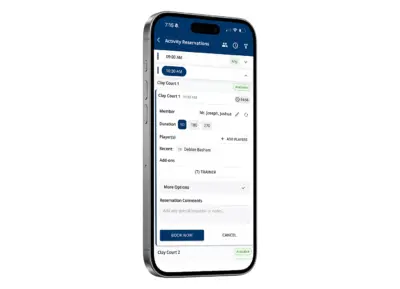
A member app your members will actually use: The mobile-first member app lets members book tee times, view statements, and register for events from anywhere, at any time putting the club experience in their pocket.

Smarter decisions for the staff: A centralized dashboard gives every department, from F&B to the pro shop; real-time visibility across operations, so decisions get made faster and with confidence.

AI that works at the core, not as an add-on: Northstar’s AI-powered insights help clubs proactively identify retention risks, forecast demand, and personalize the member experience in ways legacy systems were never built to handle.

Implementation and support that doesn’t disappear: Unlike platforms that hand over the keys and walk away, Northstar’s team ensures the transition is smooth, the training sticks, and someone is genuinely reachable when something goes wrong including on a weekend.

Built around the people who run the club: The F&B manager, head pro, accounting team, membership director, GM, and IT lead all have a role in evaluating and using the platform. Northstar is designed to work for every one of them.

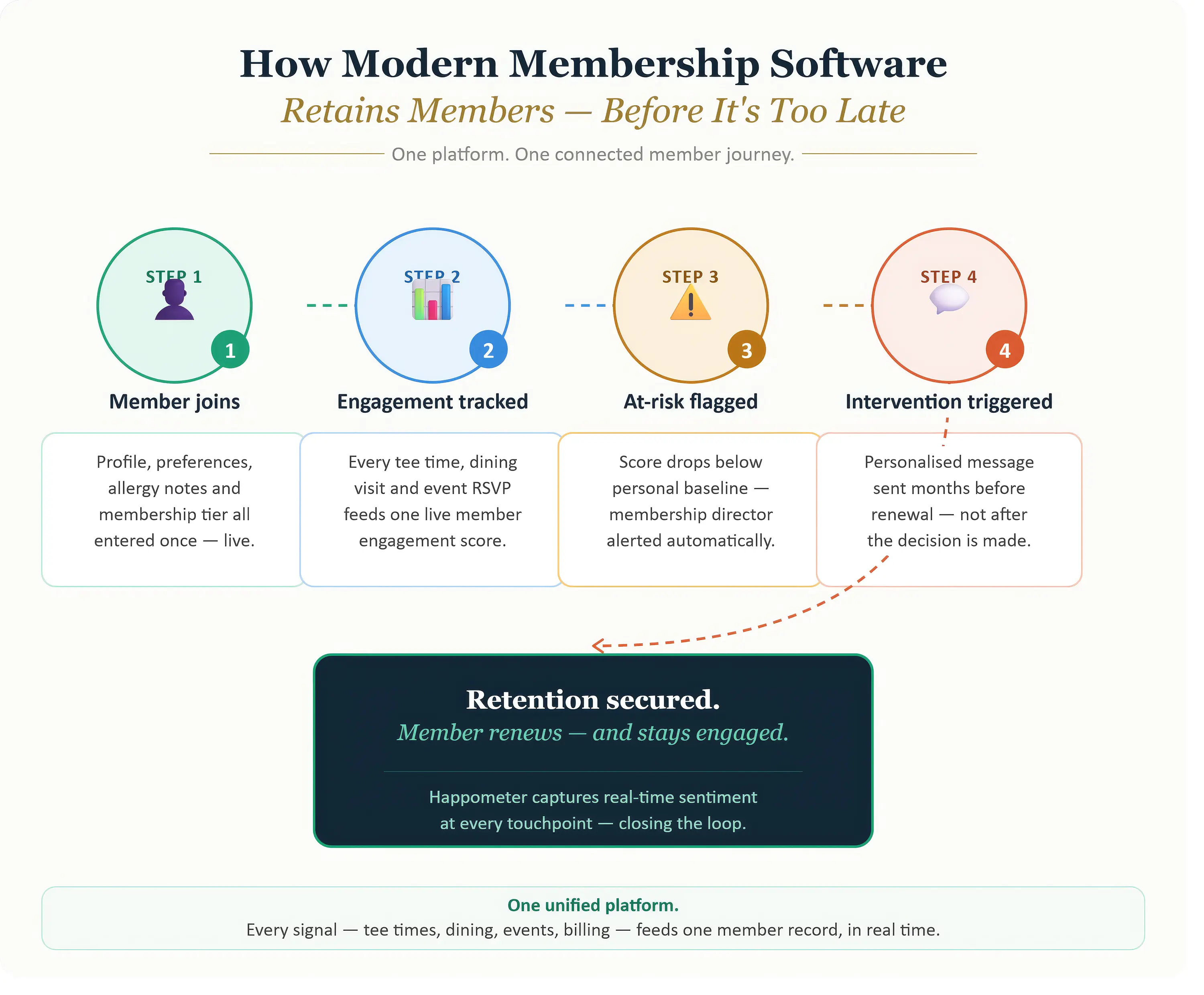
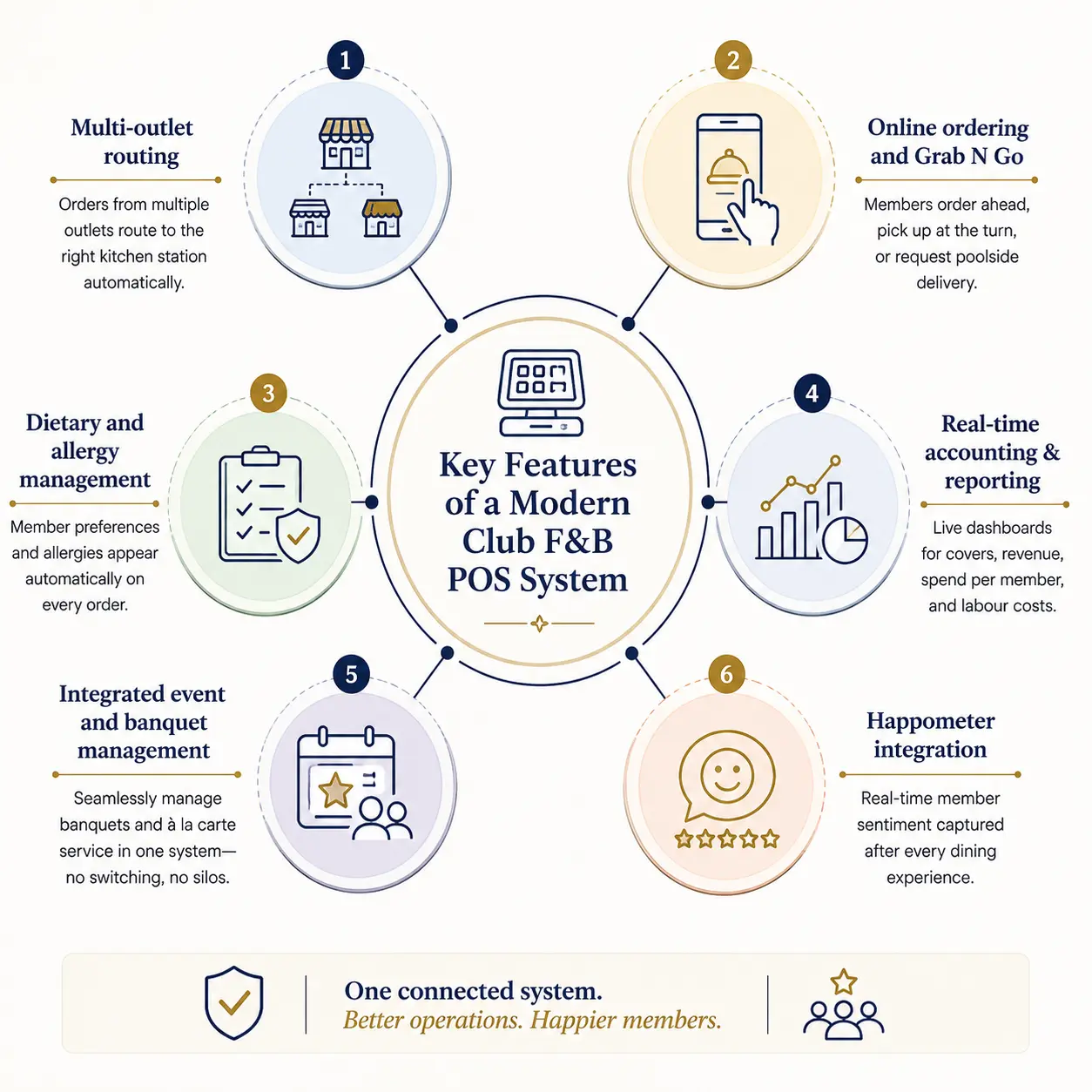
Member feedback built into the platform: Northstar’s Happometer captures real-time member sentiment at the moments that matter most. Turning member responses into actionable insight helps clubs continuously improve operations and strengthen the connection between the club and its members.

Know exactly how your members feel

Member retention doesn’t fail overnight. It erodes quietly, one unaddressed frustration at a time. That’s where Northstar built Happometer, a real-time member feedback tool that takes the guesswork out of member satisfaction. Instead of waiting or relying on annual surveys that are outdated the moment they’re sent.

Happometer captures how members feel at the moments that matter most; after a round, a dining experience, an event, or a service interaction. The insights surface directly in the dashboard, giving the team a continuous, honest pulse on what’s working and what needs attention before it becomes a retention problem.

It’s not just a feedback form; it’s an early warning system, a relationship-building tool, and a data source that makes every operational decision sharper. In a world where member expectations are higher than ever, Happometer gives clubs the one thing most software platforms don’t: a direct, ongoing line to the voice of the member.

The Bottom Line

Choosing the best club management software isn’t just a technology decision; it’s a strategic one. The right platform will reduce administrative overhead, the total insights the team can actually act on, and makes the club meaningfully easier to stay connected for its members.

The right club management software will save time, money, and impact member retention that lasts for years.

Northstar helps clubs navigate exactly the kind of decision from initial needs assessment through implementation and beyond. If you’re ready to stop patching together workarounds and start running a truly connected club operation, we’d love to talk.

Want to see how Northstar’s platform stacks up for specific club types? Book a Demo to start the conversation.

Integrated Marina & Yacht Club Management Software – From Striving to Thriving

Why Integrated Marina & Yacht Club Management Software is the Difference Between a Club That Runs & One That Thrives

Why Integrated Marina & Yacht Club Management Software is the Difference Between a Club That Runs & One That Thrives?

If you manage a yacht club, you already know the job is nothing like outsiders imagine. They picture sundowners on the deck. You’re thinking about a member whose berth registration expired two weeks ago, a work order that fell through the cracks, a utilities invoice that got sent to the wrong account, and a board meeting in the morning where someone will ask why the marina report doesn’t match the accounting system. Again.

The truth is that running a well-functioning yacht club in 2026 is operationally complex in a way that most generic software simply cannot handle. Membership dues, slip assignments, boat documentation, point-of-sale billing, event communications, and marina occupancy all have to work together. When they don’t, you spend your time fixing errors instead of serving members.

This is the conversation worth having around marina & yacht club management software: not just what features are listed on a product page, but what it actually means when your marina module, your CRM, and your accounting system share the same database.

The Fragmentation Problem Most Clubs Are Still Sitting With

Industry research puts a sharp number on something most club managers already feel, facilities using disconnected systems spend an average of 15 to 20 hours a week on manual data reconciliation. That’s nearly half a working week, per facility, doing nothing but moving information between systems that should already be talking to each other.

The downstream effects are predictable. Billing errors. Late invoices. Work orders that get logged in one place but don’t appear in another. Member records that have to be updated across three different platforms every time something changes. And marina reports that nobody quite trusts because the data never fully lines up.

For a yacht club specifically, this fragmentation tends to be worse than in other private clubs, because the operational surface area is wider. You’re managing both a club and a marina. You’ve got a member directory and a boats directory. You got POS transactions that need to flow through to berth accounts. You also got document expiry dates that carry real liability if they slip by unnoticed. And you’ve got members who expect the same level of service they’d receive at any well-run hospitality business.

Generic club software handles the club membership side adequately. Generic marina software handles the dockage side adequately. What neither handles well is the intersection. And the intersection is where most of the operational complexity lives.

What Proper Marina Management Actually Looks Like Inside a Yacht Club

When a marina module is genuinely integrated into a club management system (rather than bolted on as an afterthought), a few things change in ways that matter day to day.

The member profile becomes the single source of truth

A member’s boat type, documentation status, work order history, and berth assignment all sit alongside their membership record. When you look up a member, you see the whole picture. When something changes (a new boat, a renewed insurance certificate, a different berth) you update it once and it flows everywhere: billing, communications, marina assignments, access control.

Automated document tracking removes the liability gap

Expired boat registrations and lapsed insurance certificates are an operational and legal exposure that clubs often manage via spreadsheet or not at all. A properly integrated system tracks these expiry dates and sends automated alerts to members ahead of time. The club’s responsibility is discharged. The member is taken care of. Nobody has to remember to chase it.

Utilities billing stops being a manual process

Electricity and water consumption at berths can be billed automatically, directly to the member’s account, without anyone manually extracting data from a meter reading spreadsheet and cross-referencing it against a berth assignment list. It sounds like a small thing until you’ve done it manually for a marina with 80 berths.

POS charges settle against the right account without a second step

When a member buys something at the bar or the ship’s store, that charge should flow directly to their berth account. In a fragmented system, this typically requires a manual reconciliation step. In an integrated system, it just happens.

The marina view gives you real operational clarity

A bird’s-eye layout of your marina, showing current assignments, occupancy, and upcoming availability, is the kind of view that makes the difference between a marina manager who’s always reacting and one who’s planning ahead.

The Sub-Lease Question: A Revenue Stream Most Clubs Are Underutilizing

One area where integrated marina management software can meaningfully impact club revenue is berth sub-leasing.

Many clubs allow members who hold long-term berths to sub-lease their slip during extended absences. In practice, though, this tends to be informal, inconsistently administered, and difficult to track financially. Who approved the sub-lease? What rate was agreed? What share of the revenue flows back to the club versus the member?

When the process is handled within the club management system, it becomes structured. Sub-leases are logged. Revenue is tracked. The split between member and club is calculated automatically and applied to the right accounts. What was previously a grey area on the balance sheet becomes a transparent, auditable revenue line.

For clubs in markets where berths are in high demand, this isn’t a minor feature. It’s a meaningful income stream that the right software makes administratively viable.

Member Communications: Precision Matters More Than Volume

One of the more underrated capabilities in yacht club management software is targeted, automated member communication. It matters more than most clubs realize.

The standard approach is to send the same email to everyone and hope the relevant members read it. The better approach is to build communication workflows that trigger based on actual data. A member whose boat insurance is expiring in 30 days gets a specific alert. And whose berth assignment is coming up for renewal gets the relevant notice. A member who joined six months ago gets a different onboarding communication than a 20-year member.

This kind of precision isn’t about being clever for its own sake. It’s about the member experience. Members notice when a club communicates in a way that feels relevant to them. They also notice when they receive generic blast emails that clearly weren’t written with them in mind.

For commodores and board members thinking about member retention, this is worth taking seriously. The clubs that are growing membership in the current environment are the ones that have figured out how to make large memberships feel personal.

What to Look for When Evaluating Yacht Club Management Software

If you’re currently evaluating platforms, a few questions cut through the feature list noise quickly.

Is the marina module genuinely integrated, or just interfaced?

There’s a meaningful difference between a system where the marina data lives in the same database as the membership and accounting data, and one where information is synced between separate systems via an API. The former gives you real-time accuracy across the board. The latter introduces lag, reconciliation work, and a category of errors that never fully disappears.

Can you see a complete member profile that includes their boat details?

If the answer involves switching to a different screen, a different module, or a different system, the integration isn’t as deep as it’s presented.

How does the system handle document expiry tracking?

Ask for a live demonstration. This is one of those features that looks good in a sales deck and is poorly implemented in a surprising number of platforms.

Can billing flow from point of sale directly to a berth or member account without manual intervention?

This is worth testing with a real transaction during any evaluation process.

What does the reporting actually look like?

Marina occupancy by season, utilities consumption by berth, member retention rates, maintenance cost by facility. If these reports aren’t straightforward to generate, the data is probably not as unified as the vendor suggests.

The Operational Case for Getting This Right

There’s a version of yacht club management software evaluation that’s about finding the cheapest adequate solution. There’s another version that’s about understanding the operational and financial value of getting the integration right.

The clubs that run well (the ones where staff aren’t constantly firefighting, where members consistently feel looked after, where the board receives reports, they actually trust) tend to have figured out that the system holding everything together is not a cost to be minimized. It’s infrastructure. And like any infrastructure, the quality of what you build on top of it is only as good as the foundation.

Integrated marina & yacht club management software, done properly, removes the manual work that shouldn’t exist in the first place. It makes the marina operationally transparent. It turns document tracking and utilities billing and berth sub-leases from administrative headaches into automated processes that run in the background while your team focuses on the members.

That’s not a pitch for any particular platform. It’s just what good operations actually look like.

Northstar is a fully integrated yacht club and marina management system built on a single unified database. From slip assignments and boat documentation to automated billing and member communications, every module connects.

Kitchen Display Systems for Private & Country Clubs: A Complete Guide

Kitchen Display Systems for Private Clubs: A Complete Guide

How private clubs are cutting ticket errors, turning tables faster, and finally getting member preferences into the kitchen where they belong.

If you run food and beverage at a private club, the gap between the dining room and the kitchen has probably cost you more than you want to admit. A member with a standing allergy note gets served the wrong dish. A ticket falls off the rail during a busy Saturday service. A server circles back to the POS terminal three times during dinner because there is no other way to check where an order stands. These are not rare edge cases. They are regular features of a paper-based kitchen, and they compound fast when volume picks up.

Kitchen display systems have been around long enough that the technology itself is no longer the story. The story is what happens when a KDS is properly integrated into a private club operation rather than bolted onto it. This guide covers the basics, the club-specific considerations, and what to look for when you are evaluating one.

What Is a Kitchen Display System?

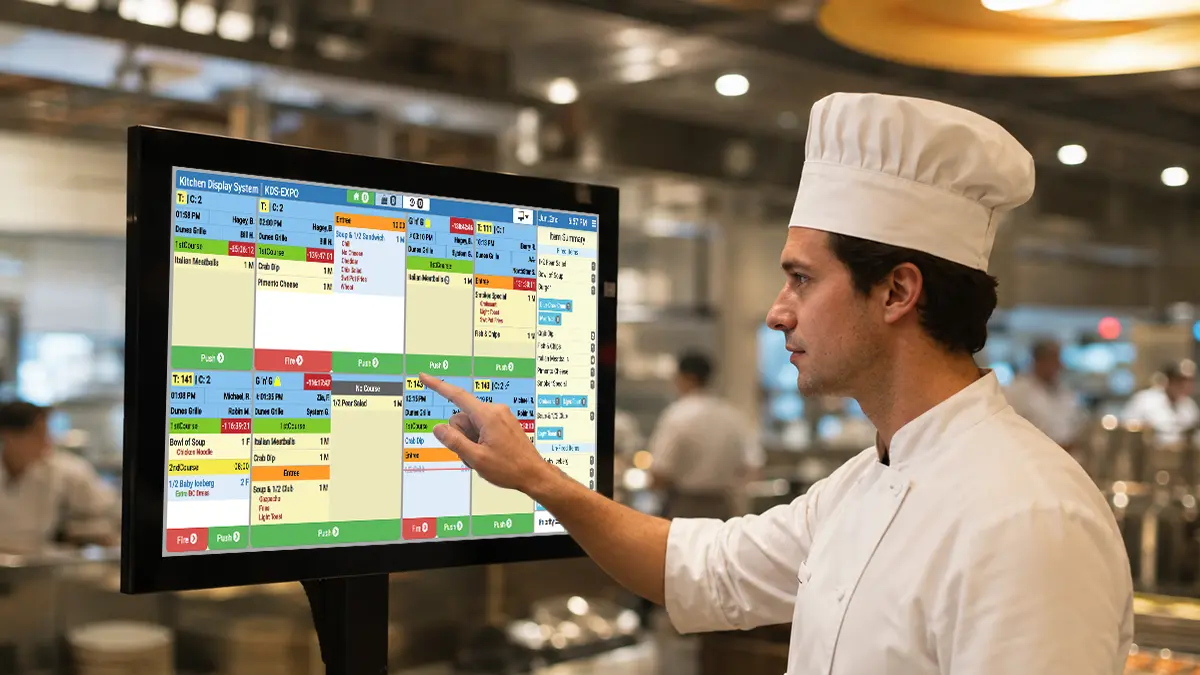
A kitchen display system is a digital screen mounted in the kitchen, connected to your POS. When a server enters an order, it shows up on the KDS instead of printing to a paper ticket. Each station sees what applies to them. Timers count how long each ticket has been open. The expo screen gives the kitchen manager a view of every active order at once.

That covers the basics. The more interesting part is what a good KDS does beyond replacing the printer. Member preferences and allergy flags travel from the POS straight to the screen without anyone writing them down again. Every stage of an order gets a timestamp. After service, you have actual data on where the kitchen slowed down, which shifts ran the longest average ticket times, and which menu items consistently held everything else up.

Paper tickets have no urgency attached to them. A KDS shows kitchen staff exactly what needs attention, in what order, without anyone having to say a word.

Where Paper Tickets Actually Break Down

The case against paper is not complicated. Tickets get wet. They fall off the rail. The handwriting on a busy night is anybody’s guess. And when a modifier or allergy note gets missed between the server and the kitchen, there is no audit trail, just a remade dish and an unhappy member.

The less obvious problem is visibility. With paper tickets, no one outside the kitchen knows where any given order stands unless they physically go back and ask. Servers lose time. Managers operate on a rough sense of how things are going rather than actual data. And after the shift, there is nothing to review because the tickets are in the trash.

For private clubs specifically, this matters more than it might at a busy restaurant. Members come back week after week. They remember the last time something went wrong. One missed allergy note is not just a service error. It is a conversation the GM has to have on Monday morning.

What a KDS Does Differently for Private Clubs?

Member Preferences reach the Kitchen

Most KDS implementations in restaurant settings handle order accuracy well but do not surface member-specific context. In a private club, that context is the whole point. When the KDS connects to the membership database, a member’s standing dietary restrictions, preferred modifications, and any notes from previous visits come through with the order automatically. The kitchen is not relying on a server to verbally relay that information, or on a handwritten note surviving the heat and noise of service.

Multi-Outlet Routing

A club is not a single dining room. Orders from the formal dining room, the bar, the pool terrace, and a halfway house halfway across the property all need to reach the right kitchen or prep station without manual rerouting. A KDS built for club operations handles that routing based on where the order originated and what is being prepared, so the grill station is not getting bar orders, and the expo screen shows a complete picture.

Stage Tracking Across the Floor

Private club kitchens often fire courses in sequence based on cues from the floor, not just time elapsed. A KDS that supports Pre-fire, Fire, Bumped, and Pushed states gives the kitchen and the front of house a common language for where each table stands. The server does not need to guess whether the entrees are close. The kitchen does not need to hold dishes because the appetizers are still on the table. Everyone is working from the same information.

Reporting That Actually Tells You Something

Average ticket time by shift. Orders that repeatedly ran long. Service periods with the highest error rates. This data exists because the KDS records every order through every stage. Clubs that use it regularly find patterns they had no way to identify before. Whether it is a particular server whose orders consistently arrive late to the kitchen, a menu item that creates a bottleneck on busy nights, or a station that needs a workflow adjustment, the data makes the problem visible before it becomes a member complaint.

The Connected F&B Picture

A KDS on its own is a useful tool. A KDS that is part of a connected F&B platform is a different thing entirely.

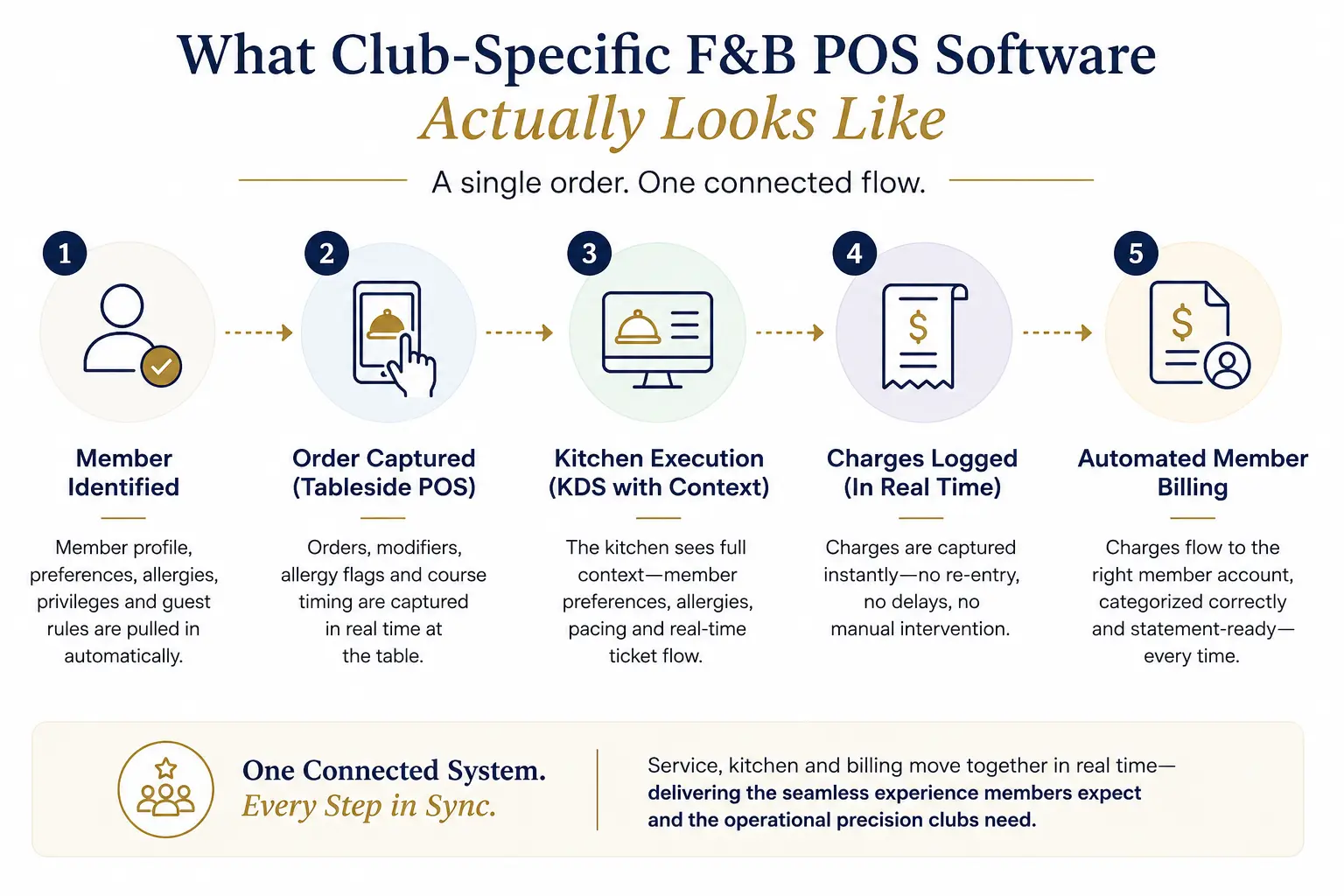
Here is how that plays out in practice. A member books a table through the club app. Their profile carries allergy information and seating preferences. When they arrive, the hostess checks them in against the live reservation view. The server takes the order on a tablet at the table, which sends it to the kitchen immediately. The KDS shows the member’s name, covers, standing preferences, and a countdown for each item. The expo screen has the full table in one view. Food arrives correctly prepared, on time, with no paper changing hands and no verbal relay between front and back of house.

That sequence depends on the membership profile, the reservation system, the tableside POS, and the KDS all drawing from the same data. When those pieces are separate systems loosely connected through an integration, you get partial information at each stage. When they are modules on the same platform, the data travels intact.

The value of a KDS is not the screen itself. It is what the screen knows. And what it knows depends entirely on what the rest of your system feeds it.

What Clubs Report After Making the Switch?

Orders to the Table Faster

When the kitchen receives orders the moment they are placed, operates to visible timers, and coordinates through an expo screen rather than shouting across stations, food gets to the table faster. Club technology data puts average order-to-delivery times 4 to 8 minutes shorter when KDS is paired with tableside ordering. For a member who wants lunch between rounds, that difference is noticeable.

Fewer Errors, Fewer Remakes

Most order errors happen at the handoff between the floor and the kitchen. Digital orders that go directly from the POS to the screen eliminate that handoff. Modifications and member preferences entered once carry through without anyone rewriting them. Clubs that switch typically see a drop in remade dishes and a drop in member complaints about incorrect orders, though the exact numbers vary by operation.

Less Food Waste

Wrong orders that go back to the kitchen rarely come out again in usable form. Fewer errors mean less waste. KDS data also helps kitchen staff manage prep more accurately during service, since they can see what is queued rather than over-preparing based on guesswork.

Staff Attention Goes to the Right Place

Kitchen staff working from a screen spend less time managing tickets and more time cooking. Servers with tableside ordering spend less time at the POS terminal and more time with members. The friction does not disappear, but it moves away from the places where it affects member experience.

Questions Worth Asking Before You Buy

Most KDS vendors will tell you their system is right for clubs. These questions tend to reveal whether that is actually true:

  • Does the KDS connect to the membership database, or does it only receive basic order data from the POS?
  • Can member preferences and allergy flags appear at the ticket level without any manual input?
  • How does the system handle multi-outlet routing across a property with several dining areas?
  • What stage management options are available, and can they be configured to match how your kitchen actually runs?
  • Is management reporting built into the same platform, or does it require pulling data from somewhere else?
  • How does the KDS connect to dining reservations, tableside POS, and mobile ordering if those are in use?
  • What happens if a screen goes down mid-service?

The answers tell you whether you are looking at a tool built for private clubs or a restaurant product being pitched into a club context.

How Northstar’s KDS Fits into the Platform

Northstar’s Kitchen Display System is part of the full F&B suite within Nexus, alongside Dining Reservations, Tableside POS, Grab N Go, and F&B POS. All of these modules run on the same platform and pull from the same membership data. That means information entered at the reservation stage is already in the system when the order is placed, and it travels to the kitchen without anyone re-entering it.

The KDS handles real-time order flow to prep and expo screens, member preference visibility at the ticket level, countdown timers based on actual menu item prep times, and stage tracking through Pre-fire, Fire, Bumped, and Pushed. The management dashboard surfaces ticket time data and bottleneck reporting after every service.

For clubs already on Northstar F&B POS, adding KDS is not a new integration. It is turning on a module within the platform already in use, with member data and order history already in place.

Want to see how Northstar’s KDS fits into your club’s F&B setup? Request a Demo.

How real-time Club Analytics & Reporting is separating high-performing clubs from the rest?

How real-time Club Analytics & Reporting is separating high-performing clubs from the rest?

There is a moment when every General Manager of the club recognizes standing in front of the board, fielding a question about last quarter’s F&B margins, and realizing the report on the table is already three days old. The numbers are right, but the world they describe has already moved on.

That moment, as frustrating as it is, is also an opportunity. It signals exactly where the gap lies between how most clubs manage information today and what modern club analytics & reporting can actually deliver.

Private clubs are not short on data. Every tee time reservation, every dinner charged to a member’s account, every event RSVP, and service interaction generates a data point. The challenge has never been a lack of information; it has been the inability to see it all in one place, in real time, in a way that actually informs decisions. That is the gap that purpose-built club analytics and reporting platforms are now closing.

Why Traditional Club Reporting Is No Longer Enough?

For years, the standard model of club reporting meant department heads compiling their own spreadsheets, submitting them upward, and waiting for someone else to reconcile the numbers. The result was a patchwork of information, some current, some not, stitched together under deadline pressure.

This approach carries a real cost. When the golf operations data lives in one system, the F&B figures in another, and the membership records somewhere else entirely. Running a club is not based on data; instead, it runs on assumptions.

Clubs that still rely on disconnected, delayed reporting find themselves perpetually reactive. Staff is reallocated after a service failure rather than before one. Pricing decisions lag behind demand shifts by a full season. At-risk members slip away before anyone notices the pattern. And board presentations become an exercise in defending stale numbers rather than debating forward strategy.

Major industry players are making efforts towards integrating club analytics & reporting as a larger part of the value proposition of the club management software in recent years, and rightly so. The market signals clearly that club leaders are no longer satisfied with siloed systems and manual exports. They expect their club management software to be the place where data becomes direction.

What Real Club Analytics Looks Like?

Northstar’s reporting & analytics was built from the ground up as a native part of the platform. And not as a third-party integration bolted on after the fact. That distinction matters far more than it might initially appear.

Because each & every Northstar module whether it is for Golf Clubs or POA/HOA Management, all modules feed a single relational database. NS Analytics has access to the full picture the moment a transaction occurs in any of the modules. There are no API delays, no data syncs to schedule, no reconciliation headaches to untangle. When a member checks in at the pro shop and books a post-round dinner; both data points get updated in the same analytics engine within seconds.

Dashboards are powered by Microsoft Power BI, embedded directly within the Northstar platform. That means the clubs’ General Manager, F&B Director, or Controller does not need a separate login, a separate subscription, or a separate tab open in the browser. The full intelligence layer lives exactly where they already work.

The club analytics & reporting environment is built for leaders, not data analysts. Customizable KPI dashboards can be tailored to individual roles, revenue per member, receivables aging, cover counts, member retention rates, F&B cost percentages and are refreshed continuously without any manual input. A report that once required half a day of staff effort is now a live view available in under a minute, on any device, from anywhere and anytime.

Analytics Built for Every Leader in the Room

One of the most important distinctions in private club analytics is recognizing that a great dashboard for the General Manager is not a great dashboard for the Controller, and neither of those is what the Board needs on the first of the month.

NS Analytics addresses this by surfacing the right club performance data for each decision-maker at the right level in detail.

The General Manager gets a club-wide operational snapshot: total revenue across all departments, member activity trends, event execution status, and staff performance indicators all visible in under two minutes before the first meeting of the day.

The Board gets strategic clarity: year-over-year comparisons, membership retention trend lines, capital project tracking, and F&B profitability summaries presented in boardroom-ready visual formats. The conversation shifts from “what are the numbers?” to “what is our strategy?”

The F&B Manager gets operational precision such as real-time food cost percentages, top-performing menu items by cover and revenue, kitchen throughput monitoring, and reservation source breakdowns that reveal exactly where covers are coming from i.e., app, website, walk-in, or event.

The Controller gets financial integrity from POS to ledger integration that eliminates manual data entry, vendor invoice reconciliation matched against purchase orders, and budget vs actual variance reporting across all departments at a glance.

This is what purpose-built club analytics and reporting actually means. It’s not just one dashboard that tries to serve everyone generically, but a layered intelligence environment that speaks the language of each role.

Where Analytics Translates Directly to Member Value

Here is the part that top-tier club management understands intuitively but does not always articulate clearly. Club analytics is not just an internal efficiency tool. Every operational insight that flows through the leadership team ultimately shapes the member experience.

Consider what becomes possible when member behavior data is genuinely accessible. A member who has not dined in 60 days no longer goes unnoticed until they submit a resignation letter. Instead, an early-detection dashboard flags the pattern, triggers a personalized outreach moment. And gives the team the context to invite that member back with relevance; perhaps a dinner invitation featuring their preferred menu items, or a reminder about an upcoming event aligned with their history.

This is not personalization by guesswork. It is personalization powered by real purchase history, visit frequency data, spend patterns across departments, and engagement trends that NS Analytics surfaces at the point of service. A server greeting a member at the table can see dietary preferences, past orders, and service notes and deliver the kind of anticipatory hospitality that members associate with the very best clubs in the world.

The member insights that analytics makes visible also feed the retention strategy in real time. Continuous monitoring of engagement metrics & proactive outreach replaces reactive damage control. Win-back campaigns become targeted and timely rather than generic and late. Interest-based promotions drive event attendance because they are grounded in actual member behavior, not assumptions about segments.

The result is not just operational efficiency for leadership. It is a membership experience that feels more attentive, more personal, and more worth belonging to. This is ultimately the measure against which every club investment should be evaluated.

The Competitive Case for Smarter Club Reporting

The clubs making the clearest gains in member satisfaction and operational performance today share one common aspect. They have stopped treating club reporting as a back-office function and started treating it as a strategic capability.

NS Analytics & Reporting is Northstar’s answer to that shift. A club management software environment where data does not sit in silos waiting to be reconciled. But flows continuously into the hands of the people making decisions. Where the Monday morning operations review is a real-time conversation rather than a stale summary. Where the board has strategic confidence, not just static numbers.

Club already generates the data it needs to operate at a higher level. The question is whether the current systems are giving club leaders the visibility to use it.

See NS Analytics in action — Request a Demo

Why Club Accounting Software Real-Time Data is your Greatest Asset?

Why Club Accounting Software Real-Time Data is Your Greatest Asset

The private club industry moves fast. From a sudden spike in golf cart rentals on a beautiful Saturday to unexpected catering cancellations mid-week, the operational landscape is constantly shifting. Yet, many clubs are still making mission-critical decisions based on what we call “lagging data.”

A typical club might only see its full financial picture – the Profit & Loss statement, the final Accounts Receivable tally—a week or more into the next month. This reliance on historical records forces management to be reactive rather than proactive. When you only know about a cash flow problem or a revenue miss after the period is closed, you’ve lost valuable time.

The shift to modern club accounting software isn’t just about moving your books online. It’s about transforming your finance system from a historical record-keeper into a proactive management tool. Your greatest asset isn’t just the data—it’s the real-time access to it.

The End of “Month-End” Shock

The first major benefit of next-generation club accounting is the elimination of the month-end surprise.

If you’ve ever had to chase down discrepancies or wait anxiously for the final numbers, you know the pain of month-end reconciliation. Traditional systems require adjustments, revenue capture, and expense accruals to be logged manually in batches.

Real-time club accounting turns your General Ledger into a live dashboard. By automating posts the moment a transaction occurs, you get a transparent look at your club’s financial health in seconds. It’s a smarter way to ensure your books stay balanced and your integrity stays intact.

This automated, robust accounting foundation gives your leadership and finance committees the confidence they need to make decisions immediately, rather than waiting for formal sign-off on last month’s numbers.

The Power of the Integrated Ecosystem

A core weakness of generic or small-business accounting solutions is the dreaded “integration gap.”

If your Point-of-Sale (POS) system can’t automatically speak to your accounting software, your team is left manually exporting and importing files—a guaranteed recipe for errors and delays. This fragmentation makes it nearly impossible to get granular insights. How much revenue did the tennis pro shop really generate today? Did that special-event catering charge flow to the correct member profile?

Premier club accounting software operates as a single, unified ecosystem. The accounting module is the central hub, not a silo. Every transaction—from a dinner charge in the dining room to a direct auto-draft for membership dues—flows instantly and accurately into the ledger and the member’s profile.

This full integration across all operating modules is the key to unlocking profitability analysis. By unifying your revenue streams into a single source of truth, you can track spending trends, monitor departmental profitability, and see the complete financial impact of every member interaction.

Dynamic Reporting for Decision-Makers

Even the fastest data is useless if it’s trapped in a complicated interface or requires an accountant to decipher. Today’s club leadership needs financial data delivered in a format that meets their specific needs.

Your Board needs a high-level, compliant Profit & Loss report. Food & Beverage Manager needs a quick, weekly spend analysis. And General Manager needs an immediate view of daily cash flow. Static, generic reports simply don’t cut it.

The best club accounting software provides dynamic reporting tools. These solutions empower your finance team to design, review, and securely publish highly customized financial reports in minutes, not hours. Imagine eliminating those time-consuming manual report compilations. You need a system that offers a user-friendly, Excel-like designer that allows staff to access and distribute real-time data quickly and securely, putting the necessary insights directly onto the desktops of those who need them most.

Making the Shift from Record-Keeper to Strategist

Ultimately, the goal of transitioning to modern club accounting software is to move your club’s entire management team from reacting to past events to proactively shaping the future. Real-time data minimizes risk, optimizes revenue capture, and provides the foundation for strategic investment.

When evaluating your club’s technology, don’t just ask what the system records. Ask when and how it allows you to access and analyze that information. The ability to trust your numbers and make an immediate, data-driven decision is the mark of a forward-thinking, thriving club.

Learn more about how premier club accounting software can transform your finance system from a historical record-keeper into a proactive management tool. Request a demo of the Northstar complete club management software solution today.

Transforming Operations with Embedded Insights in Club Management Software

Transforming Operations with Embedded Insights in Club Management Software

Most legacy management software systems are designed as “data dumps”—systems that collect information but require a manual, Herculean effort to extract anything meaningful.

The true evolution of club management isn’t found in simply having a reporting module. It’s found in embedded insights. It’s the shift from having to go find data to having data guide your workflow.

Systems like Northstar have set the gold standard for this philosophy. While they offer a world-class dedicated analytics engine (NS Analytics in Northstar’s case), they’ve taken it a step further by weaving analytics capabilities directly into the fabric of all the club management software modules.

The Macro vs. The Micro: A Dual Approach to Data

To understand why this matters, we need to look at how a modern club actually functions. There are two levels of decision-making:

  1. Macro Decisions: These are high-level, cross-departmental insights often powered by sophisticated tools (such as NS Analytics). This is where a GM looks at whether a decline in golf rounds is directly correlating to a dip in F&B covers, or how a specific club membership management demographic is driving overall club profitability.
  2. Micro Decisions: These are the “on-the-floor” insights. This is the Head Pro looking at the tee sheet to see real-time utilization, or the F&B Manager seeing live table turn-times during a busy Friday night.

By building analytics into each module, Northstar ensures that department heads don’t have to leave their primary workspace to understand their performance.

Analytics in Action: Module-by-Module Excellence

When analytics are embedded, every department shifts from being reactive to being proactive. Here is how that looks across a club’s operations using the Northstar Club Management Software system as an example:

Membership & CRM: Predicting the Resignation

Most clubs only realize a member is unhappy when the resignation letter arrives. With embedded analytics in the Membership module, staff can see real-time engagement scores and spending habits directly on the member profile. If a “Gold Level” member hasn’t booked a tee time or dined at the club in 45 days, the system flags them. This allows the membership director to reach out and re-engage the member before they’ve mentally checked out.

Food & Beverage: Optimizing the Floor

In the POS module, analytics shouldn’t be limited to a “Z-Out” report at the end of the night. It should be a live pulse of the room. Northstar’s embedded capabilities enable managers to monitor kitchen performance and seat turnover on the fly. By analyzing menu item popularity and margins in real time, clubs can adjust daily specials or staffing levels based on actual demand, ensuring every shift is both profitable and efficient.

Golf & Tee Times: Mastering the Course

The golf course is a club’s most valuable—and expensive—asset. Embedded analytics within the Tee Time module provide live utilization data and “pace of play” metrics. By visualizing course usage through real-time metrics, the Head Pro can identify underutilized windows and implement dynamic strategies to maximize capacity.

Accounting & Finance: Total Transparency

Financial clarity is the bedrock of board confidence. Rather than waiting for month-end reports, Northstar’s accounting module features real-time aging reports and automated budget-vs-actual visuals within the General Ledger. This eliminates manual reconciliation and provides instant transparency for the Finance Committee.

The “Single Source of Truth” Advantage

The reason Northstar can offer such deeply embedded insights is its single-database architecture. In siloed systems where the Pro Shop software doesn’t talk to the Accounting software, there is a natural data lag.

When your system is truly unified, a member’s purchase of a sleeve of balls in the Pro Shop instantly updates:

  • The inventory levels in the Golf module.
  • The member’s spending profile in the CRM.
  • The daily revenue totals in the Accounting module.
  • The high-level trend charts in NS Analytics.

Data as Your Most Valuable Member

The goal of country club management software isn’t just to run the club. It’s to provide the insights necessary to evolve the club. By embedding analytics into every module, Northstar empowers every employee, from the server to the General Manager, to make informed, data-driven decisions in real-time.

In the modern club, intuition is good, but embedded insights are better. It’s time to stop hunting for data and start letting your data work for you.

Ready to transform your operations? Request a demo today and explore Northstar’s Analytics and Reporting solutions to see how embedded insights can change the way you manage your club.

Transform the Clubs’ Financial Challenges into Operational Excellence

Transform the Clubs’ Financial Challenges into Operational Excellence

As we enter 2026, expectations start afresh with a fresh year. Lifestyle is an evergreen aspect that defines the core point of human living. Clubs take the centre stage in elevating the lifestyle. Regardless of the hospitality the clubs set to provide, the operational hurdles due to fragmented systems put the services at stake, ultimately affecting the member experience. The key issues faced by the clubs in management are the financial friction, troubling members with varied payments for the clubs.

In this regard, the earlier monetary issues are the beacons of innovation & growth towards modernization. At this point, it’s obligatory for the clubs to resolve the issues through navigating strategic shifts, not just for the resolution of the toughest problems but also to sustain the club’s success for the long future. Let’s check out the key issues clubs usually face and how Northstar’s Integrated Club Management Software for Country Clubs & Private Clubs plays a vital role in providing the best club management solutions.      

Major financial challenges for private clubs include over-reliance on dues, unpredictable member counts, and pointless operations in areas like food and beverage, accounting, and events. Northstar’s integrated club management software addresses these by providing an all-in-one platform that streamlines billing, automates financial processes, and offers data-driven insights through analytics to help balance revenue streams and improve operational efficiency.  

The Core Financial Challenges of Clubs:

To solve operational drag, we must first understand the specific financial pressures facing private clubs today:

  • Over-reliance on Membership Dues: Depending solely on dues leaves clubs vulnerable to economic shifts or sudden member attrition. Multiple income streams are essential for a club’s success.
  • Operational Inefficiencies: Manual workflows in billing, event planning, and F&B lead to expensive errors and drain resources, leading to an operational burden.
  • Limited Financial Visibility: Without real-time data, leadership struggles to make proactive, informed strategic decisions.
  • Member Churn: High attrition rates can outpace retention efforts due to the expenses involved in the continuous member attrition processes.
  • Lack of Revenue Diversification: Failing to optimize non-dues revenue streams makes it difficult to maintain stability during market downturns. 

How Northstar Bridges the Gap

Northstar’s integrated Club Management Software is designed to replace fragmented systems with a single, powerful ecosystem that streamlines the finances moving throughout the entire club.

  • Unified accounting: Automated billing, secured payments (ACH/Credit Card) with Northstar’s Accounting module eliminates manual errors. Thus, giving a clearer picture of the monetary flow, enabling the utilization of the financials efficiently.
  • Revenue Diversification: Golf, Food & Beverage, events, and all the activities of the club are put together into a single view, helping management optimize profit centers beyond membership dues.
  • Streamlined Operations: Enhances every operation of the club, from tee-time bookings, event reservations, shopping at the club, to Food & Beverage order-to-pay flows. And boosts both the club’s operational efficiency and member satisfaction.
  • Data and analytics: Leverages Power BI to deliver real-time dashboards and analytics, allowing clubs to monitor dues-to-revenue ratios and focus on the club’s financial health promptly.
  • Improved member management: Features like self-service member portals, automated renewals, and event management help retain members and make the club more appealing to new ones. Self-service portals and automated renewals simplify the member journey and improve long-term retention.
  • Instant feedback: With Happometer – a member happiness measuring tool, clubs can measure member satisfaction instantly. Ensuring quick resolution of the member issues prior to the dissatisfaction leading to member churn.

Unified Accounting Solution for Clubs by Northstar

Northstar, providing a unified cloud-based accounting solution for private clubs, communities, and resorts, is a specialized software system. That combines core accounting functions with club-specific management features, such as membership and event management, into a single platform. The system integrates financial data directly from operational departments (such as F&B, golf, and point-of-sale) into the General Ledger in real-time. 

Key unified accounting solutions and modules include:

  • Accounts Payable (AP) & Purchasing: Streamlines vendor management, enabling electronic payments, invoice processing, and, through partnerships like AvidXchange, automates the entire AP workflow to eliminate manual data entry.
  • Accounts Receivable (AR) & Member Billing: A robust module that manages member accounts, including automated dues billing, split receivables, member minimums, and finance charges.
  • General Ledger (GL) & Reporting: A central hub that allows for custom journal templates, recurring/allocating journals, and virtual accounts. And built-in budgeting tools that can import data from spreadsheets.
  • Real-time Inventory & POS Integration: Inventory and Point-of-Sale data flow directly to the accounting system. Thus, allowing automatic invoice generation upon receiving inventory and an immediate update of financial records.
  • Analytics & Reporting: Uses Microsoft Power BI to deliver real-time dashboards for tracking KPIs, financial trends, and operational performance.
  • Timekeeping & Payroll Integration: A module for tracking employee hours, overtime, and shift premiums, with the capability to interface with most major payroll providers.
  • Audit & Compliance: Features built-in bank account reconciliation tools and maintains PCI compliance for secure payment processing. 

These tools are designed to work across the Northstar Nexus suite. Which connects the back office, member app, member website, and employee apps into a single platform for full operational visibility. 

How do clubs benefit from Northstar’s Accounting Module?

Northstar’s Club Accounting is a single-database architecture that unifies back-office financials with front-end operations like POS and reservations. This “single source of financial data” eliminates the need for manual data syncing between departments. 

Key Benefits for Private & Country Clubs

  • Operational Efficiency: Automates routine tasks like membership renewals, failed-payment recovery, and invoice processing, significantly reducing administrative manual work.
  • Real-Time Financial Visibility: Because every transaction from a pro shop sale to a dining reservation updates the General Ledger instantly, leadership can make informed decisions based on current data.
  • Enhanced Member Experience: Members can easily view statements and track preferences. And pay dues or guest fees via a branded mobile app or secure Online Member Portal.
  • Reduced Errors & Fraud: Direct integration with partners like AvidXchange for accounts payable enables paperless, electronic vendor payments, reducing manual data entry errors and fraud risk.
  • Integrated Inventory Management: Enables a seamless transition from inventory receiving to the General Ledger. This ensures that stock levels and associated costs are always accurate.
  • Advanced Reporting: Finance managers can use Power BI-driven dashboards to track KPIs. And compare revenue across various departments (e.g., F&B vs. payroll costs) in real-time. 

Moving from fragmented systems to a consolidated platform. Many clubs have reported a shift from “chaos” to a unified environment. Hence, staff spend less time on data entry and more on higher-value member services. Here’s what Grove XXIII Club has to say about Northstar – 

“The Northstar software really has a lot of parts to it that actually all integrate very well together. So it’s more of a one-stop shop where you can get all of your POS information, your accounting information. We have cottages with rooms, and everything integrates really well and produces great financial reports.” – Kerri Milan, CFO, Grove XXIII Club

How is Northstar a value-based alternative to its competitors in the Market?

While the Northstar’s competitors are also major industry players, Northstar’s “unique” standing in the market is often positioned on specific attributes such as –  

Single Source of Financial Truth 

Unlike systems that rely on separate modules “talking” to each other, Northstar’s club accounting is natively unified with 

  • Real-Time Data Flow: Transactions from Food & Beverage (F&B), Pro Shop, or member dues flow instantly into the General Ledger without manual batching or export/import processes.
  • Unified Member Records: All financial history from a single dinner reservation to annual dues is housed in one record, providing a 360-degree view of member spending and financial health. 

Deep Integration with Modern BI

Northstar leverages Power BI within its analytics module to create real-time financial dashboards. This ensures CFOs and Controllers to track KPIs and trends across all departments (Golf, Spa, F&B) in a single visual interface. Whereas some competitors may require external reporting tools or custom exports to achieve the same level of granular insight. 

Automated Accounts Payable (AP)

Northstar offers a specialized integration to automate the back-office AP process. This allows electronic invoice intake, routing, and approvals directly within the workflow, reducing manual data entry errors and fraud risk. 

Are you looking to empower the Clubs for 2026?

Don’t let financial complexity hinder the club’s potential. By centralizing the club’s operations with Northstar, gain a total financial picture that turns data into actionable growth. Request Demo and ensure the club’s financial control with a complete club management software. 

The ROI of Investing in the Modern Golf Club Management Software

The ROI of Investing in Modern Golf Club Management Software

The quintessential image of a golf club’s front desk might be a leather-bound logbook and a phone ringing off the hook. While charmingly traditional, this scene represents a business model stuck in the past. 

In today’s competitive market, manual processes and fragmented software systems are not just inefficient—they are a significant drain on resources and a direct hindrance to profitability. From reconciling data between your pro shop POS, your tee sheet, and your membership database to manually updating customer records, these manual tasks bleed time and money. 

Investing in a modern, all-in-one golf club management software is not merely an expense. It is a strategic investment with a measurable and significant return on investment (ROI).

The Core Problem: Where Money Leaks 

Labor Inefficiencies and Cost Overruns

Three key areas of inefficiency often undercut a golf club’s profitability. The first and most significant is labor. According to a Golf.com article citing a GCSAA survey, a golf course’s labor is its most significant expense, often making up more than half of the total budget (around 56.74% on average). This statistic highlights the critical need to optimize staff time. 

When employees are tied up with repetitive tasks like booking tee times, managing memberships, or manually re-entering data between disparate systems, they can’t focus on what truly matters: providing an exceptional experience for your golfers. 

The good news is that technology can drastically reduce this burden. The Golf Course Superintendents Association of America (GCSAA) predicts a 25% savings in labor costs as more automation becomes available, a testament to the power of a streamlined system.

Static Tee Sheet Pricing and Lost Revenue

Beyond labor, money also leaks through inefficient tee sheet and pricing strategies. Without a unified system and real-time data, courses often rely on static pricing models. This means you’re likely leaving money on the table by under-pricing popular tee times on a sunny Saturday and failing to attract players to less-desirable slots on a slow Tuesday. A modern solution eliminates this guesswork by implementing dynamic pricing based on real-time demand, weather, and historical data, ensuring you maximize revenue from every single tee time.

Fragmented Member Communication and Data

Finally, managing member communication and engagement becomes a chore when data is scattered across multiple platforms. Trying to create a targeted marketing campaign or a personalized member offer is nearly impossible without a single, comprehensive view of your customer. Fragmented systems prevent you from truly understanding your members’ habits and preferences, leading to generic and often ineffective communication.

Improving ROI with a Comprehensive Software Solution

Automation and Efficiency Gains 

The solution to these challenges is a single, powerful software platform that connects every aspect of your club. By moving away from manual and/or fragmented systems, you can achieve a level of operational efficiency and insight that was previously unattainable.

A comprehensive solution automates a wide range of administrative tasks, from online booking and mobile check-in to automated billing and email marketing. This frees your staff to focus on high-value interactions. The tangible savings are real: a case study from Tagmarshal reports that one course saved $25,000 in its first season by using technology to proactively manage the pace of play, which reduced the need for player assistants. This demonstrates how a single technology can impact multiple aspects of your budget, from payroll to enhanced customer experience.

Unified Data for Smarter Decision-Making

Furthermore, a comprehensive modern software solution like the Northstar system provides a “single source of truth” for all club operations, including the pro shop, restaurant, and events. This rich, real-time data allows you to make smarter, data-driven decisions about everything from staffing levels to inventory management. Instead of relying on gut feelings, you can use hard numbers to optimize your business.

Enhanced Member Experience and Engagement

Perhaps most importantly, a comprehensive solution elevates the golfer experience. When your operations run smoothly, your staff can focus on providing exceptional service. Features like online booking, GPS course tracking, and digital scorecards create a modern, seamless experience. That increases player loyalty and return visits. 

By using a solution built on a single database like Northstar’s; the club can also gain a 360-degree view of how each member interacts with the entire facility. This allows the club to anticipate the members’ needs; whether it’s offering a personalized pro shop discount after a round or a special on their favorite beverage at the clubhouse. Hence, delivering more value and strengthening the relationship.

The Tangible ROI: Putting It All Together

The return on your investment in a comprehensive modern golf club management software system is multifaceted and undeniable. It includes:

  • Reduced Labor Costs: Automating tasks frees up valuable staff time, leading to significant payroll savings and a more engaged team.
  • Maximized Revenue: Dynamic pricing and an optimized tee sheet ensure you’re making the most money from your most valuable asset—your course.
  • Operational Efficiency: A centralized database and real-time reporting reduce administrative waste and prevent costly errors.

Ultimately, the ROI isn’t just about saving money. It’s about building a more resilient, profitable, and future-proof business. A modern software platform like Northstar’s is the foundation for a club that not only survives but thrives in a competitive and ever-changing market.

Ready to see what a comprehensive golf course management software solution can do for your club? Just give us a call at +1-678-389-4300.  Or, request a demo on our site. And let the Northstar system help you maximize the ROI at your club.

Why Integrated Private Club Management Software is Key to Club’s Future?

Why Integrated Private Club Management Software is Key to Club's Future

Imagine a busy Saturday at your club. Members are flowing in, events are underway, and the dining room is bustling. Now, imagine the chaos behind the scenes if every department operates independently – separate spreadsheets for membership, one system for point-of-sale (POS), another for event bookings, and yet another for accounting. The result? Frustration, inefficiency, and a less-than-stellar experience for everyone involved.

In today’s competitive landscape, it’s paramount for clubs to deliver an exceptional, seamless experience that keeps members engaged and loyal. This demands a modern approach to management.

Integrated private club management software is more than just a technological upgrade. It’s a foundational necessity that centralizes operations, streamlines processes, and ultimately unlocks the club’s potential. 

The Challenges of Disjointed Systems

Operating with a patchwork of disparate systems might seem manageable on the surface, but it quickly leads to a host of hidden inefficiencies and frustrations that undermine the club’s potential.

Inefficiency and wasted time 

One of the most immediate problems with fragmented systems is the sheer amount of wasted time and effort. Consider Mrs. Henderson, a long-standing member, who calls to update her mailing address. The membership coordinator dutifully updates it in the membership database. However, because the dining room POS system and the events booking platform are separate, unconnected entities, they retain her old address. When the club sends out its monthly dining specials or an invitation to the annual gala, Mrs. Henderson receives them at her old address, leading to confusion, missed communications, and ultimately, a feeling of being overlooked. Staff then waste valuable time manually reconciling these discrepancies or tracking down outdated information.

Poor member experience 

Inconsistent data and a lack of a unified member view directly translate to frustrating interactions for the members. Mr. Davies tries to book a tennis court online, but the system he’s using doesn’t recognize his membership tier, forcing him to call the front desk for clarification. Later that day, he dines at the club, and the server, using a separate system, isn’t aware of his specific dietary restrictions, which he had previously noted on his membership application. These small, yet significant, disconnects erode the premium, personalized experience members expect from their private club.

Limited insights and reporting 

When data is siloed across various departments and systems, generating comprehensive reports and gaining strategic insights becomes a monumental task, if not impossible. 

Imagine a General Manager who wants to understand the average spending per member across all departments – golf, dining, spa, and events – to identify key revenue drivers and opportunities for cross-promotion. Because each department uses its proprietary software, the data exists in separate spreadsheets or isolated reports. Aggregating this information requires hours of manual compilation, often resulting in outdated or incomplete insights, severely hindering the ability to make data-driven strategic decisions.

Staff frustration and turnover 

Ultimately, the burden of disjointed systems falls heavily on the club staff. The events team spends countless hours manually cross-referencing attendee lists for the upcoming charity gala with membership records to ensure accurate billing and dietary preferences are met. This tedious, repetitive work takes away from their ability to focus on event quality, creative planning, and direct member engagement. This administrative burden leads to frustration and a sense of being overwhelmed by inefficient processes, ultimately impacting overall job satisfaction.

The Power of Integration

An integrated private club membership management system acts as a central nervous system for the entire club, connecting every facet of the operations. This seamless flow of information transforms the member experience, optimizes operational efficiency, and provides invaluable insights.

Seamless interactions 

When a member checks in for their tee time, the pro shop staff, using an integrated system like Northstar’s, immediately sees the member’s recent purchases. This allows the staff to offer a personalized upsell, making the member feel genuinely valued and understood.

Empowered self-service 

Picture the member logging in to the club through Northstar’s ClubNow app on their smartphone. In one seamless experience, they can update their payment method, register their family for the upcoming holiday gala, view their statement for the last month, and even book a massage at the spa – all without needing to call or visit the club.

Consistency across touchpoints 

A new member, Mr. Chen, joins the club. His membership type automatically grants him access to specific facilities and discounts. When he visits the dining room, the integrated POS system instantly recognizes his membership, eliminating the need for staff to verify anything manually. This ensures a smooth, consistent, and error-free experience every time.

Centralized data & automated workflows 

An integrated system like Northstar’s creates a single source of truth for all data. When a prospective member completes an online application, her profile is automatically created in the system. The membership fees are billed on the correct cycle, a personalized welcome email is triggered, and her access card is activated – all without any manual intervention from staff. This frees up valuable administrative time, allowing the team to focus on more strategic and member-facing activities.

Reduced errors & streamlined staff operations 

When a member charges a meal to his account at the dining room, the integrated POS system immediately posts the charge to his member statement and updates his financial ledger in real-time. This eliminates billing disputes, significantly reduces end-of-month reconciliation headaches, and allows staff to spend more time engaging with members rather than chasing down payment issues.

Real-time financial data & comprehensive analytics 

The General Manager pulls up a customized dashboard on a Tuesday morning. It instantly displays the total revenue from golf, dining, and events for the previous week, broken down by membership type and specific amenities. Seeing that junior golf clinics are underperforming, the manager can immediately launch a targeted promotion, making data-driven adjustments in real-time to optimize revenue.

Accurate billing & payments 

With a solution like Northstar’s, member statements are automatically generated and sent out on the first of each month, detailing all charges from dining, pro shop, and events. Members can securely view and pay their bills online through the member portal, which significantly reduces the administrative burden of collections and improves the club’s financial liquidity.

Efficient facility scheduling 

A member books a tennis court for 3 PM. The integrated system automatically schedules the court, sends a confirmation email to the member, and prevents any double-bookings. Simultaneously, it provides the tennis pro with a real-time schedule of court usage, enabling better planning of lessons and maintenance, and ensuring optimal use of facilities.

Integrated inventory management 

When a bartender scans a bottle of premium wine at the bar, the system automatically deducts it from inventory, updates the cost of goods sold, and flags when the stock level falls below a pre-set reorder point. This prevents costly stockouts, reduces waste, and ensures accurate profitability reporting for food and beverage operations.

Data security & compliance 

The club undergoes its annual PCI DSS compliance audit for payment processing. Because all financial transactions are handled through a single, secure, and compliant integrated system, the audit process is smooth and efficient. This demonstrates the club’s commitment to protecting member data, helping to avoid potentially costly penalties and reputational damage.

Why Integrated Systems Are the Future for Private Clubs 

Fragmented systems are a relic of the past, creating friction for both members and staff, and hindering club’s ability to adapt and grow.

Integrated private club management software is the essential backbone for a modern, thriving club. By centralizing data, automating processes, and providing deep, actionable insights, it empowers clubs to enhance member satisfaction, optimize operations, and make strategic decisions that drive long-term success.

If you would like to learn more, give us a call at  +1 678 389-4300. Or, request a demo. And discover how an integrated private club management software can help unlock the potential of the club.