






Expert Voice

Our Blogs

Stay updated with the latest news, insights, and trends from our team. Our blog is a space where we share valuable tips, industry updates, and expert advice to help you stay informed and inspired. Whether you're looking to learn something new or keep up with what's happening, you'll find fresh and engaging content right here.

Transform the Clubs’ Financial Challenges into Operational Excellence

Transform the Clubs’ Financial Challenges into Operational Excellence

As we enter 2026, expectations start afresh with a fresh year. Lifestyle is an evergreen aspect that defines the core point of human living. Clubs take the centre stage in elevating the lifestyle. Regardless of the hospitality the clubs set to provide, the operational hurdles due to fragmented systems put the services at stake, ultimately affecting the member experience. The key issues faced by the clubs in management are the financial friction, troubling members with varied payments for the clubs.

In this regard, the earlier monetary issues are the beacons of innovation & growth towards modernization. At this point, it’s obligatory for the clubs to resolve the issues through navigating strategic shifts, not just for the resolution of the toughest problems but also to sustain the club’s success for the long future. Let’s check out the key issues clubs usually face and how Northstar’s Integrated Club Management Software for Country Clubs & Private Clubs plays a vital role in providing the best club management solutions.      

Major financial challenges for private clubs include over-reliance on dues, unpredictable member counts, and pointless operations in areas like food and beverage, accounting, and events. Northstar’s integrated club management software addresses these by providing an all-in-one platform that streamlines billing, automates financial processes, and offers data-driven insights through analytics to help balance revenue streams and improve operational efficiency.  

The Core Financial Challenges of Clubs:

To solve operational drag, we must first understand the specific financial pressures facing private clubs today:

  • Over-reliance on Membership Dues: Depending solely on dues leaves clubs vulnerable to economic shifts or sudden member attrition. Multiple income streams are essential for a club’s success.
  • Operational Inefficiencies: Manual workflows in billing, event planning, and F&B lead to expensive errors and drain resources, leading to an operational burden.
  • Limited Financial Visibility: Without real-time data, leadership struggles to make proactive, informed strategic decisions.
  • Member Churn: High attrition rates can outpace retention efforts due to the expenses involved in the continuous member attrition processes.
  • Lack of Revenue Diversification: Failing to optimize non-dues revenue streams makes it difficult to maintain stability during market downturns. 

How Northstar Bridges the Gap

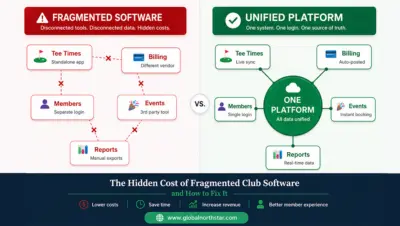
Northstar’s integrated Club Management Software is designed to replace fragmented systems with a single, powerful ecosystem that streamlines the finances moving throughout the entire club.

  • Unified accounting: Automated billing, secured payments (ACH/Credit Card) with Northstar’s Accounting module eliminates manual errors. Thus, giving a clearer picture of the monetary flow, enabling the utilization of the financials efficiently.
  • Revenue Diversification: Golf, Food & Beverage, events, and all the activities of the club are put together into a single view, helping management optimize profit centers beyond membership dues.
  • Streamlined Operations: Enhances every operation of the club, from tee-time bookings, event reservations, shopping at the club, to Food & Beverage order-to-pay flows. And boosts both the club’s operational efficiency and member satisfaction.
  • Data and analytics: Leverages Power BI to deliver real-time dashboards and analytics, allowing clubs to monitor dues-to-revenue ratios and focus on the club’s financial health promptly.
  • Improved member management: Features like self-service member portals, automated renewals, and event management help retain members and make the club more appealing to new ones. Self-service portals and automated renewals simplify the member journey and improve long-term retention.
  • Instant feedback: With Happometer – a member happiness measuring tool, clubs can measure member satisfaction instantly. Ensuring quick resolution of the member issues prior to the dissatisfaction leading to member churn.

Unified Accounting Solution for Clubs by Northstar

Northstar, providing a unified cloud-based accounting solution for private clubs, communities, and resorts, is a specialized software system. That combines core accounting functions with club-specific management features, such as membership and event management, into a single platform. The system integrates financial data directly from operational departments (such as F&B, golf, and point-of-sale) into the General Ledger in real-time. 

Key unified accounting solutions and modules include:

  • Accounts Payable (AP) & Purchasing: Streamlines vendor management, enabling electronic payments, invoice processing, and, through partnerships like AvidXchange, automates the entire AP workflow to eliminate manual data entry.
  • Accounts Receivable (AR) & Member Billing: A robust module that manages member accounts, including automated dues billing, split receivables, member minimums, and finance charges.
  • General Ledger (GL) & Reporting: A central hub that allows for custom journal templates, recurring/allocating journals, and virtual accounts. And built-in budgeting tools that can import data from spreadsheets.
  • Real-time Inventory & POS Integration: Inventory and Point-of-Sale data flow directly to the accounting system. Thus, allowing automatic invoice generation upon receiving inventory and an immediate update of financial records.
  • Analytics & Reporting: Uses Microsoft Power BI to deliver real-time dashboards for tracking KPIs, financial trends, and operational performance.
  • Timekeeping & Payroll Integration: A module for tracking employee hours, overtime, and shift premiums, with the capability to interface with most major payroll providers.
  • Audit & Compliance: Features built-in bank reconciliation tools and maintains PCI compliance for secure payment processing. 

These tools are designed to work across the Northstar Nexus suite. Which connects the back office, member app, member website, and employee apps into a single platform for full operational visibility. 

How do clubs benefit from Northstar’s Accounting Module?

Northstar’s Club Accounting is a single-database architecture that unifies back-office financials with front-end operations like POS and reservations. This “single source of financial data” eliminates the need for manual data syncing between departments. 

Key Benefits for Private & Country Clubs

  • Operational Efficiency: Automates routine tasks like membership renewals, failed-payment recovery, and invoice processing, significantly reducing administrative manual work.
  • Real-Time Financial Visibility: Because every transaction from a pro shop sale to a dining reservation updates the General Ledger instantly, leadership can make informed decisions based on current data.
  • Enhanced Member Experience: Members can easily view statements and track preferences. And pay dues or guest fees via a branded mobile app or secure Online Member Portal.
  • Reduced Errors & Fraud: Direct integration with partners like AvidXchange for accounts payable enables paperless, electronic vendor payments, reducing manual data entry errors and fraud risk.
  • Integrated Inventory Management: Enables a seamless transition from inventory receiving to the General Ledger. This ensures that stock levels and associated costs are always accurate.
  • Advanced Reporting: Finance managers can use Power BI-driven dashboards to track KPIs. And compare revenue across various departments (e.g., F&B vs. payroll costs) in real-time. 

Moving from fragmented systems to a consolidated platform. Many clubs have reported a shift from “chaos” to a unified environment. Hence, staff spend less time on data entry and more on higher-value member services. Here’s what Grove XXIII Club has to say about Northstar – 

“The Northstar software really has a lot of parts to it that actually all integrate very well together. So it’s more of a one-stop shop where you can get all of your POS information, your accounting information. We have cottages with rooms, and everything integrates really well and produces great financial reports.” – Kerri Milan, CFO, Grove XXIII Club

How is Northstar a value-based alternative to its competitors in the Market?

While the Northstar’s competitors are also major industry players, Northstar’s “unique” standing in the market is often positioned on specific attributes such as –  

Single Source of Financial Truth 

Unlike systems that rely on separate modules “talking” to each other, Northstar’s club accounting is natively unified with 

  • Real-Time Data Flow: Transactions from Food & Beverage (F&B), Pro Shop, or member dues flow instantly into the General Ledger without manual batching or export/import processes.
  • Unified Member Records: All financial history from a single dinner reservation to annual dues is housed in one record, providing a 360-degree view of member spending and financial health. 

Deep Integration with Modern BI

Northstar leverages Power BI within its analytics module to create real-time financial dashboards. This ensures CFOs and Controllers to track KPIs and trends across all departments (Golf, Spa, F&B) in a single visual interface. Whereas some competitors may require external reporting tools or custom exports to achieve the same level of granular insight. 

Automated Accounts Payable (AP)

Northstar offers a specialized integration to automate the back-office AP process. This allows electronic invoice intake, routing, and approvals directly within the workflow, reducing manual data entry errors and fraud risk. 

Are you looking to empower the Clubs for 2026?

Don’t let financial complexity hinder the club’s potential. By centralizing the club’s operations with Northstar, gain a total financial picture that turns data into actionable growth. Request Demo and ensure the club’s financial control with a complete club management software. 

The ROI of Investing in Modern Golf Club Management Software

The ROI of Investing in Modern Golf Club Management Software

The quintessential image of a golf club’s front desk might be a leather-bound logbook and a phone ringing off the hook. While charmingly traditional, this scene represents a business model stuck in the past. 

In today’s competitive market, manual processes and fragmented software systems are not just inefficient—they are a significant drain on resources and a direct hindrance to profitability. From reconciling data between your pro shop POS, your tee sheet, and your membership database to manually updating customer records, these manual tasks bleed time and money. 

Investing in a modern, all-in-one golf club management software is not merely an expense. It is a strategic investment with a measurable and significant return on investment (ROI).

The Core Problem: Where Money Leaks 

Labor Inefficiencies and Cost Overruns

Three key areas of inefficiency often undercut a golf club’s profitability. The first and most significant is labor. According to a Golf.com article citing a GCSAA survey, a golf course’s labor is its most significant expense, often making up more than half of the total budget (around 56.74% on average). This statistic highlights the critical need to optimize staff time. 

When employees are tied up with repetitive tasks like booking tee times, managing memberships, or manually re-entering data between disparate systems, they can’t focus on what truly matters: providing an exceptional experience for your golfers. 

The good news is that technology can drastically reduce this burden. The Golf Course Superintendents Association of America (GCSAA) predicts a 25% savings in labor costs as more automation becomes available, a testament to the power of a streamlined system.

Static Tee Sheet Pricing and Lost Revenue

Beyond labor, money also leaks through inefficient tee sheet and pricing strategies. Without a unified system and real-time data, courses often rely on static pricing models. This means you’re likely leaving money on the table by under-pricing popular tee times on a sunny Saturday and failing to attract players to less-desirable slots on a slow Tuesday. A modern solution eliminates this guesswork by implementing dynamic pricing based on real-time demand, weather, and historical data, ensuring you maximize revenue from every single tee time.

Fragmented Member Communication and Data

Finally, managing member communication and engagement becomes a chore when data is scattered across multiple platforms. Trying to create a targeted marketing campaign or a personalized member offer is nearly impossible without a single, comprehensive view of your customer. Fragmented systems prevent you from truly understanding your members’ habits and preferences, leading to generic and often ineffective communication.

Improving ROI with a Comprehensive Software Solution

Automation and Efficiency Gains 

The solution to these challenges is a single, powerful software platform that connects every aspect of your club. By moving away from manual and/or fragmented systems, you can achieve a level of operational efficiency and insight that was previously unattainable.

A comprehensive solution automates a wide range of administrative tasks, from online booking and mobile check-in to automated billing and email marketing. This frees your staff to focus on high-value interactions. The tangible savings are real: a case study from Tagmarshal reports that one course saved $25,000 in its first season by using technology to proactively manage the pace of play, which reduced the need for player assistants. This demonstrates how a single technology can impact multiple aspects of your budget, from payroll to enhanced customer experience.

Unified Data for Smarter Decision-Making

Furthermore, a comprehensive modern software solution like the Northstar system provides a “single source of truth” for all club operations, including the pro shop, restaurant, and events. This rich, real-time data allows you to make smarter, data-driven decisions about everything from staffing levels to inventory management. Instead of relying on gut feelings, you can use hard numbers to optimize your business.

Enhanced Member Experience and Engagement

Perhaps most importantly, a comprehensive solution elevates the golfer experience. When your operations run smoothly, your staff can focus on providing exceptional service. Features like online booking, GPS course tracking, and digital scorecards create a modern, seamless experience. That increases player loyalty and return visits. 

By using a solution built on a single database like Northstar’s; the club can also gain a 360-degree view of how each member interacts with the entire facility. This allows the club to anticipate the members’ needs; whether it’s offering a personalized pro shop discount after a round or a special on their favorite beverage at the clubhouse. Hence, delivering more value and strengthening the relationship.

The Tangible ROI: Putting It All Together

The return on your investment in a comprehensive modern golf club management software system is multifaceted and undeniable. It includes:

  • Reduced Labor Costs: Automating tasks frees up valuable staff time, leading to significant payroll savings and a more engaged team.
  • Maximized Revenue: Dynamic pricing and an optimized tee sheet ensure you’re making the most money from your most valuable asset—your course.
  • Operational Efficiency: A centralized database and real-time reporting reduce administrative waste and prevent costly errors.

Ultimately, the ROI isn’t just about saving money. It’s about building a more resilient, profitable, and future-proof business. A modern software platform like Northstar’s is the foundation for a club that not only survives but thrives in a competitive and ever-changing market.

Ready to see what a comprehensive golf course management software solution can do for your club? Just give us a call at +1-678-389-4300.  Or, request a demo on our site. And let the Northstar system help you maximize the ROI at your club.

Why Integrated Private Club Management Software is Key to Club’s Future?

Why Integrated Private Club Management Software is Key to Club's Future

Imagine a busy Saturday at your club. Members are flowing in, events are underway, and the dining room is bustling. Now, imagine the chaos behind the scenes if every department operates independently – separate spreadsheets for membership, one system for point-of-sale (POS), another for event bookings, and yet another for accounting. The result? Frustration, inefficiency, and a less-than-stellar experience for everyone involved.

In today’s competitive landscape, it’s paramount for clubs to deliver an exceptional, seamless experience that keeps members engaged and loyal. This demands a modern approach to management.

Integrated private club management software is more than just a technological upgrade. It’s a foundational necessity that centralizes operations, streamlines processes, and ultimately unlocks the club’s potential. 

The Challenges of Disjointed Systems

Operating with a patchwork of disparate systems might seem manageable on the surface, but it quickly leads to a host of hidden inefficiencies and frustrations that undermine the club’s potential.

Inefficiency and wasted time 

One of the most immediate problems with fragmented systems is the sheer amount of wasted time and effort. Consider Mrs. Henderson, a long-standing member, who calls to update her mailing address. The membership coordinator dutifully updates it in the membership database. However, because the dining room POS system and the events booking platform are separate, unconnected entities, they retain her old address. When the club sends out its monthly dining specials or an invitation to the annual gala, Mrs. Henderson receives them at her old address, leading to confusion, missed communications, and ultimately, a feeling of being overlooked. Staff then waste valuable time manually reconciling these discrepancies or tracking down outdated information.

Poor member experience 

Inconsistent data and a lack of a unified member view directly translate to frustrating interactions for the members. Mr. Davies tries to book a tennis court online, but the system he’s using doesn’t recognize his membership tier, forcing him to call the front desk for clarification. Later that day, he dines at the club, and the server, using a separate system, isn’t aware of his specific dietary restrictions, which he had previously noted on his membership application. These small, yet significant, disconnects erode the premium, personalized experience members expect from their private club.

Limited insights and reporting 

When data is siloed across various departments and systems, generating comprehensive reports and gaining strategic insights becomes a monumental task, if not impossible. 

Imagine a General Manager who wants to understand the average spending per member across all departments – golf, dining, spa, and events – to identify key revenue drivers and opportunities for cross-promotion. Because each department uses its proprietary software, the data exists in separate spreadsheets or isolated reports. Aggregating this information requires hours of manual compilation, often resulting in outdated or incomplete insights, severely hindering the ability to make data-driven strategic decisions.

Staff frustration and turnover 

Ultimately, the burden of disjointed systems falls heavily on the club staff. The events team spends countless hours manually cross-referencing attendee lists for the upcoming charity gala with membership records to ensure accurate billing and dietary preferences are met. This tedious, repetitive work takes away from their ability to focus on event quality, creative planning, and direct member engagement. This administrative burden leads to frustration and a sense of being overwhelmed by inefficient processes, ultimately impacting overall job satisfaction.

The Power of Integration

An integrated private club membership management system acts as a central nervous system for the entire club, connecting every facet of the operations. This seamless flow of information transforms the member experience, optimizes operational efficiency, and provides invaluable insights.

Seamless interactions 

When a member checks in for their tee time, the pro shop staff, using an integrated system like Northstar’s, immediately sees the member’s recent purchases. This allows the staff to offer a personalized upsell, making the member feel genuinely valued and understood.

Empowered self-service 

Picture the member logging in to the club through Northstar’s ClubNow app on their smartphone. In one seamless experience, they can update their payment method, register their family for the upcoming holiday gala, view their statement for the last month, and even book a massage at the spa – all without needing to call or visit the club.

Consistency across touchpoints 

A new member, Mr. Chen, joins the club. His membership type automatically grants him access to specific facilities and discounts. When he visits the dining room, the integrated POS system instantly recognizes his membership, eliminating the need for staff to verify anything manually. This ensures a smooth, consistent, and error-free experience every time.

Centralized data & automated workflows 

An integrated system like Northstar’s creates a single source of truth for all data. When a prospective member completes an online application, her profile is automatically created in the system. The membership fees are billed on the correct cycle, a personalized welcome email is triggered, and her access card is activated – all without any manual intervention from staff. This frees up valuable administrative time, allowing the team to focus on more strategic and member-facing activities.

Reduced errors & streamlined staff operations 

When a member charges a meal to his account at the dining room, the integrated POS system immediately posts the charge to his member statement and updates his financial ledger in real-time. This eliminates billing disputes, significantly reduces end-of-month reconciliation headaches, and allows staff to spend more time engaging with members rather than chasing down payment issues.

Real-time financial data & comprehensive analytics 

The General Manager pulls up a customized dashboard on a Tuesday morning. It instantly displays the total revenue from golf, dining, and events for the previous week, broken down by membership type and specific amenities. Seeing that junior golf clinics are underperforming, the manager can immediately launch a targeted promotion, making data-driven adjustments in real-time to optimize revenue.

Accurate billing & payments 

With a solution like Northstar’s, member statements are automatically generated and sent out on the first of each month, detailing all charges from dining, pro shop, and events. Members can securely view and pay their bills online through the member portal, which significantly reduces the administrative burden of collections and improves the club’s financial liquidity.

Efficient facility scheduling 

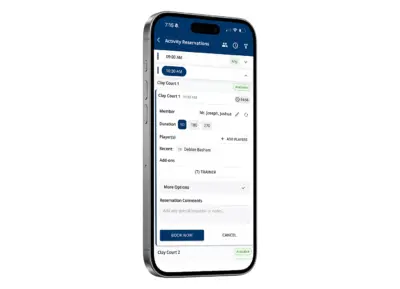
A member books a tennis court for 3 PM. The integrated system automatically schedules the court, sends a confirmation email to the member, and prevents any double-bookings. Simultaneously, it provides the tennis pro with a real-time schedule of court usage, enabling better planning of lessons and maintenance, and ensuring optimal use of facilities.

Integrated inventory management 

When a bartender scans a bottle of premium wine at the bar, the system automatically deducts it from inventory, updates the cost of goods sold, and flags when the stock level falls below a pre-set reorder point. This prevents costly stockouts, reduces waste, and ensures accurate profitability reporting for food and beverage operations.

Data security & compliance 

The club undergoes its annual PCI DSS compliance audit for payment processing. Because all financial transactions are handled through a single, secure, and compliant integrated system, the audit process is smooth and efficient. This demonstrates the club’s commitment to protecting member data, helping to avoid potentially costly penalties and reputational damage.

Why Integrated Systems Are the Future for Private Clubs 

Fragmented systems are a relic of the past, creating friction for both members and staff, and hindering club’s ability to adapt and grow.

Integrated private club management software is the essential backbone for a modern, thriving club. By centralizing data, automating processes, and providing deep, actionable insights, it empowers clubs to enhance member satisfaction, optimize operations, and make strategic decisions that drive long-term success.

If you would like to learn more, give us a call at  +1 678 389-4300. Or, request a demo. And discover how an integrated private club management software can help unlock the potential of the club.

Finding the Right Approach to Analytics in Your Club Management Software

Finding the Right Approach to Analytics in Your Club Management Software

The modern country club continues to evolve from a traditional social haven into a sophisticated, multi-faceted business. That’s driven, in large part, by today’s members demanding highly personalized, seamless experiences that span every amenity. From the tee sheet and the fitness center to the dining room and event planning. 

In this dynamic landscape, effective club management is no longer about intuition or legacy practices. It requires precision. A precision that the right approach to analytics can help you achieve.

The Challenge of the Current Approach to Analytics

For too many private clubs, the most significant obstacle to optimization is siloed data that leads to fragmented data management.

Clubs frequently rely on a patchwork of disconnected systems. They may have one provider for point-of-sale in Food & Beverage, another for membership accounting, and maybe even manual spreadsheets for tracking golf course usage or event financials.

This fragmentation leads to critical inefficiencies. It’s not an unfamiliar scenario to see an F&B manager have to wait until their monthly financial review to discover that the department overspent its labor budget by 15% during a series of busy weekend events. That is information that arrives three weeks too late to take corrective action.

The fact of the matter is that siloed data results in reports that are delayed, incomplete, or require significant manual effort to compile. All of which prevents proactive decision-making. 

Key Trends Driving Analytic Adoption

Three major trends are currently reshaping how private clubs approach analytics:

1. The 360-Degree Member View

Today, it is imperative that clubs understand a member’s total value and engagement. That means tracking member activity across all departments to understand how often they dine, the amenities they use, event attendance, and more. This data is then used to calculate profitability and predict potential attrition.

For example, a club may have previously identified members who didn’t visit the golf course. Now, with a unified system, it identifies members who haven’t used any club amenity (dining, fitness, golf) in 60 days. These “at-risk” members are then proactively engaged with a personalized invitation. This strategy has proven far more effective than general appeals at boosting satisfaction and retention.

2. Real-Time Operational Optimization

Club managers are demanding systems that move beyond monthly financial statements to provide instant, actionable dashboards. This allows for immediate course corrections.

Here’s a scenario. Instead of waiting for the weekly payroll report, a club manager monitors F&B performance in real-time, noting that kitchen staff utilization spiked above 95% at 7:30 PM last Friday. With this insight, the manager can optimize labor costs by adjusting next week’s schedule to move more resources to peak times and reduce staff during less busy times.

3. Predictive and Strategic Planning

Using deep historical data, clubs can now forecast more accurately. In addition to optimizing staffing levels, the club could use the forecasts to support strategic decision-making. That can include assessing departmental costs and revenue, or even helping the club plan major capital expenditures.

Defining the Ideal Approach to Analytics

To effectively address the trends, the best solution for a modern country club is an integrated club management system that includes advanced business intelligence as a core module. This model represents a significant upgrade over legacy solutions that bolt on basic reporting capabilities.

The ideal platform must meet the following critical criteria:

Key Criterion Function/Benefit
Unified Data Engine The system must unify data from all functional modules, including Accounting, Membership, F&B, Golf, and more. This single, real-time relational database structure ensures the 360-degree member view is always accurate.
Real-Time Business Intelligence Data must be processed and visualized instantly through next-generation BI tools (such as native Power BI integration). This allows managers to respond to issues the moment they arise. No more waiting weeks to find out about a budget overage.
Comprehensive Reporting Suite The system must offer a vast library of highly parameterized stock reports, while also providing managers with the flexibility to easily define, customize, and save their own user-defined dashboards and Key Performance Indicators. This capability ensures the system adapts to any management style.
Executive Accessibility The platform must be portable and optimized for mobile devices, giving decision-makers access to critical insights from any device. Decisions are no longer tethered to the office desktop.
Transparency & Collaboration The tool should support secure internal collaboration. Managers should be able to share custom reports and standardized departmental views with internal stakeholders, ensuring data transparency across the organization. This fosters accountability and cross-departmental alignment.

The Future is Connected

For private clubs today, integrated analytics is not a technical upgrade. It is a competitive necessity. 

Future-looking solutions provide a unified platform that delivers a holistic, real-time, and accessible view of operations. It’s a view that can help the club optimize efficiency and maximize revenue across all facets of the club. And, ultimately, help the club elevate the member experience.

These 2026 Key Trends Should Be On Your Club’s Radar

2026 Key Club Trends

As the private club industry steps into 2026, the landscape is defined less by tradition and more by transformation. 

Several factors influence the perception of value at your club. Those include changes in your member demographics. The shifts in the economy. And technological advancements.

To succeed, clubs must do more than simply maintain amenities. They must pursue a future built on holistic value, digital fluency, and authentic inclusivity. Here are the four key trends defining this future.

1. The Rise of Holistic Wellness

What This Means for Country Clubs: What does your club’s wellness offering look like? Is it treadmills and a weight room? In 2026, members view wellness as much more than that. They see it as a comprehensive offering that integrates physical fitness with mental health, recovery, and personalized nutrition. 

Actionable Insights:

  • Invest in Experts: Imagine your club offering the services of a Wellness Director. This individual could manage partnerships with local registered experts. That can include everything from dietitians to physical therapists to mental health professionals. These experts could be scheduled for private, fee-based coaching or small-group seminars.
  • Create Integrated F&B: Ensure your dining menus clearly highlight options aligned with current health trends (e.g., plant-based, low-carb, high-protein). Offer custom meal prep or healthy grab-and-go options for members transitioning from the gym to their next activity.
  • Establish a Zen Zone: There is growing demand for offerings focused on mental wellness. Consider using an underutilized space to create a stress-reducing sanctuary. It could have comfy seating with access to noise-cancelling headphones, guided meditation apps, sound therapy playlists, and more.
  • Leverage an Integrated System for Service Monetization: Use an integrated club management software system’s scheduling, registration, and billing modules to seamlessly manage, book, and charge for specialized fee-based wellness services. This can include everything from private training and physical therapy sessions to small-group nutrition workshops. An integrated system ensures that all non-dues revenue is captured efficiently and tied back to the member profile.

2. Hyper-Personalized Digital Experiences

What This Means for Country Clubs: Members are accustomed to effortless, highly personalized experiences from services like Netflix, Amazon, and others. They now demand the same level of seamless digital convenience and personalization from their club. This trend requires integrating technology (including AI and machine learning) not just for efficiency, but to proactively anticipate member needs and communicate with relevance, turning data into delight.

Actionable Insights:

  • Create One Source of Truth: Implement a comprehensive club management software system to track all member activity. This can include things like the reservations they made, their food preferences, their account charges, and more. Having one source for all this information gives you the power to personalize the member experience like never before.
  • Try Gamification: Reward members for certain behaviors. For example, members could earn a “Socialite” badge in the club app for attending 10+ club events. Or, they could earn a reward like a dining credit for five consecutive restaurant visits. 
  • Embrace Data-Driven Staffing and Flow: Use historical usage data from the reservation system and app to predict hourly peak times for all amenities (e.g., the pool deck at 4 PM, the halfway house at 1 PM). Adjust staffing levels dynamically across F&B and service areas to ensure rapid service and prevent frustrating bottlenecks during high-demand periods.

3. The Shift to Flexible and Multi-Generational Programming

What This Means for Country Clubs: Unfortunately, the way clubs have always done things may clash with what younger prospects want. That can hamper membership efforts when you consider that those younger prospects represent the future of your club. Clubs must master the art of balancing tradition with the offerings desired by a younger cohort (e.g. casual dining, family-centric activities). The club must become a destination for all ages, from toddlers to retirees.

Actionable Insights:

  • Implement Tiered and Flexible Membership Levels: Review and adjust membership categories to offer more access points, such as social-only, young professional (with age-based step-ups), and off-peak weekday memberships. This increases initial acquisition flexibility.
  • Focus on Casual Wins: Reallocate underperforming formal dining space to create casual, highly-activated areas (e.g., a sports lounge, pub, or multi-sport simulator room). Prioritize casual outdoor dining and programming (such as food truck events or live acoustic music) that encourage spontaneous use.
  • Develop Dedicated Family Zones: Invest intentionally in spaces for children and families (e.g., dedicated game rooms, covered outdoor play areas, or robust junior programming) to ensure the club is a primary, year-round family choice.
  • Master Complex Event Management: Leverage an integrated club management software system’s robust event module to create and manage the complex logistics of multi-generational programming. This includes dynamically managing varying costs based on membership category, age group, or special one-time access. 

4. Operational Transparency and ESG Accountability

What This Means for Country Clubs: Environmental, Social, and Governance (ESG) factors are no longer abstract corporate concepts. They are factors that are influencing the decisions of your members and prospects. Future-oriented clubs understand the importance of transparency when it comes to these issues. Whether it be ethical labor practices, waste management, water usage, or other key topics.

Actionable Insights:

  • Conduct Sustainability Audits: Hire a professional to assess critical operational areas, including energy and water use. Prioritize high-impact areas. For example, evaluate the efficiency of the clubhouse’s energy systems or the golf course’s irrigation system.
  • Highlight Sustainable Sourcing: Develop partnerships with local, sustainable farms and suppliers. Then, create a “Local Partner of the Month” program and communicate the effort to your membership. It’s the kind of thing that can turn a sustainability effort into a marketing asset.
  • Communicate Impact: Dedicate a section of the annual member report to ESG metrics. Report on water saved, energy reduced, and community contributions. This fosters trust and reinforces the club’s role as a responsible community steward.
  • Automate Reporting and Member Communication: Utilize an integrated club management system’s powerful CRM to automate the secure and targeted distribution of quarterly or annual ESG reports. 

The Path Forward: From Amenity Provider to Experience Curator

The defining factor for success in 2026 will not be the prestige of the club, but its agility and relevance. The four trends outlined above are not isolated challenges. They represent a fundamental shift in member expectations.

Clubs that win the future will move past simply being a provider of excellent amenities and evolve into curators of a comprehensive member experience. This means integrating your new digital tools (Trend 2) to seamlessly promote your wellness programs (Trend 1), using transparent operations (Trend 4) to attract multi-generational members (Trend 3), and ensuring every capital improvement project addresses at least two of these critical areas.

The time for incremental change is over. Club leadership, boards, and management teams need to embrace these trends to map out how the club will not just survive but lead in the dynamic, rewarding landscape of 2026 and beyond.

The Most Surprising Outcome of Integrated Club Management Software? Thankfulness

The Most Surprising Outcome of Integrated Club Management Software Thankfulness

As the leaves change and we gather to celebrate Thanksgiving, it’s natural to reflect on what we’re genuinely thankful for. In the club industry, that list usually includes dedicated staff, loyal members, and a beautiful facility.

But if you ask a General Manager who has to navigate a complex holiday rush, they might name something else entirely that they are thankful for: time. The time that comes from not having to scramble and stress quite so much.

This unexpected catalyst for thankfulness is perhaps the most surprising outcome that a club can experience when adopting a fully integrated club management software platform. There is a transformative power to it. An ability to convert chaos into calm, allowing everyone to truly appreciate the season a little more.

Thankful for the End of Data Wrangling

Remember the old way? A frantic pre-holiday operation involved five different systems that refused to talk to each other: one for POS, one for event registration, and two different spreadsheets for accounting and membership data. Reconciling a single member’s monthly statement could feel like a full-time job.

That stress evaporates when your club operates on a single database.

When membership, F&B, and accounting all speak the same language, stress vanishes. A single-database club management software solution eliminates complexity and makes audits and end-of-year financial reporting effortless, reliable, and something your team might actually look forward to. Okay, maybe not look forward to, but definitely dread less.

Thankful for Empowered Staff Instead of Overwhelmed Employees

Your staff are the heart of the member experience. But when they are bogged down with administrative headaches—like manually compiling reservation lists or trying to fix a billing error from two different platforms—they can’t give members the attention they deserve.

The shift enabled by unified technology is truly something to celebrate. Like appreciating the staff who can now spend time building relationships instead of doing double-entry. Here are just a couple of examples:

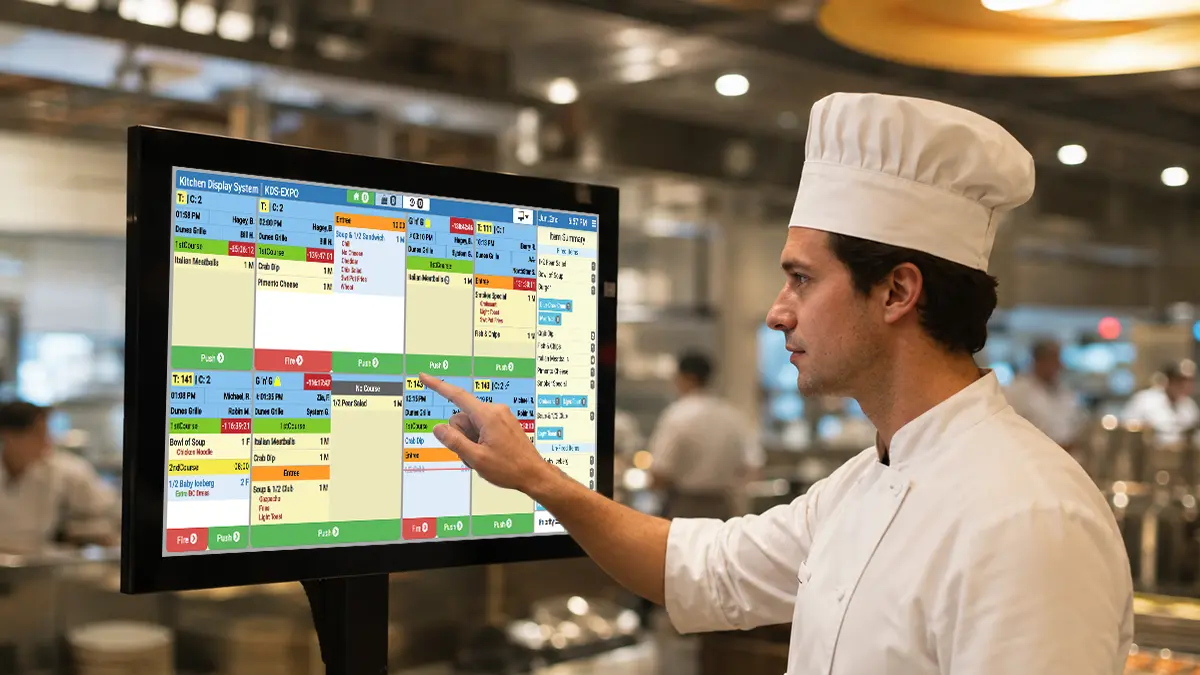
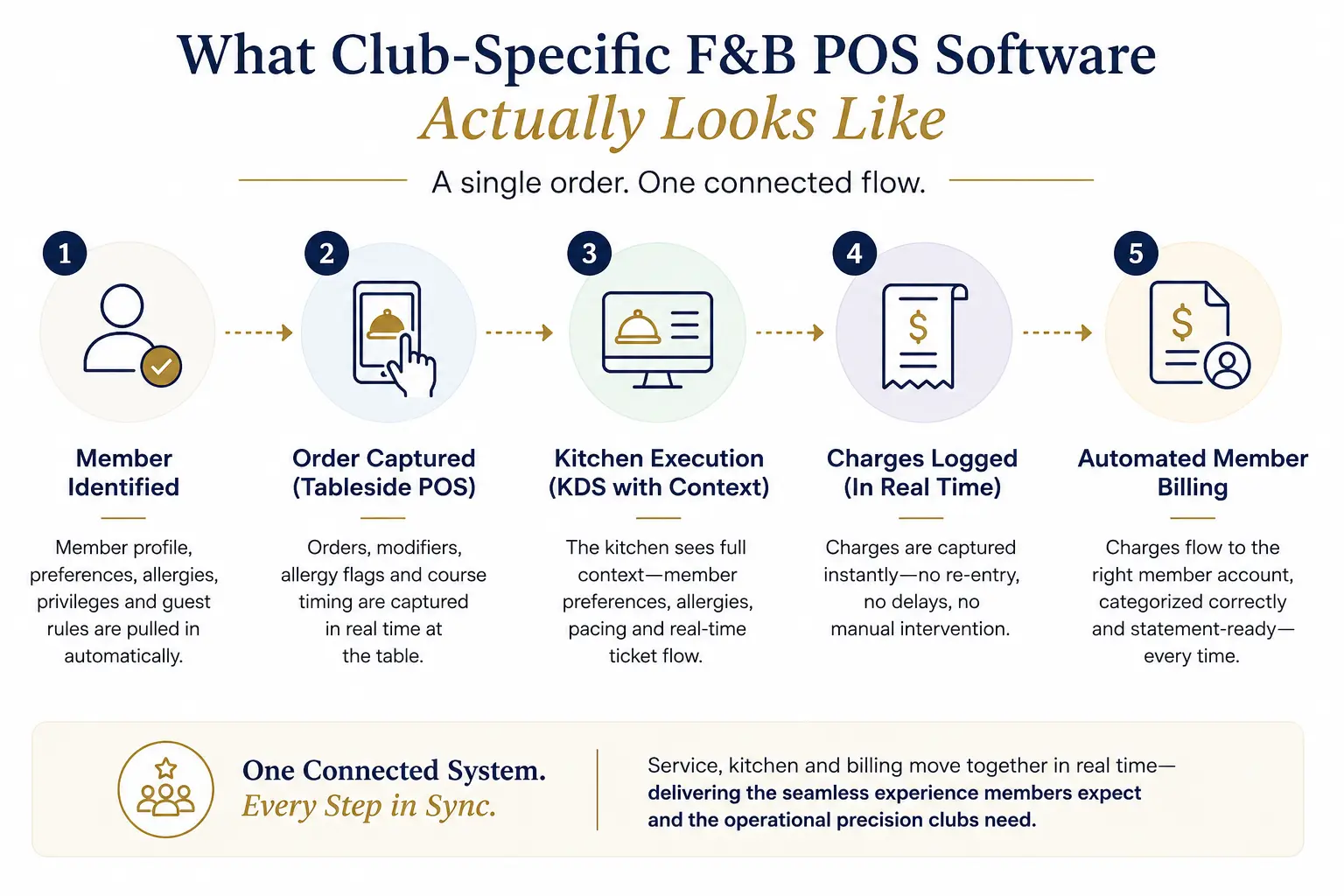
  • Wait staff use table-side POS with confidence because they know it posts to the member’s account instantly and accurately.
  • Front desk staff have instant access to a member’s status, access, and reservation details.

This kind of intuitive design empowers every department. The efficiency it creates is key to job satisfaction and retention—and that, for any General Manager, is a huge reason to give thanks.

Thankful for the Gift of a Seamless Member Experience

The ultimate beneficiary of an integrated system is the member. When your operations run smoothly, the member experience feels effortless, personal, and modern.

With an integrated system like Northstar’s, you have access to the mobile and digital tools that make club life feel special. For example:

  • The member who books their holiday dinner reservation, registers for a kids’ party, and checks their account balance all from the club’s mobile app.
  • The staff member who can anticipate a need, not just react to a problem, because they have a complete, real-time view of that member’s history and preferences.

It’s the integrated club management software that makes the club feel modern, intuitive, and effortlessly tailored. When your members experience this level of seamless service, their engagement deepens, and they can’t help but feel thankful to be part of your club.

Feeling the Gratitude

This holiday season, may your team enjoy less time stressing over systems and more time connecting with each other and your members. And that you, too, may experience that sense of thankfulness that results from reduced chaos, an empowered staff, and a magical member experience.

If you would like to learn more about how an integrated club management software solution can help you transform the holiday experience at your club, request a demo of the Northstar system today.

Using Country Club Point Of Sale System Data to Transform the Member Experience

Using Country Club Point Of Sale System Data to Transform the Member Experience

We have to remember that the modern club member expects an experience tailored to them—the same level of insight and personalization they receive from major brands like Amazon. 

While club staff are trained to deliver this type of service, the systems they rely on too often leave them in the dark. Separate point-of-sale (POS), booking, and accounting systems create data silos, resulting in awkward, impersonal moments, such as asking a member their favorite dish when they ordered it just recently. 

To overcome this deficiency, premier clubs are turning to a unified system that enables “Smart Service.” Here are 10 ways a single-source-of-truth platform turns transaction data into unforgettable, margin-driving member experiences.

1. The Instant Welcome and High-Touch Recognition

The moment a member checks in, the integrated country club point of sale system should become a staff briefing tool. No more fumbling for conversation starters or missing critical service opportunities. The integrated system instantly surfaces key member data upon check-in, tee time, or reservation. This ensures staff can:

  • Recognize and mention any upcoming Birthdays, Anniversaries, or other milestones.
  • Recall known dietary restrictions or preferred seating arrangements.
  • Reference favorite items (e.g., “Welcome back, Mr. Peterson. We have that special Cabernet Sauvignon you love ready.”).

2. Dynamic, Informed Upsells and Recommendations

Generic sales pitches are annoying. Worse yet, impersonal cross-selling can result in lost revenue. Relevant recommendations are perceived as top-notch service. 

An integrated system enables staff to access the member’s full purchase history to generate intelligent, context-sensitive suggestions across all departments. For instance:

  • Pro Shop: If a member bought a new driver six months ago, the system prompts staff to recommend a new rescue club from the same maker or other complementary gear.
  • Spa: If a member routinely buys one type of facial cleanser, staff can suggest a complementary serum.

3. Universal Credit and Seamless Fund Redemption

Frustration kills the service experience. Confusion and delays caused by funds trapped in the wrong department can trigger this frustration. A unified ledger ensures all credits, gift certificates, and member minimums are instantly active and viewable across all revenue centers.

  • A gift certificate purchased at the Pro Shop is instantly redeemable at the Spa or in Dining.
  • Staff can check a member’s remaining minimum spend balance from any terminal, ensuring no opportunity is missed.

4. Predictive Inventory Management

Why guess when you can predict? Especially when you can mitigate the problem of ordering too much of a slow mover or running out of member favorites. By analyzing aggregate transaction data, you can identify major shifts in F&B or Pro Shop demand.

  • If purchase data shows a 30% surge in specific liquor sales over three months, managers know to increase inventory immediately.
  • The system can flag items nearing depletion that your highest-spending members historically purchase.

5. Post-Transaction Follow-up and Feedback Loops

Targeted feedback is more valuable than blanket surveys. Why send generic, untargeted surveys that yield low response rates when you can opt for more relevant tools with an integrated solution? 

The integrated system triggers personalized communication immediately after a specific transaction type. For example:

  • A short micro-survey about the new menu item is sent only to members who purchased it.
  • A customized thank-you note is sent after a high-value catering event, referencing the specific order details.

6. Effortless Loyalty and Tiered Rewards

Reward members for their loyalty without manual tracking. It can be challenging to manually calculate points or assign status based on outdated data. The unified POS tracks real-time spend velocity and automatically assigns loyalty tiers, discounts, or special access.

  • High-value members receive immediate recognition (e.g., a “Gold Tier” alert on the POS screen), and their associated benefits are automatically applied to their bill.

7. Staff Performance and Training Feedback

If you can’t measure it, you can’t manage it. Too often, staff simply do not know if their attempts at personalization are working. With an integrated system, managers can directly tie service behavior to financial results.

  • Track how often staff successfully use data for personalized recommendations, allowing managers to see that “Staff Member X’s average check size increased by 15% after receiving data-driven coaching.”

8. Automated Billing Preference and Checkout Simplicity

Make paying instantaneous and invisible by eliminating annoying end-of-service questions about payment method or forgotten wallets.

  • The system uses transaction history and stored profile settings to automatically know if the member prefers to charge to their account, use a specific stored card, or bill a sub-account, reducing checkout friction to zero.

9. Activity Frequency and Engagement Analysis

Engagement isn’t just about spending. It’s also about showing up. It’s too easy to miss members who are disengaging. An integrated system enables you to analyze the frequency of specific purchases (e.g., only one golf round in 3 months) to trigger targeted, personalized outreach, such as a “We Miss You” offer or a reminder about an upcoming clinic.

10. Holistic Household Spend and Dependent Tracking

Personalization must extend beyond the primary member. Ignoring the preferences of the spouse, children, or other dependents on the account could be costing the club.

  • Linking all dependent transactions to the main member profile allows staff to recognize and reference family favorites (e.g., “Welcome, Mrs. Jones. Did young Timmy enjoy his swimming lesson today?”).

Justifying the Investment in a Unified Country Club Point of Sale System

A unified system is not just an accounting upgrade—it’s a personalized service engine. These 10 strategies demonstrate that integrated transaction data transforms high-touch service from an aspirational goal into a scalable, repeatable reality. By reducing friction and creating moments of effortless recognition, the technology instantly justifies its cost through increased member satisfaction, retention, and department-wide revenue growth.

Ready to see how an integrated country club point of sale system solution can help you use transaction data to personalize the member experience? Request a demo of the Northstar system today.

How the Employee App Transforms Daily Club Operations

How the Employee App Transforms Daily Club Operations

Key Takeaways

  • Empowerment is Key: The shift to a mobile-first Employee App is crucial for transitioning from a reactive service approach to proactive, personalized member engagement.
  • Real-Time, Unified Access: The app delivers instant access to a unified database, eliminating communication gaps and ensuring staff alignment across all operations.
  • Strategic Advantage: Investing in an Employee App is not just an efficiency move—it’s a strategic asset that enhances the member experience, drives operational excellence, and significantly improves employee retention.

The Modern Club Challenge

The hallmark of a world-class club is an effortless, memorable member experience. However, achieving this level of excellence is fundamentally constrained by an employee experience that is often anything but effortless.

Picture this all-too-common scenario: A service request comes in, but the staff member responsible is tethered to a back-office desk, fighting through outdated interfaces to check a schedule, confirm a booking, or look up a member’s history. Communication flows through paper notes or fragmented systems, leading to delayed responses, frustrating manual data entry, and missed opportunities for personalized service. This is the hidden chaos that undermines even the most dedicated teams.

The truth is, the demand for truly exceptional member experiences can only be met by an equally exceptional employee experience. In today’s hospitality landscape, this requires a fundamental shift to genuinely empowering staff in real-time.

The Evolution of Engagement: From Back-Office to Mobile-First

For years, digital transformation in the club industry meant transitioning from manual, paper-based operations to robust, browser-based digital systems. This was a crucial first step, centralizing data and automating back-office finance and operations. But for the front-line staff—the true face of your brand—these back-office tools have remained largely inaccessible or impractical.

This is where the concept of the Mobile-First Workforce comes into play. Modern employees, especially those working in dynamic, service-oriented environments, expect their professional tools to match the simplicity and responsiveness of the apps they use in their daily lives. The failure to provide intuitive, mobile-first tools creates a tangible disconnect between C-suite investment in technology and staff satisfaction in executing their daily work.

The club manager’s challenge is clear: if staff cannot access mission-critical information instantly and seamlessly on the go, the service will inevitably lag, regardless of how powerful the back-end system is.

The Real Impact of Technology

Technology is not just about efficiency. It’s about empowerment. In the context of club operations, empowerment means entrusting employees with the tools and information necessary to act independently, resolve issues, and create high-value member interactions. All this without seeking approval or retrieving data from a separate location.

The key technological impacts driving this shift are multifaceted:

Real-Time Access

Waiting for a system to boot up or navigating complex menus slows down service and diminishes the sense of immediacy members expect. A modern employee app ensures every staff member has instant, secure access to the unified member database. This allows a concierge to proactively greet a member by name, confirm their last dining preference, or check on a specific request without having to step away. This instant access transforms the service from a reactive task completion to a proactive, personal relationship-building experience.

Instant Communication

The reliance on fragmented communication is a major source of operational friction. The Employee App centralizes communication, allowing for instant notifications and staff broadcasts. Whether it’s an urgent weather alert for the pool deck or a quick change to the dinner special, the ability to disseminate information immediately and reliably keeps every team member aligned. And prevents confusion, which is critical for consistent service delivery.

Streamlined Scheduling

Repetitive, low-value administrative tasks are a drain on staff time and morale. By streamlining scheduling, reservations, and appointments through an intuitive mobile interface, you free up your most valuable asset—your human staff—to focus on high-value interactions. This shift enables your team to focus on building rapport, upselling services. And addressing member needs, ultimately driving revenue growth and enhancing overall member satisfaction.

The Strategic Advantage of a Unified Employee App

When evaluating a mobile solution, integration is a non-negotiable. The advantage of the Northstar Employee App lies in its foundation: its seamless connection to a single, unified database. This is critical because it ensures that every action taken on the app—from a reservation adjustment to a schedule change—is reflected immediately across the entire club ecosystem. There are no synchronization issues, data lags, or information silos.

Ultimately, the app is a strategic asset designed to address the talent crisis head-on. It directly impacts your ability to attract, engage, and retain top talent by providing them with the professional tools they deserve.

The core features are designed for maximum efficiency:

  • Reservations & Scheduling on the Go: Staff can manage bookings for events, activities, spa treatments, and golf tee times directly from their device, eliminating the need to search for a workstation or rely on manual logbooks.
  • Team Alignment & Staff Calendar: Full visibility into the live staff calendar allows managers to make real-time adjustments and approve time-off requests instantly. Additionally, it enables employees to view their upcoming shifts, enhancing accountability and reducing managerial workload.
  • Operational Control & Security: Features like Digital Access Cards provide a modern security layer. At the same time, the ability to issue Instant Citations or send Staff Broadcasts ensures compliance and rapid incident response. This is by securing both your physical property and your data.

The Path to Excellence

The shift to a mobile-first mindset is the key for any club aiming for sustained excellence. The equation is simple, yet profound:

Empowered Staff = Enhanced Member Experience & Operational Excellence.

By investing in a platform that truly mobilizes and empowers your team, you are not just purchasing software—you are investing in the quality of your service and the future retention of both your members and your employees.

Ready to see how real-time, on-the-go tools can revolutionize your daily operations? Just give us a call at +1-678-389-4300. Or, request a demo of the Northstar Employee App today.

7 Essential KPIs for Modern Country Club Success

7 Essential KPIs for Modern Country Club Success

With today’s competitive landscape, managing a successful club demands a sophisticated, data-driven approach. The most successful club leaders are not just focused on member satisfaction—they are obsessed with measuring it. 

These leaders understand that there are vital signs of their club’s health. These Key Performance Indicators (KPIs) provide them with clear, objective insights needed to make strategic decisions.

Here are seven essential KPIs that every modern country club leader must track to ensure long-term success.

Member Retention Rate

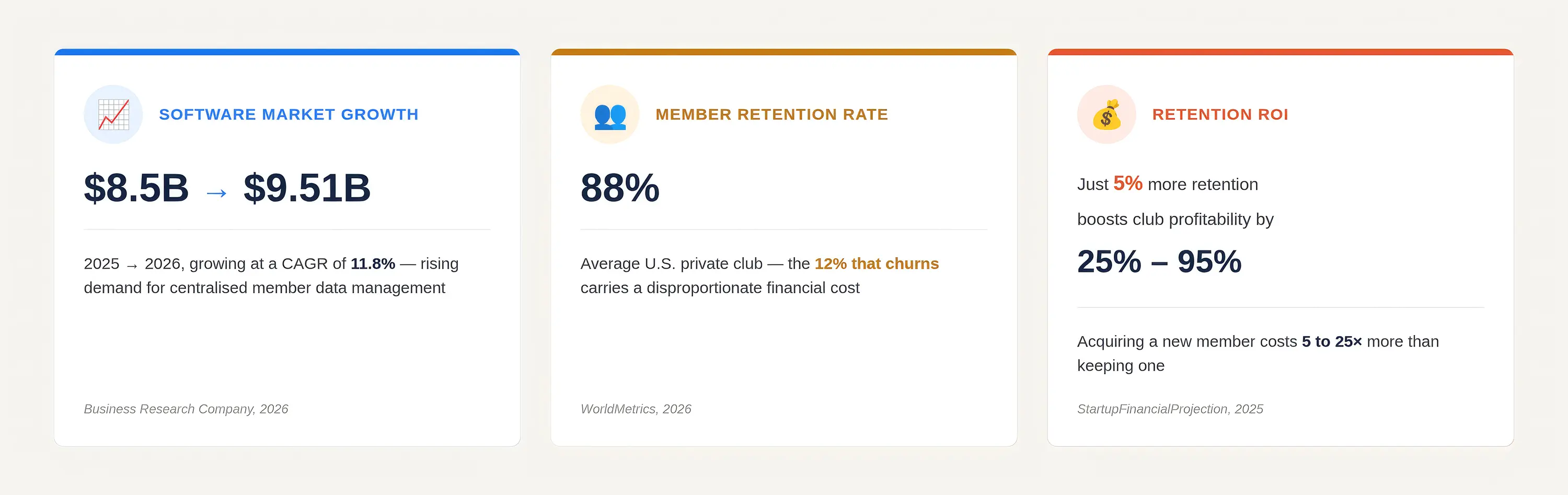
Your member retention rate measures the percentage of people who renew their membership over a specific period. It is arguably the single most important metric for gauging the health of your club. 

While a club might focus on new member acquisition, the cost of acquiring a new member is almost always significantly higher than the cost of retaining an existing one. A high retention rate signifies that your members feel a strong sense of value, satisfaction, and belonging. 

Furthermore, a high retention rate creates a stable and predictable revenue stream. And a foundation of loyal advocates who will naturally help with new member recruitment through positive word-of-mouth.

How to leverage this KPI

Don’t just look at the final number. Dig into the “why.”

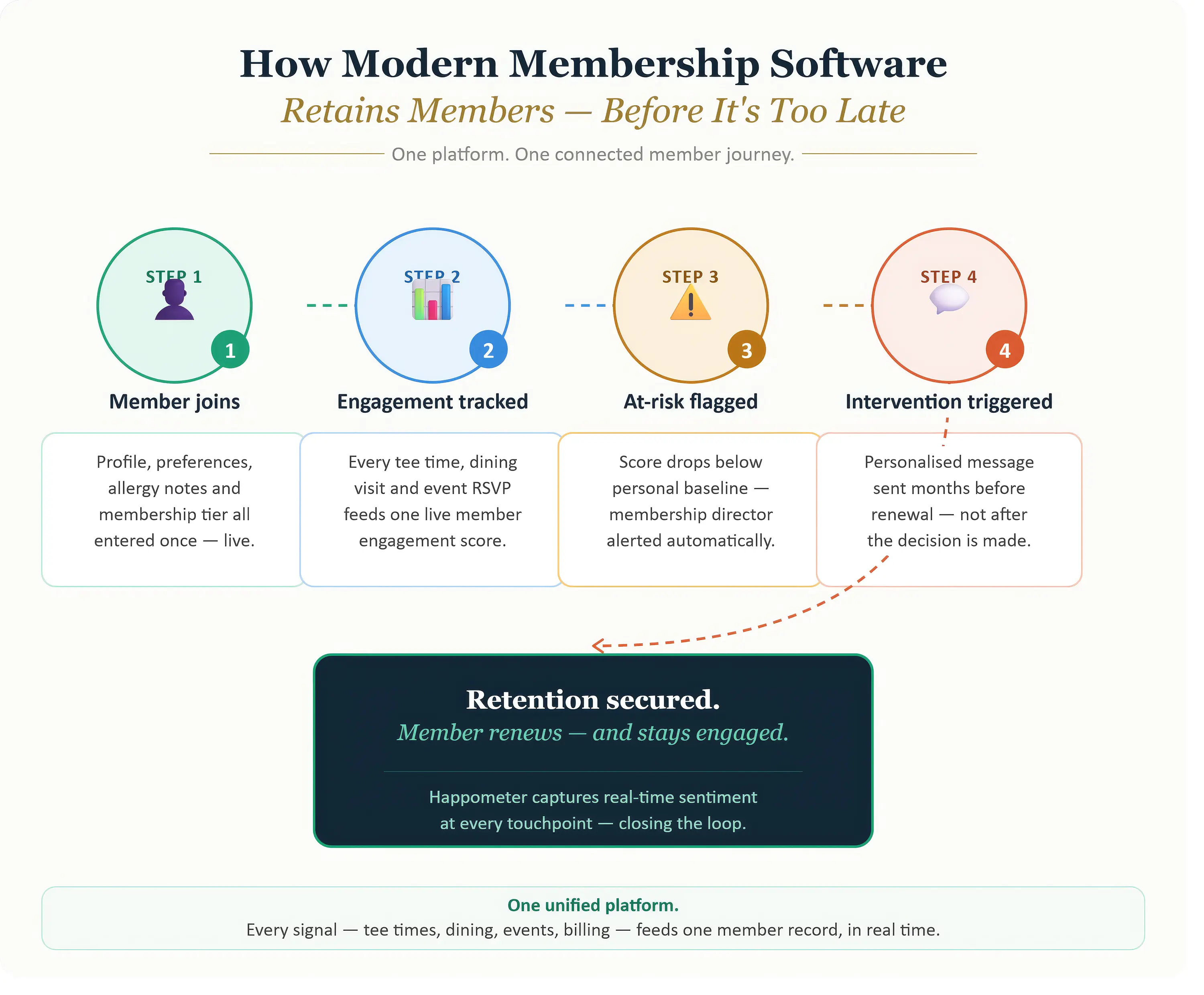
With a robust CRM system integrated into your Private Club Management Software, you can track member engagement—everything from login frequency on the member app to event attendance and spending habits. This data can help you identify at-risk members before they churn, allowing you to proactively reach out, address concerns, and rebuild their connection to the club.

Facility Usage Rate

Does your state-of-the-art fitness center sit empty in the afternoons? Is your fine dining restaurant busy every weekend, while the casual bar struggles? 

The Facility Usage Rate is a critical KPI that helps you understand how members are interacting with your amenities. By tracking the frequency and volume of use for golf courses, tennis courts, dining facilities, and other areas, you can see which amenities are genuinely valued and which may need a marketing push or operational adjustment.

How to leverage this KPI

An integrated reservation and booking system is the key to unlocking this data. The insights you gain are invaluable. If your tennis courts are underutilized, you might introduce a new clinic. If a specific restaurant is consistently busy, you can use that data to justify a staff expansion or menu change.

This KPI is a direct reflection of member value and helps you optimize resource allocation to align with member demand.

Average Spend Per Visit

While dues provide the foundational revenue for your club, a significant portion of your financial health comes from ancillary spending. The Average Spend Per Visit KPI delivers a clear picture of how much members are spending each time they walk through the door, including food and beverage, pro shop purchases, spa services, and more. This metric helps you gauge the effectiveness of your pricing, offerings, and upselling strategies.

How to leverage this KPI

A unified Point-of-Sale (POS) system that communicates with a single database is crucial here. By tracking spending across all departments, you can identify trends and opportunities. For example, if you notice a low average spend at the poolside bar, you might introduce a new signature cocktail menu or a happy hour special. This KPI helps you maximize profitability without relying solely on dues increases.

Member Satisfaction

Understanding member satisfaction goes beyond simple surveys. It’s about listening to real-time feedback and turning that insight into action. Your members are a constant source of commentary, and a holistic approach to tracking their satisfaction is crucial for maintaining a healthy and vibrant club.

How to leverage this KPI

This is where advanced tools like Northstar’s Happometer come into play. Happometer is a member feedback tool that uses proprietary AI and natural language processing to analyze thousands of data points and provide actionable insights. 

Instead of waiting for a quarterly survey, you can get instant feedback from multiple touchpoints. This gives you the power to identify and address issues immediately, ensuring you can act on feedback while it’s still relevant. The insights gleaned from this continuous feedback loop allow you to create and validate great experiences, strengthening your community and reinforcing member loyalty.

Dues to Operating Revenue Ratio

This essential financial KPI reveals what percentage of your total operating revenue comes from membership dues.

While dues are the stable backbone of your club’s finances, a healthy club has diverse revenue streams from golf operations, dining, events, and other amenities. A club that is overly reliant on dues might be more vulnerable to economic downturns or membership fluctuations.

How to leverage this KPI

Your private club management software should provide comprehensive financial reporting that gives you a clear and accurate breakdown of all revenue sources. By analyzing this ratio, you can determine if your ancillary revenue streams are pulling their weight. If the ratio is too high, it might be time to focus on enhancing events or improving food and beverage offerings to create a more balanced and resilient financial model.

Membership Growth Rate

While retention is about keeping members, growth is about ensuring the club’s future. 

The Membership Growth Rate measures the speed at which your club is acquiring new members. A positive growth rate signals that your club’s value proposition is strong and that your marketing and sales efforts are effective. It’s a key indicator of your club’s relevance and appeal in the market.

How to leverage this KPI

A robust CRM and pipeline management system is critical for tracking this metric. You can monitor the number of new leads, the conversion rate from prospect to member, and the effectiveness of different marketing channels. This data allows you to fine-tune your acquisition strategy and ensure a healthy, consistent flow of new members.

Resource Cost Percentage

Labor is often the single most significant expense for any country club. The Labor Cost Percentage KPI calculates your total labor costs as a percentage of your total revenue. It’s a critical metric for gauging operational efficiency and ensuring your staffing levels are appropriate for the services you provide. A high percentage could indicate inefficient scheduling or overstaffing, while a low percentage could mean you are understaffed, leading to a decline in service quality.

How to leverage this KPI

An all-in-one management platform helps streamline operations, from reservations and dining to accounting, which can reduce the need for excessive administrative staff. By using a single system to manage all club functions, you can gain a clear view of where labor is being spent and identify opportunities for optimization.

The Path Forward

Running a modern country club is a delicate balance of preserving tradition and embracing innovation. The best leaders are no longer just focused on the aesthetics of the course or the ambience of the dining room—they are also stewards of their data.

By consistently tracking these seven KPIs, you move from making decisions based on intuition to making decisions based on evidence. You’re not just measuring success. You’re actively creating it, one data point at a time.

Discover how a comprehensive private club management software solution can help you stay on top of the essential KPIs at your club. Just give us a call at +1-678-389-4300.  Or, request a demo on our site.