Expert Voice

Our Blogs

Stay updated with the latest news, insights, and trends from our team. Our blog is a space where we share valuable tips, industry updates, and expert advice to help you stay informed and inspired. Whether you're looking to learn something new or keep up with what's happening, you'll find fresh and engaging content right here.

Kitchen Display Systems for Private & Country Clubs: A Complete Guide

Kitchen Display Systems for Private Clubs: A Complete Guide

How private clubs are cutting ticket errors, turning tables faster, and finally getting member preferences into the kitchen where they belong.

If you run food and beverage at a private club, the gap between the dining room and the kitchen has probably cost you more than you want to admit. A member with a standing allergy note gets served the wrong dish. A ticket falls off the rail during a busy Saturday service. A server circles back to the POS terminal three times during dinner because there is no other way to check where an order stands. These are not rare edge cases. They are regular features of a paper-based kitchen, and they compound fast when volume picks up.

Kitchen display systems have been around long enough that the technology itself is no longer the story. The story is what happens when a KDS is properly integrated into a private club operation rather than bolted onto it. This guide covers the basics, the club-specific considerations, and what to look for when you are evaluating one.

What Is a Kitchen Display System?

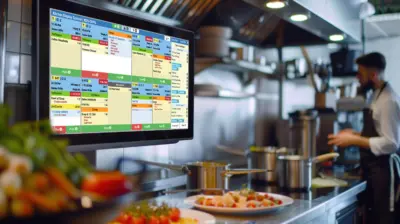
A kitchen display system is a digital screen mounted in the kitchen, connected to your POS. When a server enters an order, it shows up on the KDS instead of printing to a paper ticket. Each station sees what applies to them. Timers count how long each ticket has been open. The expo screen gives the kitchen manager a view of every active order at once.

That covers the basics. The more interesting part is what a good KDS does beyond replacing the printer. Member preferences and allergy flags travel from the POS straight to the screen without anyone writing them down again. Every stage of an order gets a timestamp. After service, you have actual data on where the kitchen slowed down, which shifts ran the longest average ticket times, and which menu items consistently held everything else up.

Paper tickets have no urgency attached to them. A KDS shows kitchen staff exactly what needs attention, in what order, without anyone having to say a word.

Where Paper Tickets Actually Break Down

The case against paper is not complicated. Tickets get wet. They fall off the rail. The handwriting on a busy night is anybody’s guess. And when a modifier or allergy note gets missed between the server and the kitchen, there is no audit trail, just a remade dish and an unhappy member.

The less obvious problem is visibility. With paper tickets, no one outside the kitchen knows where any given order stands unless they physically go back and ask. Servers lose time. Managers operate on a rough sense of how things are going rather than actual data. And after the shift, there is nothing to review because the tickets are in the trash.

For private clubs specifically, this matters more than it might at a busy restaurant. Members come back week after week. They remember the last time something went wrong. One missed allergy note is not just a service error. It is a conversation the GM has to have on Monday morning.

What a KDS Does Differently for Private Clubs?

Member Preferences reach the Kitchen

Most KDS implementations in restaurant settings handle order accuracy well but do not surface member-specific context. In a private club, that context is the whole point. When the KDS connects to the membership database, a member’s standing dietary restrictions, preferred modifications, and any notes from previous visits come through with the order automatically. The kitchen is not relying on a server to verbally relay that information, or on a handwritten note surviving the heat and noise of service.

Multi-Outlet Routing

A club is not a single dining room. Orders from the formal dining room, the bar, the pool terrace, and a halfway house halfway across the property all need to reach the right kitchen or prep station without manual rerouting. A KDS built for club operations handles that routing based on where the order originated and what is being prepared, so the grill station is not getting bar orders, and the expo screen shows a complete picture.

Stage Tracking Across the Floor

Private club kitchens often fire courses in sequence based on cues from the floor, not just time elapsed. A KDS that supports Pre-fire, Fire, Bumped, and Pushed states gives the kitchen and the front of house a common language for where each table stands. The server does not need to guess whether the entrees are close. The kitchen does not need to hold dishes because the appetizers are still on the table. Everyone is working from the same information.

Reporting That Actually Tells You Something

Average ticket time by shift. Orders that repeatedly ran long. Service periods with the highest error rates. This data exists because the KDS records every order through every stage. Clubs that use it regularly find patterns they had no way to identify before. Whether it is a particular server whose orders consistently arrive late to the kitchen, a menu item that creates a bottleneck on busy nights, or a station that needs a workflow adjustment, the data makes the problem visible before it becomes a member complaint.

The Connected F&B Picture

A KDS on its own is a useful tool. A KDS that is part of a connected F&B platform is a different thing entirely.

Here is how that plays out in practice. A member books a table through the club app. Their profile carries allergy information and seating preferences. When they arrive, the hostess checks them in against the live reservation view. The server takes the order on a tablet at the table, which sends it to the kitchen immediately. The KDS shows the member’s name, covers, standing preferences, and a countdown for each item. The expo screen has the full table in one view. Food arrives correctly prepared, on time, with no paper changing hands and no verbal relay between front and back of house.

That sequence depends on the membership profile, the reservation system, the tableside POS, and the KDS all drawing from the same data. When those pieces are separate systems loosely connected through an integration, you get partial information at each stage. When they are modules on the same platform, the data travels intact.

The value of a KDS is not the screen itself. It is what the screen knows. And what it knows depends entirely on what the rest of your system feeds it.

What Clubs Report After Making the Switch?

Orders to the Table Faster

When the kitchen receives orders the moment they are placed, operates to visible timers, and coordinates through an expo screen rather than shouting across stations, food gets to the table faster. Club technology data puts average order-to-delivery times 4 to 8 minutes shorter when KDS is paired with tableside ordering. For a member who wants lunch between rounds, that difference is noticeable.

Fewer Errors, Fewer Remakes

Most order errors happen at the handoff between the floor and the kitchen. Digital orders that go directly from the POS to the screen eliminate that handoff. Modifications and member preferences entered once carry through without anyone rewriting them. Clubs that switch typically see a drop in remade dishes and a drop in member complaints about incorrect orders, though the exact numbers vary by operation.

Less Food Waste

Wrong orders that go back to the kitchen rarely come out again in usable form. Fewer errors mean less waste. KDS data also helps kitchen staff manage prep more accurately during service, since they can see what is queued rather than over-preparing based on guesswork.

Staff Attention Goes to the Right Place

Kitchen staff working from a screen spend less time managing tickets and more time cooking. Servers with tableside ordering spend less time at the POS terminal and more time with members. The friction does not disappear, but it moves away from the places where it affects member experience.

Questions Worth Asking Before You Buy

Most KDS vendors will tell you their system is right for clubs. These questions tend to reveal whether that is actually true:

  • Does the KDS connect to the membership database, or does it only receive basic order data from the POS?
  • Can member preferences and allergy flags appear at the ticket level without any manual input?
  • How does the system handle multi-outlet routing across a property with several dining areas?
  • What stage management options are available, and can they be configured to match how your kitchen actually runs?
  • Is management reporting built into the same platform, or does it require pulling data from somewhere else?
  • How does the KDS connect to dining reservations, tableside POS, and mobile ordering if those are in use?
  • What happens if a screen goes down mid-service?

The answers tell you whether you are looking at a tool built for private clubs or a restaurant product being pitched into a club context.

How Northstar’s KDS Fits into the Platform

Northstar’s Kitchen Display System is part of the full F&B suite within Nexus, alongside Dining Reservations, Tableside POS, Grab N Go, and F&B POS. All of these modules run on the same platform and pull from the same membership data. That means information entered at the reservation stage is already in the system when the order is placed, and it travels to the kitchen without anyone re-entering it.

The KDS handles real-time order flow to prep and expo screens, member preference visibility at the ticket level, countdown timers based on actual menu item prep times, and stage tracking through Pre-fire, Fire, Bumped, and Pushed. The management dashboard surfaces ticket time data and bottleneck reporting after every service.

For clubs already on Northstar F&B POS, adding KDS is not a new integration. It is turning on a module within the platform already in use, with member data and order history already in place.

Want to see how Northstar’s KDS fits into your club’s F&B setup? Request a Demo.

How real-time Club Analytics & Reporting is separating high-performing clubs from the rest?

How real-time Club Analytics & Reporting is separating high-performing clubs from the rest?

There is a moment when every General Manager of the club recognizes standing in front of the board, fielding a question about last quarter’s F&B margins, and realizing the report on the table is already three days old. The numbers are right, but the world they describe has already moved on.

That moment, as frustrating as it is, is also an opportunity. It signals exactly where the gap lies between how most clubs manage information today and what modern club analytics & reporting can actually deliver.

Private clubs are not short on data. Every tee time reservation, every dinner charged to a member’s account, every event RSVP, and service interaction generates a data point. The challenge has never been a lack of information; it has been the inability to see it all in one place, in real time, in a way that actually informs decisions. That is the gap that purpose-built club analytics and reporting platforms are now closing.

Why Traditional Club Reporting Is No Longer Enough?

For years, the standard model of club reporting meant department heads compiling their own spreadsheets, submitting them upward, and waiting for someone else to reconcile the numbers. The result was a patchwork of information, some current, some not, stitched together under deadline pressure.

This approach carries a real cost. When the golf operations data lives in one system, the F&B figures in another, and the membership records somewhere else entirely. Running a club is not based on data; instead, it runs on assumptions.

Clubs that still rely on disconnected, delayed reporting find themselves perpetually reactive. Staff is reallocated after a service failure rather than before one. Pricing decisions lag behind demand shifts by a full season. At-risk members slip away before anyone notices the pattern. And board presentations become an exercise in defending stale numbers rather than debating forward strategy.

Major industry players are making efforts towards integrating club analytics & reporting as a larger part of the value proposition of the club management software in recent years, and rightly so. The market signals clearly that club leaders are no longer satisfied with siloed systems and manual exports. They expect their club management software to be the place where data becomes direction.

What Real Club Analytics Looks Like?

Northstar’s reporting & analytics was built from the ground up as a native part of the platform. And not as a third-party integration bolted on after the fact. That distinction matters far more than it might initially appear.

Because each & every Northstar module whether it is for Golf Clubs or POA/HOA Management, all modules feed a single relational database. NS Analytics has access to the full picture the moment a transaction occurs in any of the modules. There are no API delays, no data syncs to schedule, no reconciliation headaches to untangle. When a member checks in at the pro shop and books a post-round dinner; both data points get updated in the same analytics engine within seconds.

Dashboards are powered by Microsoft Power BI, embedded directly within the Northstar platform. That means the clubs’ General Manager, F&B Director, or Controller does not need a separate login, a separate subscription, or a separate tab open in the browser. The full intelligence layer lives exactly where they already work.

The club analytics & reporting environment is built for leaders, not data analysts. Customizable KPI dashboards can be tailored to individual roles, revenue per member, receivables aging, cover counts, member retention rates, F&B cost percentages and are refreshed continuously without any manual input. A report that once required half a day of staff effort is now a live view available in under a minute, on any device, from anywhere and anytime.

Analytics Built for Every Leader in the Room

One of the most important distinctions in private club analytics is recognizing that a great dashboard for the General Manager is not a great dashboard for the Controller, and neither of those is what the Board needs on the first of the month.

NS Analytics addresses this by surfacing the right club performance data for each decision-maker at the right level in detail.

The General Manager gets a club-wide operational snapshot: total revenue across all departments, member activity trends, event execution status, and staff performance indicators all visible in under two minutes before the first meeting of the day.

The Board gets strategic clarity: year-over-year comparisons, membership retention trend lines, capital project tracking, and F&B profitability summaries presented in boardroom-ready visual formats. The conversation shifts from “what are the numbers?” to “what is our strategy?”

The F&B Manager gets operational precision such as real-time food cost percentages, top-performing menu items by cover and revenue, kitchen throughput monitoring, and reservation source breakdowns that reveal exactly where covers are coming from i.e., app, website, walk-in, or event.

The Controller gets financial integrity from POS to ledger integration that eliminates manual data entry, vendor invoice reconciliation matched against purchase orders, and budget vs actual variance reporting across all departments at a glance.

This is what purpose-built club analytics and reporting actually means. It’s not just one dashboard that tries to serve everyone generically, but a layered intelligence environment that speaks the language of each role.

Where Analytics Translates Directly to Member Value

Here is the part that top-tier club management understands intuitively but does not always articulate clearly. Club analytics is not just an internal efficiency tool. Every operational insight that flows through the leadership team ultimately shapes the member experience.

Consider what becomes possible when member behavior data is genuinely accessible. A member who has not dined in 60 days no longer goes unnoticed until they submit a resignation letter. Instead, an early-detection dashboard flags the pattern, triggers a personalized outreach moment. And gives the team the context to invite that member back with relevance; perhaps a dinner invitation featuring their preferred menu items, or a reminder about an upcoming event aligned with their history.

This is not personalization by guesswork. It is personalization powered by real purchase history, visit frequency data, spend patterns across departments, and engagement trends that NS Analytics surfaces at the point of service. A server greeting a member at the table can see dietary preferences, past orders, and service notes and deliver the kind of anticipatory hospitality that members associate with the very best clubs in the world.

The member insights that analytics makes visible also feed the retention strategy in real time. Continuous monitoring of engagement metrics & proactive outreach replaces reactive damage control. Win-back campaigns become targeted and timely rather than generic and late. Interest-based promotions drive event attendance because they are grounded in actual member behavior, not assumptions about segments.

The result is not just operational efficiency for leadership. It is a membership experience that feels more attentive, more personal, and more worth belonging to. This is ultimately the measure against which every club investment should be evaluated.

The Competitive Case for Smarter Club Reporting

The clubs making the clearest gains in member satisfaction and operational performance today share one common aspect. They have stopped treating club reporting as a back-office function and started treating it as a strategic capability.

NS Analytics & Reporting is Northstar’s answer to that shift. A club management software environment where data does not sit in silos waiting to be reconciled. But flows continuously into the hands of the people making decisions. Where the Monday morning operations review is a real-time conversation rather than a stale summary. Where the board has strategic confidence, not just static numbers.

Club already generates the data it needs to operate at a higher level. The question is whether the current systems are giving club leaders the visibility to use it.

See NS Analytics in action — Request a Demo

Why Club Accounting Software Real-Time Data is your Greatest Asset?

Why Club Accounting Software Real-Time Data is Your Greatest Asset

The private club industry moves fast. From a sudden spike in golf cart rentals on a beautiful Saturday to unexpected catering cancellations mid-week, the operational landscape is constantly shifting. Yet, many clubs are still making mission-critical decisions based on what we call “lagging data.”

A typical club might only see its full financial picture – the Profit & Loss statement, the final Accounts Receivable tally—a week or more into the next month. This reliance on historical records forces management to be reactive rather than proactive. When you only know about a cash flow problem or a revenue miss after the period is closed, you’ve lost valuable time.

The shift to modern club accounting software isn’t just about moving your books online. It’s about transforming your finance system from a historical record-keeper into a proactive management tool. Your greatest asset isn’t just the data—it’s the real-time access to it.

The End of “Month-End” Shock

The first major benefit of next-generation club accounting is the elimination of the month-end surprise.

If you’ve ever had to chase down discrepancies or wait anxiously for the final numbers, you know the pain of month-end reconciliation. Traditional systems require adjustments, revenue capture, and expense accruals to be logged manually in batches.

Real-time club accounting turns your General Ledger into a live dashboard. By automating posts the moment a transaction occurs, you get a transparent look at your club’s financial health in seconds. It’s a smarter way to ensure your books stay balanced and your integrity stays intact.

This automated, robust accounting foundation gives your leadership and finance committees the confidence they need to make decisions immediately, rather than waiting for formal sign-off on last month’s numbers.

The Power of the Integrated Ecosystem

A core weakness of generic or small-business accounting solutions is the dreaded “integration gap.”

If your Point-of-Sale (POS) system can’t automatically speak to your accounting software, your team is left manually exporting and importing files—a guaranteed recipe for errors and delays. This fragmentation makes it nearly impossible to get granular insights. How much revenue did the tennis pro shop really generate today? Did that special-event catering charge flow to the correct member profile?

Premier club accounting software operates as a single, unified ecosystem. The accounting module is the central hub, not a silo. Every transaction—from a dinner charge in the dining room to a direct auto-draft for membership dues—flows instantly and accurately into the ledger and the member’s profile.

This full integration across all operating modules is the key to unlocking profitability analysis. By unifying your revenue streams into a single source of truth, you can track spending trends, monitor departmental profitability, and see the complete financial impact of every member interaction.

Dynamic Reporting for Decision-Makers

Even the fastest data is useless if it’s trapped in a complicated interface or requires an accountant to decipher. Today’s club leadership needs financial data delivered in a format that meets their specific needs.

Your Board needs a high-level, compliant Profit & Loss report. Food & Beverage Manager needs a quick, weekly spend analysis. And General Manager needs an immediate view of daily cash flow. Static, generic reports simply don’t cut it.

The best club accounting software provides dynamic reporting tools. These solutions empower your finance team to design, review, and securely publish highly customized financial reports in minutes, not hours. Imagine eliminating those time-consuming manual report compilations. You need a system that offers a user-friendly, Excel-like designer that allows staff to access and distribute real-time data quickly and securely, putting the necessary insights directly onto the desktops of those who need them most.

Making the Shift from Record-Keeper to Strategist

Ultimately, the goal of transitioning to modern club accounting software is to move your club’s entire management team from reacting to past events to proactively shaping the future. Real-time data minimizes risk, optimizes revenue capture, and provides the foundation for strategic investment.

When evaluating your club’s technology, don’t just ask what the system records. Ask when and how it allows you to access and analyze that information. The ability to trust your numbers and make an immediate, data-driven decision is the mark of a forward-thinking, thriving club.

Learn more about how premier club accounting software can transform your finance system from a historical record-keeper into a proactive management tool. Request a demo of the Northstar complete club management software solution today.

Transforming Operations with Embedded Insights in Club Management Software

Transforming Operations with Embedded Insights in Club Management Software

Most legacy management software systems are designed as “data dumps”—systems that collect information but require a manual, Herculean effort to extract anything meaningful.

The true evolution of club management isn’t found in simply having a reporting module. It’s found in embedded insights. It’s the shift from having to go find data to having data guide your workflow.

Systems like Northstar have set the gold standard for this philosophy. While they offer a world-class dedicated analytics engine (NS Analytics in Northstar’s case), they’ve taken it a step further by weaving analytics capabilities directly into the fabric of all the club management software modules.

The Macro vs. The Micro: A Dual Approach to Data

To understand why this matters, we need to look at how a modern club actually functions. There are two levels of decision-making:

  1. Macro Decisions: These are high-level, cross-departmental insights often powered by sophisticated tools (such as NS Analytics). This is where a GM looks at whether a decline in golf rounds is directly correlating to a dip in F&B covers, or how a specific club membership management demographic is driving overall club profitability.
  2. Micro Decisions: These are the “on-the-floor” insights. This is the Head Pro looking at the tee sheet to see real-time utilization, or the F&B Manager seeing live table turn-times during a busy Friday night.

By building analytics into each module, Northstar ensures that department heads don’t have to leave their primary workspace to understand their performance.

Analytics in Action: Module-by-Module Excellence

When analytics are embedded, every department shifts from being reactive to being proactive. Here is how that looks across a club’s operations using the Northstar Club Management Software system as an example:

Membership & CRM: Predicting the Resignation

Most clubs only realize a member is unhappy when the resignation letter arrives. With embedded analytics in the Membership module, staff can see real-time engagement scores and spending habits directly on the member profile. If a “Gold Level” member hasn’t booked a tee time or dined at the club in 45 days, the system flags them. This allows the membership director to reach out and re-engage the member before they’ve mentally checked out.

Food & Beverage: Optimizing the Floor

In the POS module, analytics shouldn’t be limited to a “Z-Out” report at the end of the night. It should be a live pulse of the room. Northstar’s embedded capabilities enable managers to monitor kitchen performance and seat turnover on the fly. By analyzing menu item popularity and margins in real time, clubs can adjust daily specials or staffing levels based on actual demand, ensuring every shift is both profitable and efficient.

Golf & Tee Times: Mastering the Course

The golf course is a club’s most valuable—and expensive—asset. Embedded analytics within the Tee Time module provide live utilization data and “pace of play” metrics. By visualizing course usage through real-time metrics, the Head Pro can identify underutilized windows and implement dynamic strategies to maximize capacity.

Accounting & Finance: Total Transparency

Financial clarity is the bedrock of board confidence. Rather than waiting for month-end reports, Northstar’s accounting module features real-time aging reports and automated budget-vs-actual visuals within the General Ledger. This eliminates manual reconciliation and provides instant transparency for the Finance Committee.

The “Single Source of Truth” Advantage

The reason Northstar can offer such deeply embedded insights is its single-database architecture. In siloed systems where the Pro Shop software doesn’t talk to the Accounting software, there is a natural data lag.

When your system is truly unified, a member’s purchase of a sleeve of balls in the Pro Shop instantly updates:

  • The inventory levels in the Golf module.
  • The member’s spending profile in the CRM.
  • The daily revenue totals in the Accounting module.
  • The high-level trend charts in NS Analytics.

Data as Your Most Valuable Member

The goal of country club management software isn’t just to run the club. It’s to provide the insights necessary to evolve the club. By embedding analytics into every module, Northstar empowers every employee, from the server to the General Manager, to make informed, data-driven decisions in real-time.

In the modern club, intuition is good, but embedded insights are better. It’s time to stop hunting for data and start letting your data work for you.

Ready to transform your operations? Request a demo today and explore Northstar’s Analytics and Reporting solutions to see how embedded insights can change the way you manage your club.

Transform the Clubs’ Financial Challenges into Operational Excellence

Transform the Clubs’ Financial Challenges into Operational Excellence

As we enter 2026, expectations start afresh with a fresh year. Lifestyle is an evergreen aspect that defines the core point of human living. Clubs take the centre stage in elevating the lifestyle. Regardless of the hospitality the clubs set to provide, the operational hurdles due to fragmented systems put the services at stake, ultimately affecting the member experience. The key issues faced by the clubs in management are the financial friction, troubling members with varied payments for the clubs.

In this regard, the earlier monetary issues are the beacons of innovation & growth towards modernization. At this point, it’s obligatory for the clubs to resolve the issues through navigating strategic shifts, not just for the resolution of the toughest problems but also to sustain the club’s success for the long future. Let’s check out the key issues clubs usually face and how Northstar’s Integrated Club Management Software for Country Clubs & Private Clubs plays a vital role in providing the best club management solutions.      

Major financial challenges for private clubs include over-reliance on dues, unpredictable member counts, and pointless operations in areas like food and beverage, accounting, and events. Northstar’s integrated club management software addresses these by providing an all-in-one platform that streamlines billing, automates financial processes, and offers data-driven insights through analytics to help balance revenue streams and improve operational efficiency.  

The Core Financial Challenges of Clubs:

To solve operational drag, we must first understand the specific financial pressures facing private clubs today:

  • Over-reliance on Membership Dues: Depending solely on dues leaves clubs vulnerable to economic shifts or sudden member attrition. Multiple income streams are essential for a club’s success.
  • Operational Inefficiencies: Manual workflows in billing, event planning, and F&B lead to expensive errors and drain resources, leading to an operational burden.
  • Limited Financial Visibility: Without real-time data, leadership struggles to make proactive, informed strategic decisions.
  • Member Churn: High attrition rates can outpace retention efforts due to the expenses involved in the continuous member attrition processes.
  • Lack of Revenue Diversification: Failing to optimize non-dues revenue streams makes it difficult to maintain stability during market downturns. 

How Northstar Bridges the Gap

Northstar’s integrated Club Management Software is designed to replace fragmented systems with a single, powerful ecosystem that streamlines the finances moving throughout the entire club.

  • Unified accounting: Automated billing, secured payments (ACH/Credit Card) with Northstar’s Accounting module eliminates manual errors. Thus, giving a clearer picture of the monetary flow, enabling the utilization of the financials efficiently.
  • Revenue Diversification: Golf, Food & Beverage, events, and all the activities of the club are put together into a single view, helping management optimize profit centers beyond membership dues.
  • Streamlined Operations: Enhances every operation of the club, from tee-time bookings, event reservations, shopping at the club, to Food & Beverage order-to-pay flows. And boosts both the club’s operational efficiency and member satisfaction.
  • Data and analytics: Leverages Power BI to deliver real-time dashboards and analytics, allowing clubs to monitor dues-to-revenue ratios and focus on the club’s financial health promptly.
  • Improved member management: Features like self-service member portals, automated renewals, and event management help retain members and make the club more appealing to new ones. Self-service portals and automated renewals simplify the member journey and improve long-term retention.
  • Instant feedback: With Happometer – a member happiness measuring tool, clubs can measure member satisfaction instantly. Ensuring quick resolution of the member issues prior to the dissatisfaction leading to member churn.

Unified Accounting Solution for Clubs by Northstar

Northstar, providing a unified cloud-based accounting solution for private clubs, communities, and resorts, is a specialized software system. That combines core accounting functions with club-specific management features, such as membership and event management, into a single platform. The system integrates financial data directly from operational departments (such as F&B, golf, and point-of-sale) into the General Ledger in real-time. 

Key unified accounting solutions and modules include:

  • Accounts Payable (AP) & Purchasing: Streamlines vendor management, enabling electronic payments, invoice processing, and, through partnerships like AvidXchange, automates the entire AP workflow to eliminate manual data entry.
  • Accounts Receivable (AR) & Member Billing: A robust module that manages member accounts, including automated dues billing, split receivables, member minimums, and finance charges.
  • General Ledger (GL) & Reporting: A central hub that allows for custom journal templates, recurring/allocating journals, and virtual accounts. And built-in budgeting tools that can import data from spreadsheets.
  • Real-time Inventory & POS Integration: Inventory and Point-of-Sale data flow directly to the accounting system. Thus, allowing automatic invoice generation upon receiving inventory and an immediate update of financial records.
  • Analytics & Reporting: Uses Microsoft Power BI to deliver real-time dashboards for tracking KPIs, financial trends, and operational performance.
  • Timekeeping & Payroll Integration: A module for tracking employee hours, overtime, and shift premiums, with the capability to interface with most major payroll providers.
  • Audit & Compliance: Features built-in bank account reconciliation tools and maintains PCI compliance for secure payment processing. 

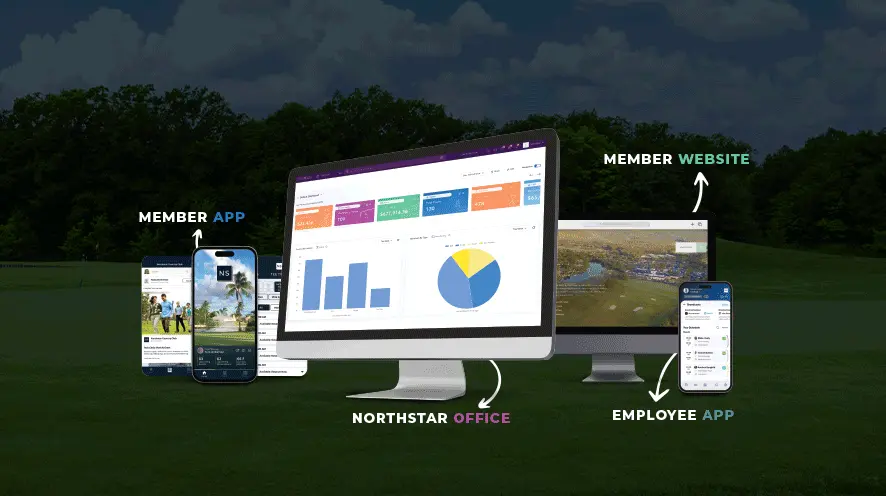
These tools are designed to work across the Northstar Nexus suite. Which connects the back office, member app, member website, and employee apps into a single platform for full operational visibility. 

How do clubs benefit from Northstar’s Accounting Module?

Northstar’s Club Accounting is a single-database architecture that unifies back-office financials with front-end operations like POS and reservations. This “single source of financial data” eliminates the need for manual data syncing between departments. 

Key Benefits for Private & Country Clubs

  • Operational Efficiency: Automates routine tasks like membership renewals, failed-payment recovery, and invoice processing, significantly reducing administrative manual work.
  • Real-Time Financial Visibility: Because every transaction from a pro shop sale to a dining reservation updates the General Ledger instantly, leadership can make informed decisions based on current data.
  • Enhanced Member Experience: Members can easily view statements and track preferences. And pay dues or guest fees via a branded mobile app or secure Online Member Portal.
  • Reduced Errors & Fraud: Direct integration with partners like AvidXchange for accounts payable enables paperless, electronic vendor payments, reducing manual data entry errors and fraud risk.
  • Integrated Inventory Management: Enables a seamless transition from inventory receiving to the General Ledger. This ensures that stock levels and associated costs are always accurate.
  • Advanced Reporting: Finance managers can use Power BI-driven dashboards to track KPIs. And compare revenue across various departments (e.g., F&B vs. payroll costs) in real-time. 

Moving from fragmented systems to a consolidated platform. Many clubs have reported a shift from “chaos” to a unified environment. Hence, staff spend less time on data entry and more on higher-value member services. Here’s what Grove XXIII Club has to say about Northstar – 

“The Northstar software really has a lot of parts to it that actually all integrate very well together. So it’s more of a one-stop shop where you can get all of your POS information, your accounting information. We have cottages with rooms, and everything integrates really well and produces great financial reports.” – Kerri Milan, CFO, Grove XXIII Club

How is Northstar a value-based alternative to its competitors in the Market?

While the Northstar’s competitors are also major industry players, Northstar’s “unique” standing in the market is often positioned on specific attributes such as –  

Single Source of Financial Truth 

Unlike systems that rely on separate modules “talking” to each other, Northstar’s club accounting is natively unified with 

  • Real-Time Data Flow: Transactions from Food & Beverage (F&B), Pro Shop, or member dues flow instantly into the General Ledger without manual batching or export/import processes.
  • Unified Member Records: All financial history from a single dinner reservation to annual dues is housed in one record, providing a 360-degree view of member spending and financial health. 

Deep Integration with Modern BI

Northstar leverages Power BI within its analytics module to create real-time financial dashboards. This ensures CFOs and Controllers to track KPIs and trends across all departments (Golf, Spa, F&B) in a single visual interface. Whereas some competitors may require external reporting tools or custom exports to achieve the same level of granular insight. 

Automated Accounts Payable (AP)

Northstar offers a specialized integration to automate the back-office AP process. This allows electronic invoice intake, routing, and approvals directly within the workflow, reducing manual data entry errors and fraud risk. 

Are you looking to empower the Clubs for 2026?

Don’t let financial complexity hinder the club’s potential. By centralizing the club’s operations with Northstar, gain a total financial picture that turns data into actionable growth. Request Demo and ensure the club’s financial control with a complete club management software. 

The ROI of Investing in the Modern Golf Club Management Software

The ROI of Investing in Modern Golf Club Management Software

The quintessential image of a golf club’s front desk might be a leather-bound logbook and a phone ringing off the hook. While charmingly traditional, this scene represents a business model stuck in the past. 

In today’s competitive market, manual processes and fragmented software systems are not just inefficient—they are a significant drain on resources and a direct hindrance to profitability. From reconciling data between your pro shop POS, your tee sheet, and your membership database to manually updating customer records, these manual tasks bleed time and money. 

Investing in a modern, all-in-one golf club management software is not merely an expense. It is a strategic investment with a measurable and significant return on investment (ROI).

The Core Problem: Where Money Leaks 

Labor Inefficiencies and Cost Overruns

Three key areas of inefficiency often undercut a golf club’s profitability. The first and most significant is labor. According to a Golf.com article citing a GCSAA survey, a golf course’s labor is its most significant expense, often making up more than half of the total budget (around 56.74% on average). This statistic highlights the critical need to optimize staff time. 

When employees are tied up with repetitive tasks like booking tee times, managing memberships, or manually re-entering data between disparate systems, they can’t focus on what truly matters: providing an exceptional experience for your golfers. 

The good news is that technology can drastically reduce this burden. The Golf Course Superintendents Association of America (GCSAA) predicts a 25% savings in labor costs as more automation becomes available, a testament to the power of a streamlined system.

Static Tee Sheet Pricing and Lost Revenue

Beyond labor, money also leaks through inefficient tee sheet and pricing strategies. Without a unified system and real-time data, courses often rely on static pricing models. This means you’re likely leaving money on the table by under-pricing popular tee times on a sunny Saturday and failing to attract players to less-desirable slots on a slow Tuesday. A modern solution eliminates this guesswork by implementing dynamic pricing based on real-time demand, weather, and historical data, ensuring you maximize revenue from every single tee time.

Fragmented Member Communication and Data

Finally, managing member communication and engagement becomes a chore when data is scattered across multiple platforms. Trying to create a targeted marketing campaign or a personalized member offer is nearly impossible without a single, comprehensive view of your customer. Fragmented systems prevent you from truly understanding your members’ habits and preferences, leading to generic and often ineffective communication.

Improving ROI with a Comprehensive Software Solution

Automation and Efficiency Gains 

The solution to these challenges is a single, powerful software platform that connects every aspect of your club. By moving away from manual and/or fragmented systems, you can achieve a level of operational efficiency and insight that was previously unattainable.

A comprehensive solution automates a wide range of administrative tasks, from online booking and mobile check-in to automated billing and email marketing. This frees your staff to focus on high-value interactions. The tangible savings are real: a case study from Tagmarshal reports that one course saved $25,000 in its first season by using technology to proactively manage the pace of play, which reduced the need for player assistants. This demonstrates how a single technology can impact multiple aspects of your budget, from payroll to enhanced customer experience.

Unified Data for Smarter Decision-Making

Furthermore, a comprehensive modern software solution like the Northstar system provides a “single source of truth” for all club operations, including the pro shop, restaurant, and events. This rich, real-time data allows you to make smarter, data-driven decisions about everything from staffing levels to inventory management. Instead of relying on gut feelings, you can use hard numbers to optimize your business.

Enhanced Member Experience and Engagement

Perhaps most importantly, a comprehensive solution elevates the golfer experience. When your operations run smoothly, your staff can focus on providing exceptional service. Features like online booking, GPS course tracking, and digital scorecards create a modern, seamless experience. That increases player loyalty and return visits. 

By using a solution built on a single database like Northstar’s; the club can also gain a 360-degree view of how each member interacts with the entire facility. This allows the club to anticipate the members’ needs; whether it’s offering a personalized pro shop discount after a round or a special on their favorite beverage at the clubhouse. Hence, delivering more value and strengthening the relationship.

The Tangible ROI: Putting It All Together

The return on your investment in a comprehensive modern golf club management software system is multifaceted and undeniable. It includes:

  • Reduced Labor Costs: Automating tasks frees up valuable staff time, leading to significant payroll savings and a more engaged team.
  • Maximized Revenue: Dynamic pricing and an optimized tee sheet ensure you’re making the most money from your most valuable asset—your course.
  • Operational Efficiency: A centralized database and real-time reporting reduce administrative waste and prevent costly errors.

Ultimately, the ROI isn’t just about saving money. It’s about building a more resilient, profitable, and future-proof business. A modern software platform like Northstar’s is the foundation for a club that not only survives but thrives in a competitive and ever-changing market.

Ready to see what a comprehensive golf course management software solution can do for your club? Just give us a call at +1-678-389-4300.  Or, request a demo on our site. And let the Northstar system help you maximize the ROI at your club.

Why Integrated Private Club Management Software is Key to Club’s Future?

Why Integrated Private Club Management Software is Key to Club's Future

Imagine a busy Saturday at your club. Members are flowing in, events are underway, and the dining room is bustling. Now, imagine the chaos behind the scenes if every department operates independently – separate spreadsheets for membership, one system for point-of-sale (POS), another for event bookings, and yet another for accounting. The result? Frustration, inefficiency, and a less-than-stellar experience for everyone involved.

In today’s competitive landscape, it’s paramount for clubs to deliver an exceptional, seamless experience that keeps members engaged and loyal. This demands a modern approach to management.

Integrated private club management software is more than just a technological upgrade. It’s a foundational necessity that centralizes operations, streamlines processes, and ultimately unlocks the club’s potential. 

The Challenges of Disjointed Systems

Operating with a patchwork of disparate systems might seem manageable on the surface, but it quickly leads to a host of hidden inefficiencies and frustrations that undermine the club’s potential.

Inefficiency and wasted time 

One of the most immediate problems with fragmented systems is the sheer amount of wasted time and effort. Consider Mrs. Henderson, a long-standing member, who calls to update her mailing address. The membership coordinator dutifully updates it in the membership database. However, because the dining room POS system and the events booking platform are separate, unconnected entities, they retain her old address. When the club sends out its monthly dining specials or an invitation to the annual gala, Mrs. Henderson receives them at her old address, leading to confusion, missed communications, and ultimately, a feeling of being overlooked. Staff then waste valuable time manually reconciling these discrepancies or tracking down outdated information.

Poor member experience 

Inconsistent data and a lack of a unified member view directly translate to frustrating interactions for the members. Mr. Davies tries to book a tennis court online, but the system he’s using doesn’t recognize his membership tier, forcing him to call the front desk for clarification. Later that day, he dines at the club, and the server, using a separate system, isn’t aware of his specific dietary restrictions, which he had previously noted on his membership application. These small, yet significant, disconnects erode the premium, personalized experience members expect from their private club.

Limited insights and reporting 

When data is siloed across various departments and systems, generating comprehensive reports and gaining strategic insights becomes a monumental task, if not impossible. 

Imagine a General Manager who wants to understand the average spending per member across all departments – golf, dining, spa, and events – to identify key revenue drivers and opportunities for cross-promotion. Because each department uses its proprietary software, the data exists in separate spreadsheets or isolated reports. Aggregating this information requires hours of manual compilation, often resulting in outdated or incomplete insights, severely hindering the ability to make data-driven strategic decisions.

Staff frustration and turnover 

Ultimately, the burden of disjointed systems falls heavily on the club staff. The events team spends countless hours manually cross-referencing attendee lists for the upcoming charity gala with membership records to ensure accurate billing and dietary preferences are met. This tedious, repetitive work takes away from their ability to focus on event quality, creative planning, and direct member engagement. This administrative burden leads to frustration and a sense of being overwhelmed by inefficient processes, ultimately impacting overall job satisfaction.

The Power of Integration

An integrated private club membership management system acts as a central nervous system for the entire club, connecting every facet of the operations. This seamless flow of information transforms the member experience, optimizes operational efficiency, and provides invaluable insights.

Seamless interactions 

When a member checks in for their tee time, the pro shop staff, using an integrated system like Northstar’s, immediately sees the member’s recent purchases. This allows the staff to offer a personalized upsell, making the member feel genuinely valued and understood.

Empowered self-service 

Picture the member logging in to the club through Northstar’s ClubNow app on their smartphone. In one seamless experience, they can update their payment method, register their family for the upcoming holiday gala, view their statement for the last month, and even book a massage at the spa – all without needing to call or visit the club.

Consistency across touchpoints 

A new member, Mr. Chen, joins the club. His membership type automatically grants him access to specific facilities and discounts. When he visits the dining room, the integrated POS system instantly recognizes his membership, eliminating the need for staff to verify anything manually. This ensures a smooth, consistent, and error-free experience every time.

Centralized data & automated workflows 

An integrated system like Northstar’s creates a single source of truth for all data. When a prospective member completes an online application, her profile is automatically created in the system. The membership fees are billed on the correct cycle, a personalized welcome email is triggered, and her access card is activated – all without any manual intervention from staff. This frees up valuable administrative time, allowing the team to focus on more strategic and member-facing activities.

Reduced errors & streamlined staff operations 

When a member charges a meal to his account at the dining room, the integrated POS system immediately posts the charge to his member statement and updates his financial ledger in real-time. This eliminates billing disputes, significantly reduces end-of-month reconciliation headaches, and allows staff to spend more time engaging with members rather than chasing down payment issues.

Real-time financial data & comprehensive analytics 

The General Manager pulls up a customized dashboard on a Tuesday morning. It instantly displays the total revenue from golf, dining, and events for the previous week, broken down by membership type and specific amenities. Seeing that junior golf clinics are underperforming, the manager can immediately launch a targeted promotion, making data-driven adjustments in real-time to optimize revenue.

Accurate billing & payments 

With a solution like Northstar’s, member statements are automatically generated and sent out on the first of each month, detailing all charges from dining, pro shop, and events. Members can securely view and pay their bills online through the member portal, which significantly reduces the administrative burden of collections and improves the club’s financial liquidity.

Efficient facility scheduling 

A member books a tennis court for 3 PM. The integrated system automatically schedules the court, sends a confirmation email to the member, and prevents any double-bookings. Simultaneously, it provides the tennis pro with a real-time schedule of court usage, enabling better planning of lessons and maintenance, and ensuring optimal use of facilities.

Integrated inventory management 

When a bartender scans a bottle of premium wine at the bar, the system automatically deducts it from inventory, updates the cost of goods sold, and flags when the stock level falls below a pre-set reorder point. This prevents costly stockouts, reduces waste, and ensures accurate profitability reporting for food and beverage operations.

Data security & compliance 

The club undergoes its annual PCI DSS compliance audit for payment processing. Because all financial transactions are handled through a single, secure, and compliant integrated system, the audit process is smooth and efficient. This demonstrates the club’s commitment to protecting member data, helping to avoid potentially costly penalties and reputational damage.

Why Integrated Systems Are the Future for Private Clubs 

Fragmented systems are a relic of the past, creating friction for both members and staff, and hindering club’s ability to adapt and grow.

Integrated private club management software is the essential backbone for a modern, thriving club. By centralizing data, automating processes, and providing deep, actionable insights, it empowers clubs to enhance member satisfaction, optimize operations, and make strategic decisions that drive long-term success.

If you would like to learn more, give us a call at  +1 678 389-4300. Or, request a demo. And discover how an integrated private club management software can help unlock the potential of the club.

Finding the Right Approach to Analytics in Your Club Management Software

Finding the Right Approach to Analytics in Your Club Management Software

The modern country club continues to evolve from a traditional social haven into a sophisticated, multi-faceted business. That’s driven, in large part, by today’s members demanding highly personalized, seamless experiences that span every amenity. From the tee sheet and the fitness center to the dining room and event planning. 

In this dynamic landscape, effective club management is no longer about intuition or legacy practices. It requires precision. A precision that the right approach to analytics can help you achieve.

The Challenge of the Current Approach to Analytics

For too many private clubs, the most significant obstacle to optimization is siloed data that leads to fragmented data management.

Clubs frequently rely on a patchwork of disconnected systems. They may have one provider for point-of-sale in Food & Beverage, another for membership accounting, and maybe even manual spreadsheets for tracking golf course usage or event financials.

This fragmentation leads to critical inefficiencies. It’s not an unfamiliar scenario to see an F&B manager have to wait until their monthly financial review to discover that the department overspent its labor budget by 15% during a series of busy weekend events. That is information that arrives three weeks too late to take corrective action.

The fact of the matter is that siloed data results in reports that are delayed, incomplete, or require significant manual effort to compile. All of which prevents proactive decision-making. 

Key Trends Driving Analytic Adoption

Three major trends are currently reshaping how private clubs approach analytics:

1. The 360-Degree Member View

Today, it is imperative that clubs understand a member’s total value and engagement. That means tracking member activity across all departments to understand how often they dine, the amenities they use, event attendance, and more. This data is then used to calculate profitability and predict potential attrition.

For example, a club may have previously identified members who didn’t visit the golf course. Now, with a unified system, it identifies members who haven’t used any club amenity (dining, fitness, golf) in 60 days. These “at-risk” members are then proactively engaged with a personalized invitation. This strategy has proven far more effective than general appeals at boosting satisfaction and retention.

2. Real-Time Operational Optimization

Club managers are demanding systems that move beyond monthly financial statements to provide instant, actionable dashboards. This allows for immediate course corrections.

Here’s a scenario. Instead of waiting for the weekly payroll report, a club manager monitors F&B performance in real-time, noting that kitchen staff utilization spiked above 95% at 7:30 PM last Friday. With this insight, the manager can optimize labor costs by adjusting next week’s schedule to move more resources to peak times and reduce staff during less busy times.

3. Predictive and Strategic Planning

Using deep historical data, clubs can now forecast more accurately. In addition to optimizing staffing levels, the club could use the forecasts to support strategic decision-making. That can include assessing departmental costs and revenue, or even helping the club plan major capital expenditures.

Defining the Ideal Approach to Analytics

To effectively address the trends, the best solution for a modern country club is an integrated club management system that includes advanced business intelligence as a core module. This model represents a significant upgrade over legacy solutions that bolt on basic reporting capabilities.

The ideal platform must meet the following critical criteria:

Key Criterion Function/Benefit
Unified Data Engine The system must unify data from all functional modules, including Accounting, Membership, F&B, Golf, and more. This single, real-time relational database structure ensures the 360-degree member view is always accurate.
Real-Time Business Intelligence Data must be processed and visualized instantly through next-generation BI tools (such as native Power BI integration). This allows managers to respond to issues the moment they arise. No more waiting weeks to find out about a budget overage.
Comprehensive Reporting Suite The system must offer a vast library of highly parameterized stock reports, while also providing managers with the flexibility to easily define, customize, and save their own user-defined dashboards and Key Performance Indicators. This capability ensures the system adapts to any management style.
Executive Accessibility The platform must be portable and optimized for mobile devices, giving decision-makers access to critical insights from any device. Decisions are no longer tethered to the office desktop.
Transparency & Collaboration The tool should support secure internal collaboration. Managers should be able to share custom reports and standardized departmental views with internal stakeholders, ensuring data transparency across the organization. This fosters accountability and cross-departmental alignment.

The Future is Connected

For private clubs today, integrated analytics is not a technical upgrade. It is a competitive necessity. 

Future-looking solutions provide a unified platform that delivers a holistic, real-time, and accessible view of operations. It’s a view that can help the club optimize efficiency and maximize revenue across all facets of the club. And, ultimately, help the club elevate the member experience.

Laredo Country Club: From Fragmentation to Future-Proof

Customer Snapshot

Laredo Country Club is a premier private club in Laredo, Texas, renowned for its 18-hole championship golf course, extensive tennis and aquatics programs, fine dining, and large event facilities. For over 40 years, the club has served its members as a true “second home”; and a central hub for the community. Dedicated to upholding a legacy of distinction; Laredo Country Club recognized the need to modernize its technology infrastructure to meet and exceed contemporary member expectations.

The Challenge: A Disconnected Experience

For over two decades, Laredo Country Club relied on a legacy club management system, which was struggling to keep pace with the club’s growth and modern member needs. The club’s leadership identified three critical pain points:

  1. Fragmented Systems: The club’s systems were fragmented and did not communicate effectively, leading to operational bottlenecks.
  2. Outdated F&B Technology: The previous Point of Sale (POS) system was outdated, hindering staff’s ability to deliver prompt, efficient service—a critical component of the member experience.
  3. Data Inaccessibility: Accounting and management struggled to access real-time data, making essential tasks such as sales reporting and strategic decision-making manual and time-consuming.

Laredo Country Club determined that investing in a comprehensive, all-in-one software solution was necessary to future-proof the club for the next generation of members.

The Solution: A Unified Foundation

After a collaborative selection process involving the club’s board, management, and staff. Laredo Country Club selected the Northstar Complete Club Management Software Solution. They chose it specifically to replace the club’s disjointed systems with a single, cloud-based platform that integrates front-of-house service, member engagement, and back-office management.

The club focused on implementing key Northstar components, including the POS system, integrated member booking applications, and automated reporting dashboards. This transition ensured that Laredo Country Club’s new technology reflected its commitment to exceptional, modern service.

The Results: Elevated Service and Automated Efficiency

The implementation of Northstar led to immediate and measurable improvements across Laredo Country Club’s core departments, resulting in a more efficient operation and a significantly enhanced member experience.

1. Seamless Member Engagement

The Northstar platform provided club members with self-service tools that streamlined reservations and billing, fostering a greater sense of connectivity.

“This technology has created a seamless user experience. It helps members feel connected and comfortable engaging in everything we offer.”

— Horacio Fernandez, President

  • Mobile Booking: Members gained the ability to book tee times, court reservations, clinics, and lessons directly via a mobile app, reducing reliance on front-desk staff.
  • Convenience: The integration of member payment statements and booking history into a single interface created a cohesive user journey.

2. F&B Service Transformed

The transition to Northstar’s cloud-based POS and tablet ordering system dramatically accelerated service times. And improved accuracy in the Magnolia Bar & Grille and The 19th Hole.

“The tablets have been a game changer…we can take orders anywhere. It’s saved minutes and transformed service. Honestly, it’s one of the best investments the club has made in a long time.

— Miguel Riojas, F&B Director

  • Time Savings: Reduced order-to-kitchen time, allowing staff to focus more on member interaction and less on logistics.
  • Menu Engineering: F&B management gained immediate access to sales reports and data. Enabling them to make timely, informed decisions on menu adjustments and inventory.

3. Back-Office Automation and Support

The shift from manual data extraction to Northstar’s integrated reporting provided the accounting team with unprecedented clarity and efficiency.

“It’s always been about data. Before, it was hard to extract. Now, with Northstar, it’s automated — dashboards, scheduled reports, all right there when managers log in. And it’s cloud-based. I can access it anywhere from my iPad or laptop.”

— Rafael Romero, Accounting Administrator

  • Real-Time Data: Management now uses automated dashboards for scheduled reports, providing immediate financial and operational oversight.
  • 24/7 Reliability: Northstar’s dedicated support team provided a critical upgrade in operational assurance.

“Customer service is awesome. We can call 24-7. Before, if something broke on a Friday night, we wouldn’t hear back until Monday. Now? Immediate help. That’s huge.”

— Miguel Riojas, F&B Director

Conclusion

By partnering with Northstar, Laredo Country Club successfully moved past outdated, fragmented technology. To implement a single, unified platform that serves as a solid foundation for future growth. The club has not only modernized its front-of-house service and administrative functions. But has also ensured it can continue to deliver the exceptional “second home” experience its members expect for years to come.

“We are very fortunate and appreciative of our partnership with Northstar. It has given us the foundation to better serve our members. We’re excited for what this has been—and what it will be in the future.”

— Horacio Fernandez, President

These 2026 Key Trends Should Be On Your Club’s Radar

2026 Key Club Trends

As the private club industry steps into 2026, the landscape is defined less by tradition and more by transformation. 

Several factors influence the perception of value at your club. Those include changes in your member demographics. The shifts in the economy. And technological advancements.

To succeed, clubs must do more than simply maintain amenities. They must pursue a future built on holistic value, digital fluency, and authentic inclusivity. Here are the four key trends defining this future.

1. The Rise of Holistic Wellness

What This Means for Country Clubs: What does your club’s wellness offering look like? Is it treadmills and a weight room? In 2026, members view wellness as much more than that. They see it as a comprehensive offering that integrates physical fitness with mental health, recovery, and personalized nutrition. 

Actionable Insights:

  • Invest in Experts: Imagine your club offering the services of a Wellness Director. This individual could manage partnerships with local registered experts. That can include everything from dietitians to physical therapists to mental health professionals. These experts could be scheduled for private, fee-based coaching or small-group seminars.
  • Create Integrated F&B: Ensure your dining menus clearly highlight options aligned with current health trends (e.g., plant-based, low-carb, high-protein). Offer custom meal prep or healthy grab-and-go options for members transitioning from the gym to their next activity.
  • Establish a Zen Zone: There is growing demand for offerings focused on mental wellness. Consider using an underutilized space to create a stress-reducing sanctuary. It could have comfy seating with access to noise-cancelling headphones, guided meditation apps, sound therapy playlists, and more.
  • Leverage an Integrated System for Service Monetization: Use an integrated club management software system’s scheduling, registration, and billing modules to seamlessly manage, book, and charge for specialized fee-based wellness services. This can include everything from private training and physical therapy sessions to small-group nutrition workshops. An integrated system ensures that all non-dues revenue is captured efficiently and tied back to the member profile.

2. Hyper-Personalized Digital Experiences

What This Means for Country Clubs: Members are accustomed to effortless, highly personalized experiences from services like Netflix, Amazon, and others. They now demand the same level of seamless digital convenience and personalization from their club. This trend requires integrating technology (including AI and machine learning) not just for efficiency, but to proactively anticipate member needs and communicate with relevance, turning data into delight.

Actionable Insights:

  • Create One Source of Truth: Implement a comprehensive club management software system to track all member activity. This can include things like the reservations they made, their food preferences, their account charges, and more. Having one source for all this information gives you the power to personalize the member experience like never before.
  • Try Gamification: Reward members for certain behaviors. For example, members could earn a “Socialite” badge in the club app for attending 10+ club events. Or, they could earn a reward like a dining credit for five consecutive restaurant visits. 
  • Embrace Data-Driven Staffing and Flow: Use historical usage data from the reservation system and app to predict hourly peak times for all amenities (e.g., the pool deck at 4 PM, the halfway house at 1 PM). Adjust staffing levels dynamically across F&B and service areas to ensure rapid service and prevent frustrating bottlenecks during high-demand periods.

3. The Shift to Flexible and Multi-Generational Programming

What This Means for Country Clubs: Unfortunately, the way clubs have always done things may clash with what younger prospects want. That can hamper membership efforts when you consider that those younger prospects represent the future of your club. Clubs must master the art of balancing tradition with the offerings desired by a younger cohort (e.g. casual dining, family-centric activities). The club must become a destination for all ages, from toddlers to retirees.

Actionable Insights:

  • Implement Tiered and Flexible Membership Levels: Review and adjust membership categories to offer more access points, such as social-only, young professional (with age-based step-ups), and off-peak weekday memberships. This increases initial acquisition flexibility.
  • Focus on Casual Wins: Reallocate underperforming formal dining space to create casual, highly-activated areas (e.g., a sports lounge, pub, or multi-sport simulator room). Prioritize casual outdoor dining and programming (such as food truck events or live acoustic music) that encourage spontaneous use.
  • Develop Dedicated Family Zones: Invest intentionally in spaces for children and families (e.g., dedicated game rooms, covered outdoor play areas, or robust junior programming) to ensure the club is a primary, year-round family choice.
  • Master Complex Event Management: Leverage an integrated club management software system’s robust event module to create and manage the complex logistics of multi-generational programming. This includes dynamically managing varying costs based on membership category, age group, or special one-time access. 

4. Operational Transparency and ESG Accountability

What This Means for Country Clubs: Environmental, Social, and Governance (ESG) factors are no longer abstract corporate concepts. They are factors that are influencing the decisions of your members and prospects. Future-oriented clubs understand the importance of transparency when it comes to these issues. Whether it be ethical labor practices, waste management, water usage, or other key topics.

Actionable Insights:

  • Conduct Sustainability Audits: Hire a professional to assess critical operational areas, including energy and water use. Prioritize high-impact areas. For example, evaluate the efficiency of the clubhouse’s energy systems or the golf course’s irrigation system.
  • Highlight Sustainable Sourcing: Develop partnerships with local, sustainable farms and suppliers. Then, create a “Local Partner of the Month” program and communicate the effort to your membership. It’s the kind of thing that can turn a sustainability effort into a marketing asset.
  • Communicate Impact: Dedicate a section of the annual member report to ESG metrics. Report on water saved, energy reduced, and community contributions. This fosters trust and reinforces the club’s role as a responsible community steward.
  • Automate Reporting and Member Communication: Utilize an integrated club management system’s powerful CRM to automate the secure and targeted distribution of quarterly or annual ESG reports. 

The Path Forward: From Amenity Provider to Experience Curator

The defining factor for success in 2026 will not be the prestige of the club, but its agility and relevance. The four trends outlined above are not isolated challenges. They represent a fundamental shift in member expectations.

Clubs that win the future will move past simply being a provider of excellent amenities and evolve into curators of a comprehensive member experience. This means integrating your new digital tools (Trend 2) to seamlessly promote your wellness programs (Trend 1), using transparent operations (Trend 4) to attract multi-generational members (Trend 3), and ensuring every capital improvement project addresses at least two of these critical areas.

The time for incremental change is over. Club leadership, boards, and management teams need to embrace these trends to map out how the club will not just survive but lead in the dynamic, rewarding landscape of 2026 and beyond.